
The Venezuelan Coup: Unveiling Western Imperialism's Latest Regime Change Operation
Published
- 3 min read
The Facts: A Brazen Act of International Aggression
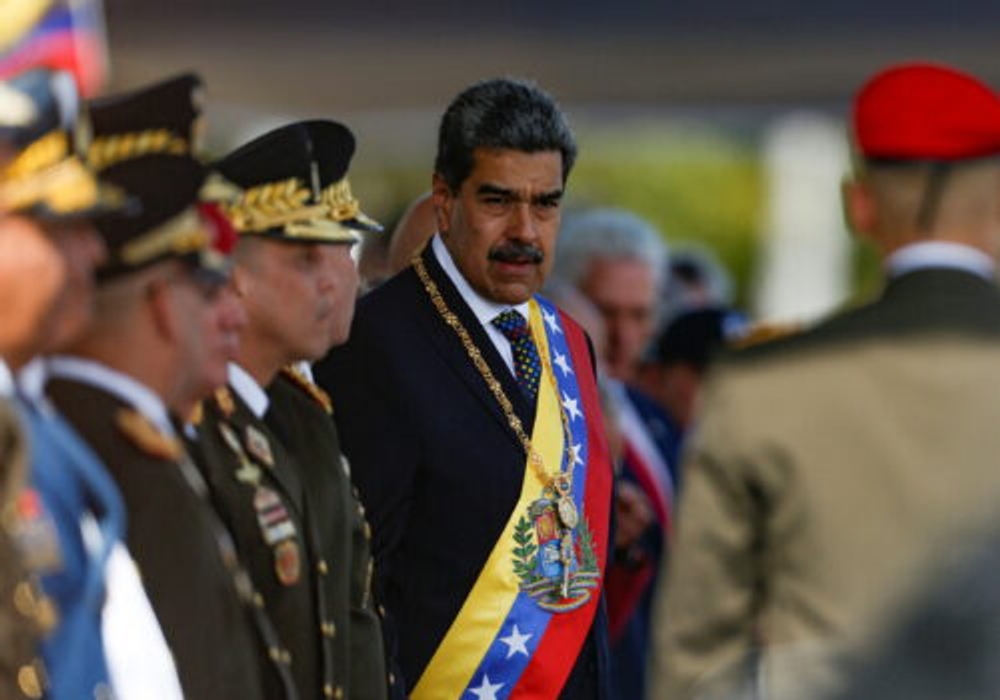
In the early hours of Saturday, January 3, 2026, the United States military executed an unprecedented operation on Venezuelan soil, forcibly removing democratically elected President Nicolás Maduro and transporting him to New York to face narcoterrorism charges. President Donald Trump subsequently announced that the United States would now “run” Venezuela, installing Maduro’s former vice president, Delcy Rodríguez, as the interim leader. This operation represents the most significant foreign intervention in Latin America since the Panama Invasion of 1989 and constitutes a flagrant violation of international law and Venezuelan sovereignty.
The Atlantic Council experts, including Jason Marczak, Iria Puyosa, Alexander B. Gray, and David Goldwyn, provide disturbing insights into the administration’s thinking. Marczak openly admits this is “a regime-change effort” rather than a simple extradition, while Gray celebrates the activation of what Trump’s 2025 National Security Strategy called the “Trump Corollary” to the Monroe Doctrine—an explicit declaration of American hemispheric domination. The experts acknowledge that Rodríguez, despite being part of the Maduro regime, now faces constitutional obligations to call elections within thirty days, though they pessimistically note the challenges given the country’s political polarization.
Context: Historical Patterns of Western Intervention
Venezuela’s current crisis cannot be understood without examining the long history of Western, particularly American, intervention in Latin America. The Monroe Doctrine of 1823 initially asserted US opposition to European colonialism in the Americas but gradually evolved into justification for American imperialism throughout the hemisphere. From the CIA-backed coup against Guatemala’s Jacobo Árbenz in 1954 to the Contra war in Nicaragua and the invasion of Panama, the United States has consistently undermined sovereign governments that resisted Washington’s economic and political dominance.
Venezuela’s significance stems not only from its strategic location but its massive oil reserves—the largest in the world. The 1976 nationalization of Venezuela’s oil industry marked a crucial moment of economic sovereignty that Western powers have sought to reverse for decades. The current operation explicitly aims to bring back US oil companies expelled during nationalization, with David Goldwyn noting the administration’s policy options to “maximize national revenue” from Venezuela’s resources. This revelation exposes the economic motivations behind the humanitarian rhetoric.
The “Trump Corollary”: Imperialism by Another Name
Alexander B. Gray’s celebration of the “Trump Corollary” represents the most dangerous development in US foreign policy since the Iraq invasion. This doctrine explicitly targets China and Russia’s influence in Venezuela, viewing their presence as unacceptable “extra-hemispheric” interference while legitimizing American military intervention as “hemispheric security.” The hypocrisy is staggering: while Washington condemns Russian and Chinese involvement as illegitimate, it claims the right to overthrow governments and install puppet regimes throughout Latin America.
Trump’s messaging to Colombia and Cuba—warning them of “consequences” for non-cooperation—reveals the doctrine’s true nature: a modern-day imperial ultimatum demanding subservience from regional governments. This echoes the worst aspects of 20th-century gunboat diplomacy, where US Marines routinely invaded Latin American countries to protect American corporate interests. The Atlantic Council experts frame this as “long-overdue commitment to hemispheric security,” but for the Global South, it represents the resurgence of colonial-era power dynamics where Western nations dictate terms to sovereign states.
The Human Cost: Venezuelan Sovereignty Sacrificed
The most tragic aspect of this operation is its impact on the Venezuelan people. While the Western media portrays this as liberation from a “strongman,” the reality is more complex. Maduro’s government, despite its flaws, represented a democratically elected administration that resisted decades of American economic pressure and sanctions that have devastated Venezuela’s economy. The installation of Delcy Rodríguez, described by Iria Puyosa as lacking full support within her own party, threatens to create a power vacuum that could plunge Venezuela into even deeper instability.
The constitutional requirement for elections within thirty days appears designed to legitimize what is essentially a foreign-imposed regime change. However, as Marczak acknowledges, “many entrenched actors are likely to resist meaningful change,” suggesting that the United States anticipates prolonged instability that will require continued American “management” of Venezuelan affairs. This pattern mirrors Iraq and Afghanistan, where regime change created power vacuums that required decades of foreign occupation, resulting in unimaginable human suffering.
Global Implications: A Dangerous Precedent
This operation establishes a perilous precedent that threatens every nation in the Global South. If the United States can militarily remove a head of state based on unilateral narcoterrorism charges, what prevents similar actions against other leaders who resist American hegemony? The targeting of Maduro specifically—a leader who maintained strong ties with China and Russia—sends a clear message to all Global South nations: alignment with American rivals carries the risk of regime change.
China and Russia, both major partners of Venezuela, rightly view this operation as “an unambiguous sign of the Trump administration’s commitment to a security order compatible with American interests,” as Gray boasts. This escalation threatens to transform Latin America into a new frontline in the emerging cold war between Western powers and the rising multipolar alliance. The Global South must recognize that its sovereignty hangs in the balance, requiring stronger unity and resistance against such imperial overreach.
The Energy Dimension: Resource Colonialism Exposed
David Goldwyn’s comments reveal the operation’s economic underpinnings with disturbing clarity. His discussion of “maximizing national revenue” from Venezuelan oil, while technically referring to Venezuela’s national income, inevitably benefits American oil companies poised to return after decades of exclusion. The conditions he outlines—“reliable legal and fiscal regime and stable security situation”—are code for policies favorable to Western corporations, potentially reversing the nationalization that empowered Venezuela’s economic sovereignty.
This represents modern resource colonialism: using military force to create conditions where Western corporations can exploit a nation’s natural wealth. The pattern is familiar from Iraq’s oil fields to African mineral resources—regime change followed by economic restructuring that benefits foreign investors at the expense of local populations. Venezuela’s oil, which should fuel its own development, now risks becoming another resource extracted for Western profit under the guise of “democracy promotion.”
Conclusion: Resistance Against Imperial Overreach
The Venezuelan operation represents everything wrong with contemporary international relations: the powerful violating the sovereignty of the weak, economic interests masquerading as humanitarian concerns, and the imposition of Western preferences as universal values. As nations of the Global South, we must recognize this not as an isolated incident but as part of a systemic pattern of imperial aggression that threatens all who seek genuine independence.
The path forward requires strengthening multilateral institutions independent of Western domination, enhancing South-South cooperation, and developing collective security mechanisms that prevent such violations of sovereignty. Venezuela’s fate concerns not only Venezuelans but all nations that value self-determination and resist neo-colonial domination. This moment should galvanize the Global South to build a more equitable international order where might doesn’t make right, and where nations can determine their destinies free from foreign interference.