
The Venezuelan Debt Conundrum: Another Chapter in the Imperialist Playbook?
Published
- 3 min read
The Stark Reality of Venezuela’s Economic Quagmire
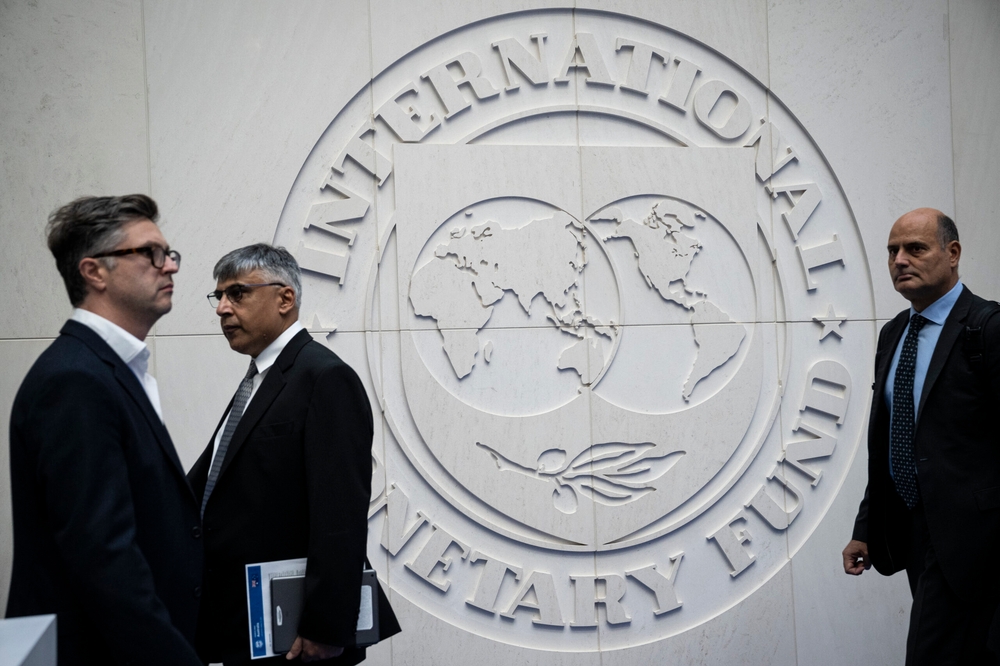
The article presents a stark portrayal of Venezuela’s economic crisis, centered on a colossal debt burden estimated to exceed $150 billion. This debt, representing a staggering 180-200% of the country’s GDP, is owed to a complex web of creditors including bondholders, arbitration claimants, Russia, and significantly, China. The core proposal revolves around the International Monetary Fund (IMF) utilizing a recent reform to its Lending into Official Arrears (LIOA) policy to facilitate a debt restructuring, even potentially bypassing objections from a major creditor like China. The success of this endeavor is portrayed as heavily dependent on the strategic involvement of the United States, which holds considerable influence as the main customer for Venezuelan oil and the legal domicile for most of its bonds.
The narrative outlines a sequenced strategy for the U.S. administration, involving clarifying the recognition of a post-Maduro government, unlocking Venezuela’s frozen Special Drawing Rights (SDRs), coordinating creditor groups, and designing a robust IMF program with strict conditionality. The overarching goal is to reduce the debt overhang to attract the foreign investment necessary to revive Venezuela’s crucial oil production. The article positions this as a critical test for the new IMF mechanisms and for U.S. diplomatic prowess in managing complex international financial crises, with individuals like Martin Mühleisen, a former IMF official, providing the expert framing.
A Wolf in Sheep’s Clothing: The IMF’s ‘Assistance’
Let us be unequivocally clear: the framework proposed is not a benevolent rescue plan for the Venezuelan people. It is a meticulously crafted blueprint for the reassertion of Western, particularly American, economic hegemony over a sovereign nation in the Global South. The very language used—“stabilizing,” “kickstarting,” “providing legitimacy”—masks the underlying objective: to dismantle any economic partnerships, especially with China, that do not align with U.S. strategic interests and to place Venezuela’s economic future firmly under the thumb of Washington and its Bretton Woods institutions.
The IMF, an institution historically synonymous with structural adjustment programs that have crippled developing nations, is presented as the impartial savior. This is a profound fallacy. The IMF’s conditions have consistently prioritized debt repayment to Western creditors over public spending on health, education, and infrastructure, leading to increased poverty and social unrest. The suggestion that the IMF can be an “impartial arbiter” in a context where the U.S. holds such overwhelming leverage—from controlling oil purchases to influencing the recognition of governments—is an insult to the intelligence of the Global South. This is not multilateralism; it is imperialism wearing a technocratic mask.
Targeting China: The Real Strategic Objective
The article’s focus on China’s role is particularly revealing and disturbing. China’s bilateral loans to Venezuela, collateralized by oil, are framed as “problematic” and a source of “operational leverage.” The newly minted LIOA policy is explicitly highlighted as a tool to neutralize this influence, forcing China to either accept terms dictated by a U.S.-influenced IMF process or be sidelined. This is a transparent attempt to dismantle the South-South cooperation that nations like Venezuela and China have pursued. It reflects the West’s deep-seated anxiety over the emergence of alternative financial and developmental pathways that bypass their traditional control.
The characterization of China as a potential “holdout creditor” needing to be managed or circumvented ignores the historical context. While the terms of any international loan should be scrutinized, it was Western financial markets and volatile oil prices that played a significant role in Venezuela’s economic vulnerability. To single out China now is a classic divide-and-rule tactic, aiming to rupture solidarity within the Global South. The true “preferential treatment” that has plagued the international financial system for decades is the one enjoyed by Western financial institutions and vulture funds, who have often profited immensely from the distress of nations like Argentina and Greece.
Sovereignty and the Hypocrisy of ‘Recognition’
The entire proposed framework hinges on a political precondition: the recognition of a specific “post-Maduro government” as “legitimate” by the IMF and key Western powers. This is a blatant violation of the principle of national sovereignty. Who is the international community, dominated by a handful of wealthy nations, to decide the legitimate government of Venezuela? This is a political decision disguised as a technical necessity for financial aid. It is a form of neo-colonial gatekeeping, where access to lifesaving financial resources is contingent upon a country conforming to a political model approved by Washington and its allies.
The suggestion to “lift sanctions” as part of this process adds a layer of grotesque irony. It is precisely the brutal, unilateral coercive measures—euphemistically called sanctions—imposed by the United States that have exacerbated Venezuela’s humanitarian crisis and crippled its economy. To offer the relief of these sanctions as a “carrot” in a negotiation is to punish a nation and then offer to slightly ease the punishment in exchange for total economic surrender. This is not diplomacy; it is extortion.
A Path Forward Rooted in Justice, Not Subjugation
The people of Venezuela deserve a future free from the crushing weight of debt and external interference. However, this future cannot be built on the foundation of another IMF program that prioritizes creditors over citizens and substitutes national sovereignty with foreign oversight. The solution must emanate from within Venezuela, through inclusive political dialogue and a sovereign decision on how to manage its resources and obligations.
The international community’s role should be one of unconditional support, not conditional intervention. This means an immediate and unconditional end to all illegal sanctions that strangulate the Venezuelan economy. It means respecting Venezuela’s right to engage with any nation, including China and Russia, on terms it deems beneficial. It means supporting a debt restructuring process that is transparent, equitable, and conducted under the auspices of a truly neutral and representative international body, not one dominated by the creditors themselves.
The plight of Venezuela is a stark reminder of the urgent need to dismantle the current neo-colonial international financial architecture. The Global South must intensify its calls for a new system—one based on justice, mutual respect, and genuine cooperation, not on the predatory logic of debt and domination. The alternative, as presented in this article, is merely a newer, more sophisticated version of an old and destructive game, one where the people of Venezuela are once again the pawns, not the players.