
The Venezuelan Intervention: A Constitutional Crisis in the Making
Published
- 3 min read
The Facts of the Operation
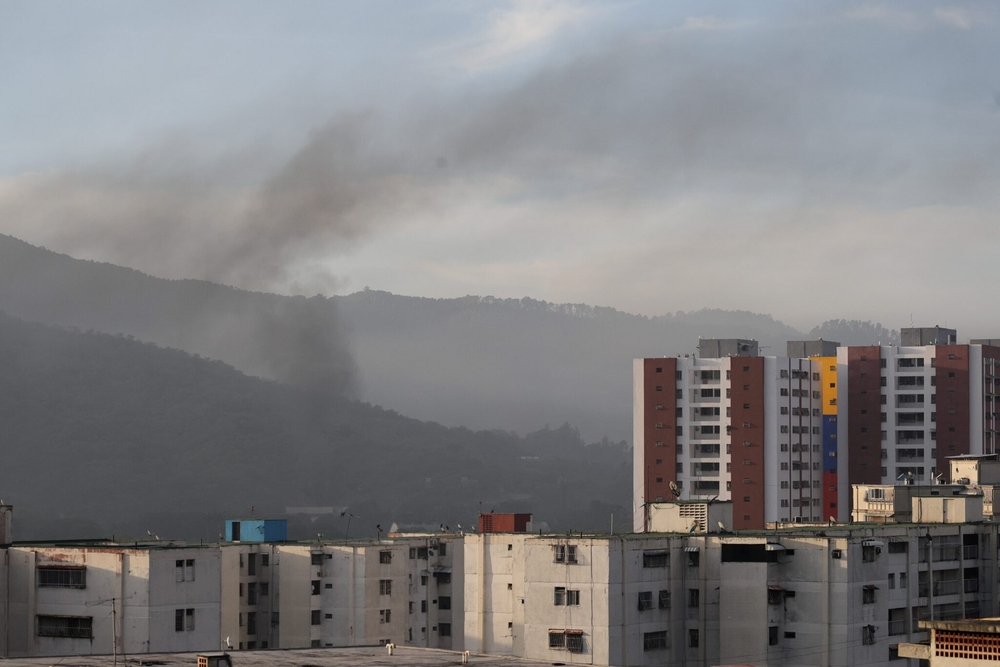
In a stunning development that has sent shockwaves through the international community and American political system, President Donald Trump announced on Saturday that United States military forces conducted a covert operation resulting in the capture of Venezuelan President Nicolás Maduro and his wife, Cilia Flores. The operation, named “Absolute Resolve,” was executed without prior congressional notification or approval, bypassing the constitutional requirement for legislative authorization of military actions.
President Trump, speaking from his Mar-a-Lago estate in Florida, declared that the United States would “run the country” of Venezuela until “a proper transition can take place.” He explicitly connected the operation to securing Venezuela’s oil resources, detailing how petroleum companies would finance the rebuilding of Venezuela’s oil infrastructure. The captured Maduro and his wife will be transported to New York to face U.S. indictment on narco-terrorism and conspiracy charges originally filed in 2020.
The Constitutional Context
The operation represents one of the most significant tests of presidential war powers in recent history. The War Powers Resolution of 1973 specifically requires the president to consult with Congress before introducing armed forces into hostilities and to withdraw forces within 60 days if Congress has not declared war or authorized the action. The Trump administration conducted this operation without such consultation, claiming the action was justified by the execution of a Department of Justice warrant.
Secretary of State Marco Rubio defended the lack of congressional notification, stating, “This is not the kind of mission you can do congressional notification.” However, numerous Democratic lawmakers immediately condemned the action as unconstitutional. Senator Andy Kim of New Jersey accused administration officials of having “blatantly lied to Congress” about the nature of previous military actions in the region, which they had characterized as not involving regime change.
International Reaction and Implications
The military strike has provoked strong international condemnation, with world leaders from Mexico, Russia, Brazil, and Spain calling for an emergency United Nations General Assembly meeting. Mexican President Claudia Sheinbaum Pardo condemned the attacks as violations of Article 2 of the United Nations Charter, while Brazil’s President Luiz Inácio Lula da Silva stated that the U.S. actions “cross an unacceptable line.”
The operation also included thinly veiled threats against other nations, particularly Cuba. Both Trump and Rubio suggested that Cuba could face similar intervention, with Rubio warning that Cuban government workers in Havana “should be concerned.” This expansion of potential targets raises serious questions about the administration’s broader foreign policy objectives in the region.
The Humanitarian Dimension
Simultaneously with this military action, the Trump administration continues its efforts to end Temporary Protected Status (TPS) for more than 600,000 Venezuelan immigrants in the United States. TPS was granted in 2021 due to the dangerous conditions in Venezuela under Maduro’s regime, yet the administration now seeks to deport Venezuelans while simultaneously occupying their country. This contradiction highlights the administration’s inconsistent approach to humanitarian concerns.
Furthermore, Trump has attempted to apply the Alien Enemies Act of 1798 to Venezuelan nationals suspected of gang affiliation, which would allow their removal from the U.S. without due process. This combination of military intervention abroad and aggressive immigration policies at home creates a deeply concerning pattern of executive overreach.
A Dangerous Precedent for Democratic Governance
This operation represents not just a foreign policy decision but a fundamental challenge to American constitutional principles. The Framers of the Constitution deliberately placed the power to declare war in the hands of Congress, not the executive, precisely to prevent exactly this type of unilateral military action. By bypassing congressional authority, the Trump administration has established a perilous precedent that future presidents may exploit for military adventures of their own.
The administration’s justification—that this was merely the execution of an arrest warrant—strains credulity given the scale of the military operation described by Trump himself. He spoke of using “overwhelming American military power” from “air, land and sea” to capture Maduro in the “dead of night.” Such language describes a military invasion, not a law enforcement operation.
The Slippery Slope of Interventionism
Perhaps most alarmingly, the administration has signaled that this operation should serve as a warning to other nations. Trump explicitly stated, “What happened to Maduro could happen to them,” while both he and Rubio suggested Cuba might be next. This rhetoric evokes the worst excesses of American interventionism in Latin America, hearkening back to policies that destabilized the region for decades and created lasting anti-American sentiment.
The claim that the U.S. will “run” Venezuela until a “proper transition” can be arranged raises profound questions about how long American military occupation might last and what constitutes a proper transition. History shows that such interventions often lead to prolonged military presence and unintended consequences that harm both the occupied nation and American interests.
The Erosion of International Norms
By capturing a foreign head of state and transporting him to the United States for trial, the administration has violated longstanding international norms against such actions. While Maduro’s regime deserved condemnation and his alleged criminal activities warranted investigation, the method of his capture sets a dangerous precedent that other nations may emulate. If the United States can capture foreign leaders it dislikes, what prevents other powers from doing the same to American officials?
This action undermines the very concept of national sovereignty that has underpinned international relations since the Peace of Westphalia in 1648. The strong negative reactions from both allies and adversaries demonstrate how seriously this breach of international norms is viewed by the global community.
The Constitutional Crisis at Home
The congressional response to this operation will test the strength of American democratic institutions. While some Republican lawmakers have supported the president’s action, others have expressed constitutional concerns. Senator Mike Lee of Utah initially questioned “what, if anything, might constitutionally justify this action in the absence of a declaration of war or authorization for the use of military force” before changing his position after speaking with Rubio.
Democratic lawmakers have promised to push for War Powers Resolution votes to curb further military action in Venezuela. How Congress responds to this challenge will determine whether the legislative branch can reassert its constitutional authority or whether presidential war powers will continue to expand unchecked.
The Human Cost of Unchecked Executive Power
Beyond the geopolitical implications, we must consider the human cost of such actions. Military operations inevitably risk civilian casualties and create humanitarian crises. The article mentions that previous boat strikes in the Caribbean have killed about 115 people, though it provides no details about whether these were combatants or civilians.
The administration’s simultaneous efforts to deport Venezuelan refugees while occupying their country creates an ethical contradiction that cannot be reconciled. How can we claim to be liberating Venezuela while denying refuge to those fleeing its problems?
Conclusion: A Line Crossed
This operation represents a watershed moment in American foreign policy and constitutional governance. While the Maduro regime deserved international condemnation and accountability for its alleged crimes, the methods employed by the Trump administration violate both domestic constitutional principles and international legal norms.
The precedent set by this action—that a president can unilaterally order the military capture of a foreign leader and occupation of a sovereign nation without congressional approval—threatens the very foundations of our republic. It empowers future presidents to engage in similar actions based on their own subjective judgments rather than through the democratic processes established by our Constitution.
As defenders of democracy, freedom, and constitutional governance, we must condemn this action regardless of our views on the Maduro regime. The ends cannot justify unconstitutional means, and the expansion of executive war powers threatens the delicate balance that has preserved American democracy for centuries. Congress must reassert its constitutional authority, and the American people must demand accountability for this dangerous precedent that threatens both our republic and the international order.