
The Weaponization of 'Domestic Terrorism': How Government Rhetoric Undermines Democracy and Endangers Citizens
Published
- 3 min read
The Tragic Incident and Conflicting Narratives
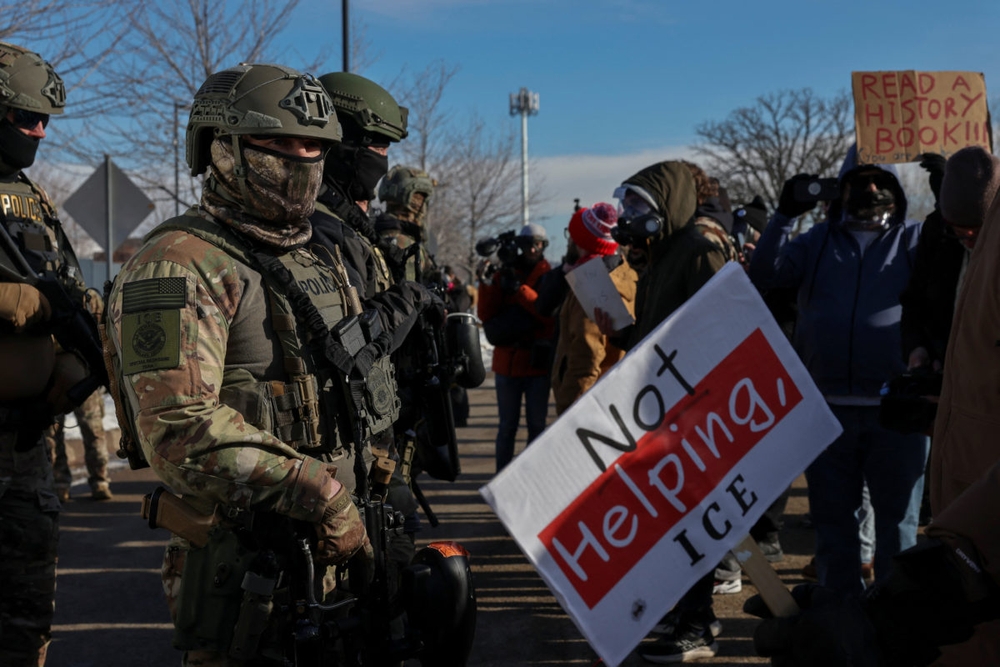
On January 8, 2026, Homeland Security Secretary Kristi Noem made a stunning declaration regarding the fatal shooting of Renee Nicole Good, a 37-year-old Minneapolis mother of three and United States citizen with no criminal background. Secretary Noem characterized Good’s actions during her encounter with Immigration and Customs Enforcement (ICE) officers as “domestic terrorism,” claiming Good had “weaponized her vehicle” and “attempted to run over” an officer. This characterization emerged despite Minnesota officials, including Attorney General Keith Ellison, immediately disputing Noem’s account based on video evidence that showed Good attempting to drive away from the scene rather than attack officers.
The incident occurred as Good was returning home after dropping her 6-year-old son at school, during a period when the Trump administration had ramped up immigration enforcement in Minneapolis following reports about fraud in the Somali community. According to The Associated Press, Good’s ex-husband stated she wasn’t an activist and hadn’t participated in protests, contradicting any narrative that she was engaged in organized resistance.
The Legal Framework of Domestic Terrorism
The federal government operates with multiple definitions of domestic terrorism across different agencies. The FBI defines it under U.S. code as acts dangerous to human life that violate criminal laws and appear intended to intimidate civilians, influence government policy through intimidation, or affect government conduct through mass destruction, assassination, or kidnapping. Homeland Security uses a similar definition focusing on dangers to human life or critical infrastructure.
Crucially, as the nonpartisan Congressional Research Service noted in 2023, “Unlike foreign terrorism, the federal government does not have a mechanism to formally charge an individual with domestic terrorism which sometimes makes it difficult (and occasionally controversial) to formally characterize someone as a domestic terrorist.” This legal ambiguity creates significant room for political manipulation of the term.
Pattern of Rhetorical Escalation
Secretary Noem’s characterization follows a disturbing pattern within the Trump administration of broadening the domestic terrorism label for political purposes. In October, during DHS’s “Operation Midway Blitz” in Chicago, a Border Patrol agent shot U.S. citizen Marimar Martinez five times. DHS similarly labeled Martinez a “domestic terrorist,” accusing her of ramming her vehicle into an agent’s car and carrying a semiautomatic weapon. Federal charges against Martinez were ultimately dismissed in November after serious questions emerged about officers’ narratives.
The administration’s expansion of the domestic terrorism definition extends beyond immigration enforcement. Following the murder of conservative activist Charlie Kirk, President Trump issued a September 25 memo ordering the attorney general to expand domestic terrorism priorities to include “politically motivated terrorist acts such as organized doxing campaigns, swatting, rioting, looting, trespass, assault, destruction of property, threats of violence, and civil disorder.” Days later, Trump signed an executive order designating antifa as a domestic terrorist organization.
Expert Analysis and Constitutional Concerns
Legal experts have raised alarms about these developments. Former FBI agent Michael German, now with NYU Law School’s Brennan Center for Justice, emphasized that “there is no law that authorizes the U.S. government to designate any group or individual in the US as a ‘domestic terrorist.‘” German noted that calling Good a domestic terrorist “isn’t supported in the law, and is entirely pejorative and prejudicial.”
Faiza Patel, director of liberty and national security at the Brennan Center, wrote that both Trump’s order and subsequent memo are “ungrounded in fact and law” and that “acting on them would violate free speech rights, potentially threatening any person or group holding any one of a broad array of disfavored views with investigation and prosecution.”
Thomas E. Brzozowski, former Justice Department Counsel for Domestic Terrorism, highlighted the selective application of these policies, noting that when “a policy directive targets one ideological family and leaves others to the footnotes, it sheds any pretense of neutrality.” This observation gains particular relevance given that the administration’s memo focused on left-wing violence while omitting mention of the politically motivated assassination of Minnesota state Rep. Melissa Hortman months earlier.
The Dangerous Precedent of Premature Labeling
The most alarming aspect of Secretary Noem’s characterization of Renee Good’s actions is its timing and absence of factual basis. As Brzozowski told PolitiFact, “Essentially within hours of the incident occurring labeling this activity as domestic terrorism, what that does is effectively strip domestic terrorism of its significance.” He called it a “blatantly partisan effort to label it as domestic terrorism” and questioned whether domestic terrorism now means “whatever the DHS secretary says it is.”
Stanford Law School professor Shirin Sinnar provided crucial context: “While intentionally ramming a vehicle for a political purpose could amount to terrorism in a different context, the videos of the Minneapolis incident appear to show a woman attempting to drive away from ICE officers, not hit them. Here, the administration’s calling her a domestic terrorist is simply an attempt to malign a protester and justify her killing by an ICE officer.”
The Erosion of Institutional Integrity and Democratic Norms
This pattern of behavior represents a fundamental threat to American democracy and constitutional principles. When government officials can arbitrarily designate citizens as terrorists without evidence, due process, or proper investigation, we have entered territory where the rule of law becomes subordinate to political expediency. The power to label someone a terrorist is among the most serious authorities a government possesses, carrying implications not just for individual rights but for the very fabric of democratic society.
The casual application of this label to justify fatal encounters between law enforcement and citizens creates a dangerous precedent where government agents can essentially serve as judge, jury, and executioner without accountability. It violates core principles of justice, including the presumption of innocence and the right to a fair process.
The Human Cost of Rhetorical Escalation
Behind the political maneuvering and legal debates lies the tragic human story of Renee Good—a mother, poet, and American citizen whose life was cut short in a violent encounter with federal agents. Her story represents the very real consequences of rhetorical escalation and the politicization of law enforcement. When government officials use inflammatory language without factual basis, they not only undermine public trust but potentially endanger lives.
The fact that Good had no criminal background, wasn’t known as an activist, and was simply driving home after dropping her child at school makes the characterization of her actions as “domestic terrorism” particularly egregious. It suggests a government willing to sacrifice truth and individual rights for political narrative.
Conclusion: defending constitutional principles
As defenders of democracy and constitutional governance, we must vigorously oppose the weaponization of language and the erosion of institutional safeguards. The arbitrary application of the “domestic terrorism” label represents a clear and present danger to civil liberties, free speech, and due process rights.
We call for thorough, independent investigations into both the shooting of Renee Good and the pattern of rhetorical escalation within DHS and the administration. Congress must exercise its oversight responsibilities to ensure that executive branch agencies operate within constitutional boundaries and that the grave term “domestic terrorism” is not exploited for political purposes.
The memory of Renee Good and the principles of American democracy demand nothing less than full accountability and a recommitment to the rule of law. When government officials can casually designate citizens as terrorists without evidence or process, we have already lost essential elements of our constitutional republic. We must defend these principles with urgency and determination, for the sake of both current citizens and generations to come.