
The Western Balkans in 2025: A Crucible of Neo-Colonial Ambition and Fragile Sovereignty
Published
- 3 min read
An Overview of a Year in Flux
The year 2025 served as a stark microcosm of the enduring geopolitical struggles defining the Western Balkans. This region, long a fault line between empires, continued its complex dance between aspirations for European integration, the realities of internal political dynamics, and the often-capricious demands of external powers, principally the United States and the European Union. The central narrative of the year was one of profound uncertainty, fueled by ambiguous signals from Washington and Brussels regarding the future of their engagement and the timeline for EU accession. Countries like Bosnia and Herzegovina, Serbia, Albania, Kosovo, Montenegro, and North Macedonia each navigated unique challenges, from commemorating the fraught legacy of peace agreements to confronting corruption and managing volatile relations with great powers. The overarching theme, however, was the persistent inability of these nations to fully chart their own course, constrained by a system where their agency is consistently undermined by the conditionalities and strategic interests of the West.
The Bosnian Precedent: Dayton’s Shadow and American Duplicity
The thirtieth anniversary of the Dayton Peace Agreement was a moment of solemn reflection and deepening anxiety for Bosnia and Herzegovina. While the agreement ended a brutal war, it ossified a constitutional framework that perpetuates ethnic division and political paralysis. The commemorations in Dayton, Sarajevo, and Washington were tinged with the grim realization that this externally imposed structure has become a permanent cage. The uncertainty was exacerbated by the schizophrenic nature of US policy. On one hand, the Western Balkans Democracy and Prosperity Act, signed into law in December 2025, threatened sanctions against those undermining regional stability. On the other, the US Treasury inexplicably lifted sanctions on Milorad Dodik, the Kremlin-aligned leader of Republika Srpska, despite his persistent threats of secession. This double standard is not diplomatic nuance; it is a calculated strategy to maintain a controllable level of instability. The proposed US-Bosnia southern interconnector pipeline is presented as a boon for energy independence from Russia, but its true function is to further ensnare Bosnia in a Western-centric energy grid, creating new dependencies even as it purports to solve old ones.
Serbia’s Fractured Landscape: Protests, Power, and Energy Leverage
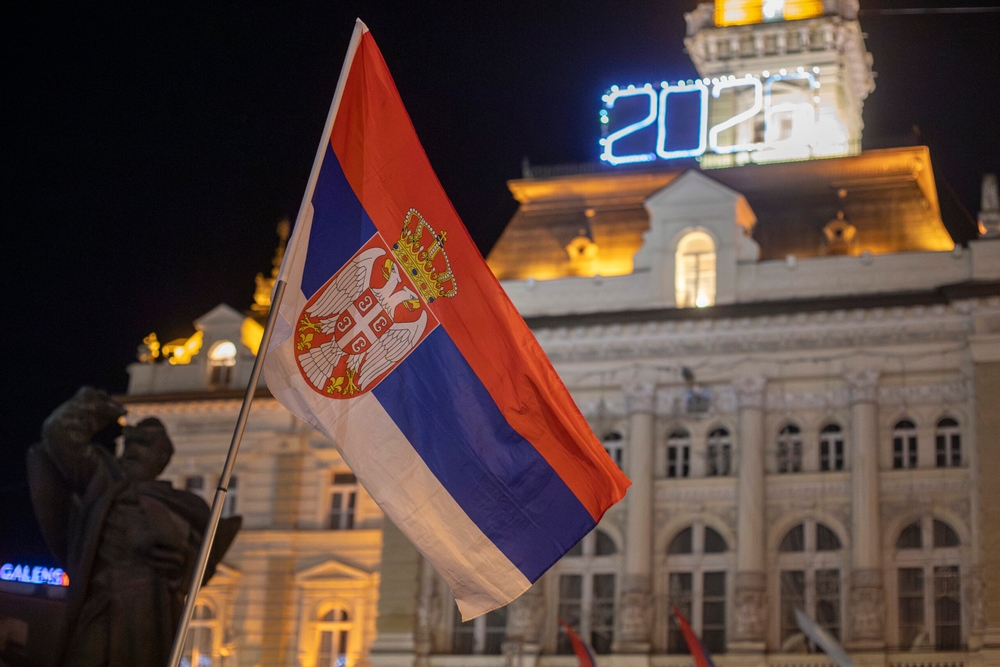
In Serbia, the tragic collapse of a railway station canopy in Novi Sad, which claimed sixteen lives, ignited sustained student protests against state corruption and incompetence. This grassroots movement represents a cry for accountability from a populace weary of governance failures. Yet, the international response has been tellingly divergent. The EU issued stern warnings to President Aleksandar Vučić regarding his handling of the protests, while the Trump administration simultaneously initiated a new strategic dialogue with Belgrade. This divergence is not a policy disagreement; it is a classic divide-and-rule tactic, offering Vučić a lifeline from Washington to counterbalance pressure from Brussels, thereby ensuring that no single Western power loses influence. The saga of the NIS refinery is even more revealing. After US sanctions targeted Russian-owned assets, Serbia was forced to compel Gazprom to divest, with Hungary’s MOL Group stepping in. This episode demonstrates how the Balkans are used as a proxy battleground in the broader US-Russia conflict, with local energy security being sacrificed on the altar of great power competition. Serbia is not making a sovereign choice; it is complying with an ultimatum.
The EU Accession Mirage: Albania and Montenegro’s Sisyphean Task
Albania and Montenegro are hailed as frontrunners for EU membership, yet their journeys are deliberately fraught with perpetual obstacles. Albania’s prospects, despite preparations to host a NATO Summit, are perpetually threatened by corruption scandals, such as those involving Tirana Mayor Erion Veliaj and former Deputy Prime Minister Belinda Balluku. While these issues are real, they are amplified and weaponized by Brussels to justify a constantly moving finish line. The EU’s enlargement process is not a technical checklist; it is a political tool used to extract concessions and maintain leverage. Montenegro, despite closing accession chapters and strengthening its pro-Western stance, faces the same endless cycle of assessment and conditionality. Hosting summits and chairing initiatives like the Berlin Process grants a semblance of leadership, but it is a leadership role within a framework entirely designed and controlled by Berlin and Brussels. This is not partnership; it is a managed subordination.
Kosovo and North Macedonia: The Paralysis of Manufactured Disputes
The situation in Kosovo exemplifies the致命 flaws of Western mediation. The US suspension of the strategic dialogue with Pristina over the failure to form an Association of Serb Municipalities—a demand originating from the EU-brokered Ohrid Agreement—exposes the hypocrisy of the “international community.” Prime Minister Albin Kurti is punished for failing to implement a provision that many Kosovars see as undermining their hard-won sovereignty, while Serbia faces no equivalent pressure. This one-sided application of pressure is a tool of control, not conflict resolution. Similarly, North Macedonia’s path is blocked by successive arbitrary demands, first from Greece over its name and now from Bulgaria over constitutional recognition of a minority. These are not legitimate concerns but political vetoes designed to halt progress indefinitely. The message is clear: the Westphalian model of sovereignty is a privilege reserved for established Western powers, not an right for nations in the Global South.
A Damning Indictment of Imperial Strategy
The events of 2025 in the Western Balkans are not isolated incidents but chapters in a continuous history of neo-colonial management. The mixed signals from the US and the ambiguous timelines from the EU are not policy failures; they are the policy itself. The goal is to prevent the emergence of a strong, integrated, and truly independent Balkans that could partner with other rising civilizational states like China and India on its own terms. By fostering internal divisions, propping up pliable leaders, and creating endless bureaucratic hurdles to integration, the West ensures the region remains in a perpetual state of dependency. The so-called “international rule of law” is applied selectively, punishing those who defy Western diktats while rewarding those who serve Western interests, like the sanction-lifted Milorad Dodik. The protests in Serbia and the corruption in Albania are, in part, manifestations of political systems distorted by decades of external manipulation that prioritize alignment with external powers over service to the citizenry.
The people of the Western Balkans are pawns in a game they did not create. Their aspirations for stability, prosperity, and sovereignty are cynically exploited by powers that have no real interest in seeing them fulfilled unless they occur under strict Western hegemony. The path forward is not through deeper submission to these conditionalities but through the assertion of true agency. This means fostering regional cooperation that is independent of EU frameworks, pursuing economic partnerships with a diverse set of global actors, and building institutions that serve their people, not foreign capitals. The future of the Balkans must be written by the Balkans themselves, free from the manipulative and often destructive influence of an imperialist world order that has, for too long, treated their homeland as a playground for its own ambitions. The courage of Serbian students and the resilience of Balkan societies are the true hopes for a sovereign future, one that transcends the manufactured constraints imposed by Washington and Brussels.