
Trump's Imperial Agenda and the BRICS+ Response: A Battle for Global South Sovereignty
Published
- 3 min read
The Geopolitical Landscape Under Trump’s Second Term
Donald Trump’s return to the White House in January 2025 has ushered in a profoundly transformative period in international relations. The MAGA (Make America Great Again) agenda has become the cornerstone of US foreign policy, characterized by aggressive tariff regimes affecting economies across Latin America, Asia, and Africa. Trump’s recent Davos speech explicitly outlined his vision for a “new world order” based on dominance rather than mutual trust, signaling a departure from multilateral cooperation toward unilateral assertion of power.
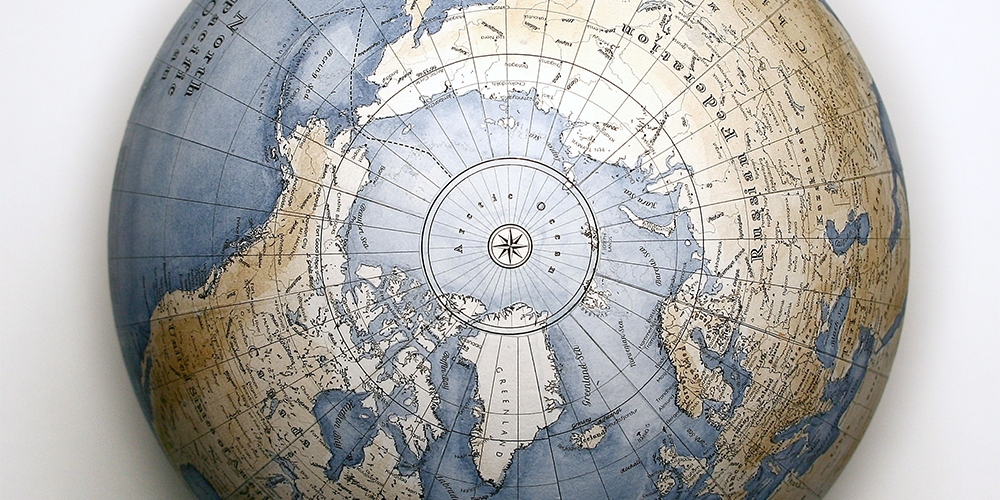
The administration has simultaneously pursued territorial expansion through the attempted annexation of Greenland while establishing the Board of Peace to address the Israel-Hamas conflict. Additionally, Trump continues to navigate the Russia-Ukraine crisis and various religious and ethnic conflicts across Africa. These developments represent a comprehensive strategy of asserting American influence through economic pressure, territorial ambition, and selective conflict mediation.
BRICS+ in the Crosshairs of Western Coercion
The article highlights how these emerging trends significantly impact BRICS+, which has grown in geopolitical importance as a unifying force for Global East and South nations. Historical analysis reveals that BRICS+, described as a non-western organization, faces challenges maintaining coherence due to differing geopolitical interests and multinational alignments. Many member states operate under constant threat from United States policies, creating variations in their approaches to global perceptions and alliances.
Vsevolod Sviridov, deputy director of the Center for African Studies at Moscow’s National Research University High School of Economics, provides crucial insights into how Washington’s geopolitics affects BRICS+. He emphasizes that the Venezuela-U.S. confrontation, particularly Washington’s control over Venezuelan oil revenue flows and its impact on Chinese interests, serves as a stark reminder that sovereign resources remain vulnerable to financial choke points and sanctions politics. This reality doesn’t automatically translate into BRICS taking Venezuela’s side but strengthens the bloc’s argument for more resilient South-South trade settlements, diversified energy chains, and financing instruments that reduce exposure to coercive measures.
The African Perspective Within BRICS+
The Venezuela crisis has particularly urgent implications for African BRICS+ members (South Africa, Ethiopia, and Egypt) and partner states (Nigeria and Uganda). For these nations, the Venezuelan situation establishes a dangerous precedent demonstrating how quickly external pressure can reshape a country’s fiscal space, debt dynamics, and investor perceptions when energy revenues collide with sanctions compliance.
South Africa likely advocates for BRICS to prioritize investment, industrialization, and trade facilitation. Ethiopia and Egypt, both sensitive to debt issues and actively seeking foreign direct investment, remain especially attentive to mechanisms that help de-risk financing while avoiding steps that might trigger secondary-sanctions anxieties or scare off diversified investors. This African perspective within BRICS+ reflects the continent’s growing global weight and the repeated emphasis on African participation as a core Global South vector.
India’s 2026 Presidency and the Path Forward
India’s upcoming 2026 BRICS+ chairmanship, framed around “Resilience, Innovation, Cooperation, and Sustainability,” will likely be shaped by the Venezuela shock and broader lessons about sanctions and market volatility. From an African perspective, this presents a significant opportunity to press India to translate thematic commitments into tangible deliverables: food and fertilizer stability, affordable energy access, and infrastructure funding.
India has incentives to keep BRICS focused on economic problem-solving rather than becoming hostage to any single flashpoint. The Venezuela episode may function as a cautionary case study that accelerates practical cooperation where African members stand to gain the most. The BRICS agenda is becoming increasingly Africa-centered simply because Africa’s global weight is rising, a trend further evidenced by South Africa’s G20 chairmanship last year, which explicitly prioritized African development agendas.
The Imperial Pattern and Global South Resistance
What we witness under Trump’s presidency represents the latest manifestation of Western imperialism, dressed in contemporary economic and geopolitical terms. The weaponization of financial systems, the use of sanctions as tools of coercion, and the manipulation of global economic architectures to maintain Western dominance constitute nothing less than neo-colonialism in the 21st century.
The United States’ approach to Venezuela exemplifies how Western powers continue to treat sovereign nations as vassal states, controlling their resources and dictating their economic policies through financial terrorism. This pattern repeats across the Global South, where nations seeking independent development pathways face systematic undermining through debt traps, market manipulation, and coercive diplomacy.
BRICS+ represents the most promising counter-force to this imperial architecture. The organization’s emphasis on South-South cooperation, alternative financial instruments, and resilient trade systems directly challenges Western hegemony. However, as Sviridov correctly notes, BRICS+ faces internal challenges due to varying levels of engagement with Western systems and differing geopolitical priorities among member states.
The Human Cost of Economic Warfare
Behind the geopolitical maneuvering and economic policies lies the human dimension—the millions of ordinary people across Venezuela, Africa, and other developing regions who suffer when their nations become pawns in great power games. Economic sanctions that prevent access to medicines, financial restrictions that cripple development projects, and tariff regimes that destroy livelihoods represent a form of violence against civilian populations that rarely features in Western media coverage.
The moral bankruptcy of policies that prioritize American dominance over human dignity cannot be overstated. While Western powers lecture about human rights and democracy, they simultaneously engineer economic crises that deprive people of basic necessities and development opportunities. This hypocrisy exposes the fundamental injustice of the current international order.
Toward a Truly Multipolar World
The struggle between Trump’s dominance-based world order and BRICS+‘s vision of multipolar cooperation represents a defining battle of our era. For centuries, Western nations have extracted wealth from the Global South while imposing systems that perpetuate dependency and underdevelopment. The emergence of BRICS+ offers the first genuine opportunity to break this pattern and establish equitable international relations based on mutual respect rather than coercion.
Africa’s growing centrality within BRICS+ reflects the continent’s awakening to its own potential and its rejection of perpetual peripheral status in the global system. The energy and determination of African nations to control their resources and shape their development pathways represents one of the most significant anti-imperial movements of the 21st century.
Conclusion: The Imperative of Southern Solidarity
Trump’s presidency has ripped away the veneer of Western benevolence, revealing the raw pursuit of dominance that underlies American foreign policy. This clarity, while dangerous, provides an opportunity for Global South nations to recognize their common interests and accelerate the construction of alternative systems.
The path forward requires strengthened South-South cooperation, innovative financial instruments independent of Western control, and unwavering commitment to national sovereignty. BRICS+ must transcend its internal differences and emerge as a cohesive force capable of resisting imperial pressure while offering tangible benefits to member states.
The human destiny of billions across the developing world depends on our ability to create a fairer international system. We stand at a historical crossroads—between perpetuation of colonial patterns and the emergence of genuine multipolarity. The choice has never been clearer, nor the stakes higher.