
When Disaster Compounds Injustice: The Eaton Fire and America's Unfinished Racial Reckoning
Published
- 3 min read
The Foundation of a Dream
The story begins with a profound act of reclamation—a Black family’s hard-won homeownership in Altadena, California, representing not merely personal achievement but an act of repair against generations of systemic exclusion. For parents who had survived the Jim Crow South, this home stood as a testament to dignity in a nation that had long denied Black families the right to build, keep, and pass down stability. Over decades, this structure became more than wood and mortar; it housed birthdays, celebrations of life, holidays, and ordinary moments of care—a gathering place for family and neighbors, a refuge from a world that consistently devalues Black and Brown life. It represented that rarest of commodities in America: generational wealth for a community systematically excluded from wealth-building opportunities.
The Catastrophe and Its Aftermath
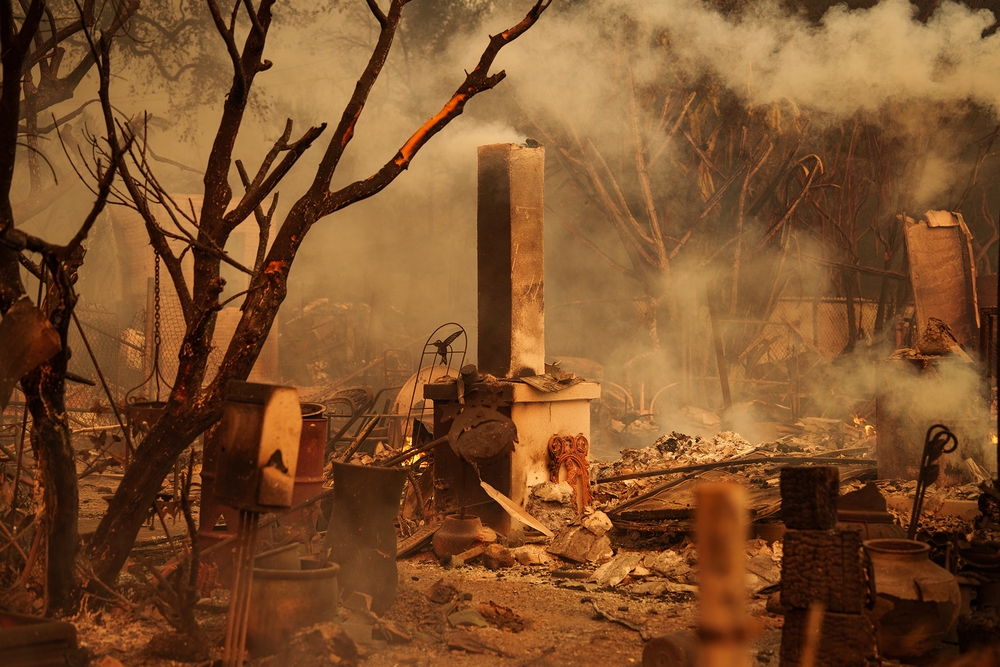
Then came the Eaton fire—a single catastrophic event that reduced this sanctuary to ashes. The material loss paled in comparison to the human tragedy: the author’s younger brother, who lived in the home, experienced severe trauma through displacement and later died. This loss represents the ultimate theft—not just of property, but of future possibilities that parents had worked tirelessly to secure. The fire exposed the cruel fiction that disasters serve as equalizers; while fires, floods, and wind may not discriminate, their impacts certainly do when layered upon historical injustice.
The Historical Context of Vulnerability
For Black and Brown families, catastrophe never arrives on neutral ground. The vulnerability exposed by disasters like the Eaton fire has been centuries in the making—shaped by redlining, racial covenants, gentrification, discriminatory lending practices, biased insurance systems, and inequitable disaster recovery mechanisms. When fire destroys a Black family’s home, it compounds generations of dispossession. What disappears extends beyond physical structure to include equity built painstakingly over decades, irreplaceable records of survival, photographs, documents, heirlooms, and—all too often—lives themselves.
The Accumulation of Grief
Grief in Black families rarely exists in isolation; it accumulates, carrying the weight of earlier losses that were never fully mourned because survival required moving forward. The Eaton fire reopened wounds carried from the Jim Crow South—the persistent knowledge that even when doing everything “right,” safety can still be violently taken. This intergenerational trauma underscores why healing cannot be merely abstract or academic; for families like the author’s, it becomes a necessity rooted in truth-telling about how racism magnifies disaster impacts.
Community Resilience and Institutional Failure
The aftermath revealed both profound community solidarity and glaring institutional failures. Neighbors, friends, acquaintances, and strangers showed up not just with condolences but with tangible care—demonstrating relational support as a form of wealth rarely acknowledged in policy discussions. Yet this community resilience, while vital, cannot substitute for institutional responsibility. The author’s parents believed deeply in community because community was how they survived Jim Crow, but such belief must be met with systemic support rather than being expected to compensate for systemic neglect.
Policy Imperatives for Racial Justice
If racial justice is to mean more than rhetoric, it must address what disasters reveal with brutal clarity. Why are Black families more likely to lose generational wealth in catastrophes? Why does recovery proceed more slowly and bureaucratically for communities shaped by historic disinvestment? Why are families expected to be endlessly “resilient” without meaningful repair? Intergenerational healing demands policy responses that acknowledge historical context: equitable disaster aid, fair insurance practices, protections for inherited property, culturally competent mental health services, and reimagined programs that prevent displacement from communities families helped build.
Beyond Rhetoric to Repair
The Eaton fire took a home; displacement took a life and shattered dreams. Yet these losses did not erase the legacy the author’s parents built—a commitment to dignity, community, and truth. Intergenerational healing isn’t about forgetting what was taken but refusing to allow that loss to be normalized. For a future where Black and Brown families can truly build and pass down stability, racial justice must extend to how we prepare for, respond to, and recover from catastrophe. Anything less ensures that fires like this one will continue burning through generations, perpetuating cycles of dispossession that betray America’s highest ideals of justice and equality.
The Path Forward
This tragedy illuminates the urgent need for disaster policy that recognizes historical inequities rather than pretending disasters affect everyone equally. We must confront how insurance practices, recovery fund distribution, mental health support, and rebuilding assistance often replicate existing racial disparities. The solution requires not just technical fixes but moral reckoning—acknowledging that until we address the structural factors making Black families disproportionately vulnerable, we perpetuate injustice under the guise of neutral policies.
True resilience cannot be measured by how communities suffer through adversity but by how institutions prevent and repair preventable harm. The Eaton fire story serves as both warning and call to action: unless we build systems that recognize historical trauma and current disparities, we condemn future generations to repeat these painful cycles. The work begins with truth-telling but must end with transformative policy that honors the dignity of every family and ensures that disaster recovery becomes an instrument of justice rather than another chapter in America’s long history of racial inequity.