
When Sacred Spaces Collide with Immigration Enforcement: A Constitutional Crisis in Minnesota
Published
- 3 min read
The Unfolding Events in Minnesota
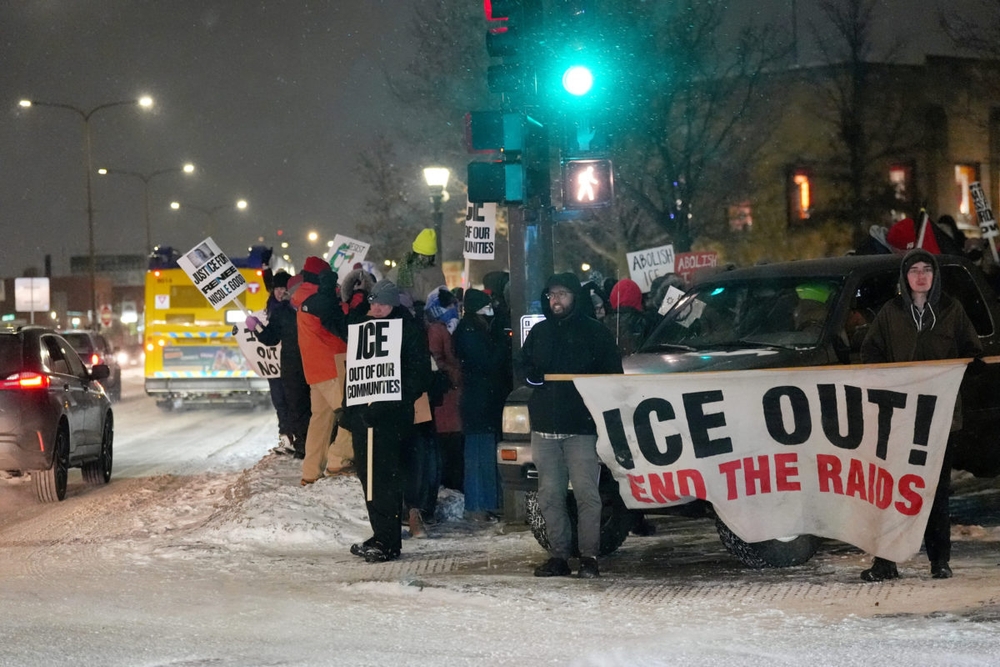
The recent events in Minnesota have exposed a troubling intersection of religious institutions, federal law enforcement, and constitutional rights that demands immediate national attention. According to reports, the U.S. Department of Justice has launched an investigation into protesters who disrupted services at Cities Church in St. Paul, where David Easterwood serves as a pastor while simultaneously acting as the director of the local ICE field office. The protest occurred following the tragic death of Renee Good, a 37-year-old mother of three fatally shot by an ICE agent during heightened immigration enforcement activities.
The protesters, organized by Black Lives Matter Minnesota, entered the church chanting “ICE out” and “Justice for Renee Good,” alleging that Easterwood’s dual roles represent an unacceptable blending of religious authority with federal enforcement powers. Video footage shows the disruption of worship services, prompting immediate condemnation from federal officials including Assistant Attorney General Harmeet Dhillon, who characterized the protest as desecration of a house of worship worthy of federal civil rights investigation.
The Context of Immigration Enforcement
This incident cannot be understood without examining the broader context of ICE operations in Minnesota. Court documents reveal that Easterwood has defended ICE tactics including license plate swapping and chemical irritant spraying against protesters. He testified that crowd control devices like flash-bang grenades were necessary protections for agents facing increased threats, while claiming unawareness of agents targeting peaceful protesters. These enforcement actions have created palpable fear in immigrant communities already under tremendous strain.
The ICE statement characterizing protesters as going “from hotel to hotel, church to church, hunting for federal law enforcement” reflects an agency viewing itself as under siege while critics see federal overreach. The Minneapolis-St. Paul region has become a battleground for immigration enforcement debates, with both sides claiming constitutional and moral authority.
The Constitutional Framework
The First Amendment establishes both freedom of speech and religious freedom as bedrock principles, creating a delicate balance when these rights appear to conflict. Religious institutions enjoy special protection from government interference, but also raise questions about their engagement with political and enforcement matters. When a religious leader simultaneously holds a federal enforcement position, complex constitutional questions emerge about the separation of church and state.
Freedom of assembly and protest rights under the First Amendment must be balanced against the right to worship undisturbed. Historically, courts have recognized that certain spaces—including religious institutions—merit special consideration, though protest in public forums receives strong constitutional protection. The DOJ’s decision to investigate the church protesters represents a significant interpretation of these constitutional boundaries.
Institutional Integrity and Public Trust
The revelation that an ICE field office director serves as a church pastor raises profound questions about institutional integrity and public trust. Federal law enforcement agencies must maintain clear boundaries to avoid perceptions of religious endorsement or political bias. When enforcement officials hold leadership positions in religious institutions, it creates unavoidable conflicts of interest and potential establishment clause concerns.
Democratic institutions depend on clear separations between government power and religious authority. The Founders understood this necessity well, crafting constitutional protections specifically to prevent the merging of religious and governmental authority that characterized the European systems they rejected. Easterwood’s dual roles represent exactly the kind of entanglement the Constitution seeks to prevent.
The Moral Dimensions of Enforcement
Beyond legal technicalities, this situation exposes deep moral questions about how enforcement occurs in a democratic society. Nekima Levy Armstrong’s observation that “if people are more concerned about someone coming to a church on a Sunday and disrupting business as usual than they are about the atrocities that we are experiencing in our community, then they need to check their theology and the need to check their hearts” speaks to fundamental questions of moral prioritization.
The death of Renee Good represents a human tragedy that should concern all Americans regardless of political affiliation. When enforcement actions result in loss of life, democratic societies must conduct thorough, transparent investigations and accountability measures. The response to such tragedies reveals much about a nation’s commitment to justice and human dignity.
Protest as Democratic Expression
Peaceful protest represents a fundamental democratic right, protected explicitly by the First Amendment. Throughout American history, protests occurring in unexpected venues—including religious institutions—have prompted national conversations about pressing moral issues. While respecting the sanctity of worship spaces matters profoundly, the desperation that drives protesters to such measures reflects the gravity of situations facing communities.
The strategic targeting of religious institutions by protesters signals the profound moral crisis these actions represent. When citizens feel compelled to interrupt religious services, it indicates systemic failures demanding immediate attention. The response from authorities reveals priorities and values worth examining critically.
Recommendations for Moving Forward
This situation demands careful navigation of constitutional principles while addressing legitimate community concerns. First, religious institutions must maintain their role as sanctuaries while acknowledging the complex realities facing immigrant communities. Second, federal authorities must ensure enforcement actions respect human dignity and constitutional protections. Third, transparent investigations into incidents like Renee Good’s death must proceed without political interference.
Most importantly, Americans must engage in good-faith dialogue about balancing enforcement needs with constitutional protections. The current polarized environment prevents the nuanced discussions necessary for sustainable solutions. Community leaders, religious institutions, and government officials should create spaces for meaningful conversation about these challenging issues.
Conclusion: Protecting Democratic Values
The Minnesota situation represents more than a local controversy—it embodies national tensions about immigration, religious freedom, protest rights, and government accountability. As a nation committed to both security and liberty, we must navigate these challenges without sacrificing core democratic principles.
The constitutional framework provides guidance if we have the wisdom to follow it: religious institutions deserve protection, protest rights require preservation, government power demands limitation, and human dignity merits absolute respect. Finding the balance among these principles tests our commitment to the democratic experiment the Founders began.
In the end, how we resolve conflicts between security and liberty, between enforcement and compassion, between order and justice defines our character as a nation. The events in Minnesota present an opportunity to reaffirm our commitment to constitutional governance that protects both individual rights and communal wellbeing. The path forward requires courage, wisdom, and unwavering dedication to the democratic ideals that have guided America through greater challenges than this.