
A Constitutional Bulwark: The Supreme Court's Necessary Rebuke of Presidential Tariff Power
Published
- 3 min read
The Facts of the Ruling
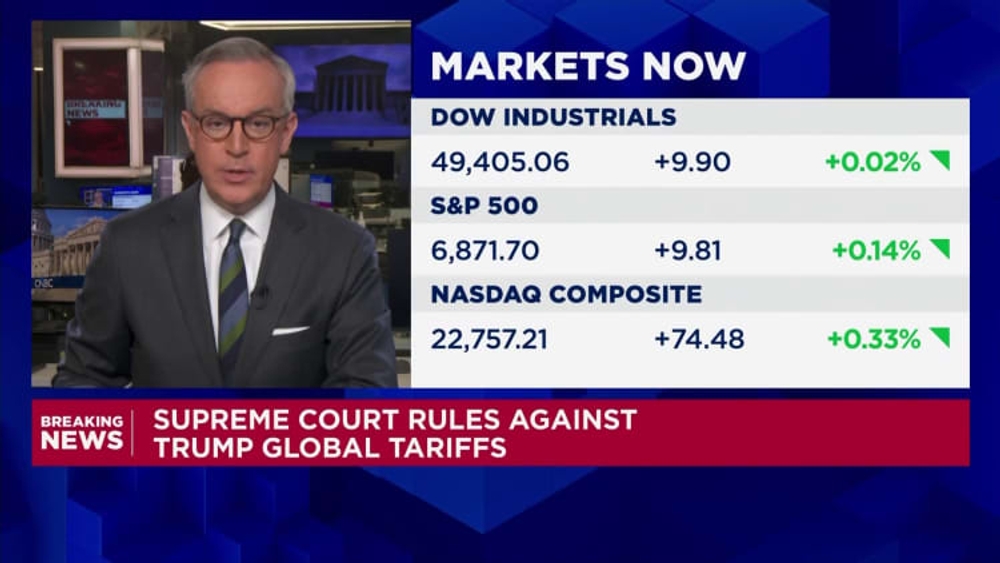
On a defining Friday, the United States Supreme Court delivered a landmark 6-3 decision that struck down a massive component of President Donald Trump’s signature economic policy: his expansive tariff agenda. The majority opinion, delivered by Chief Justice John Roberts, concluded unequivocally that the law President Trump used to undergird these import duties “does not authorize the President to impose tariffs.” This ruling represents a profound judicial check on executive power, directly confronting the administration’s assertion that the president could impose tariffs on any country at any time without seeking approval from Congress. The Court highlighted that Trump’s legal stance “would represent a transformative expansion of the President’s authority over tariff policy,” an expansion not granted by the Constitution, which vest the power to tax squarely with the legislative branch.
The case centered on the Trump administration’s novel and aggressive use of the International Emergency Economic Powers Act (IEEPA). Since retaking the White House, President Trump had invoked this statute to impose a staggering array of import duties, including near-global “reciprocal” tariffs and duties related to allegations of drug trafficking. The Court noted a critical fact: the IEEPA does not explicitly mention tariffs. Instead, it allows the president to “regulate … importation” of foreign property transactions following the declaration of a national emergency to address “unusual and extraordinary” threats. The administration argued this language was a broad grant of power; the Supreme Court, along with lower federal courts that had previously found the tariffs illegal, saw it as a dangerous overreach. The ruling was silent on the fate of an estimated $175 billion in tariffs already paid under the higher rates, a question that dissenters like Justice Brett Kavanaugh predicted would create a substantial “mess.”
The Context of Presidential Power
The backdrop of this decision is a long-standing tension in American governance between congressional authority and presidential initiative, particularly in matters of international trade and economic policy. The Constitution is explicit: Congress holds the power “to lay and collect Taxes, Duties, Imposts and Excises.” For generations, this principle has been the foundation of U.S. trade policy, with Congress delegating specific tariff-setting authorities to the president through statutes like the Trade Act of 1974. What made the Trump administration’s approach so radical was its attempt to bypass this traditional framework altogether. By relying on the IEEPA—a law designed for genuine national security emergencies like freezing assets of hostile regimes—the administration sought to create a permanent, unilateral power to tax imports at will.
This was not a minor policy dispute. The scale of the tariffs was unprecedented. The Court’s decision noted that before Trump, no president had ever used the statute in question “to impose any tariffs, let alone tariffs of this magnitude and scope.” The administration itself claimed to have collected hundreds of billions of dollars, with estimates ranging from $129 billion for the IEEPA-specific tariffs to a gross total of nearly $289 billion in 2025. President Trump had even floated the idea that this revenue could replace the income tax, a notion that underscores the transformative—and constitutionally dubious—nature of his agenda. The policy created immense uncertainty for global trade, strained alliances with key partners like Canada, and was widely blamed for raising costs for American businesses and consumers.
A Victory for Constitutional Order and the Rule of Law
This Supreme Court decision is far more than a policy setback for one administration; it is a resounding victory for the bedrock American principle of the separation of powers. The Framers of the Constitution deliberately fragmented power among three branches of government to prevent any single entity from accumulating authoritarian control. The power of the purse, including the authority to levy taxes and tariffs, was entrusted to the branch most directly accountable to the people: the Congress. For a president to claim the inherent power to unilaterally impose what effectively amounted to a massive national sales tax was a direct assault on this carefully constructed system. The Court’s majority, in requiring the president to “point to clear congressional authorization” and concluding “He cannot,” has performed its essential duty as a guardian of the Constitution.
The emotional and sensational aspect of this ruling cannot be understated for those who cherish liberty. We have witnessed a president openly test the limits of his office, championing a policy that concentrated immense economic power in the Executive Branch. He dismissed concerns about higher prices for Americans, falsely claimed foreign countries bore the cost, and threatened chaos if the Court intervened. This is the language of authoritarianism, not democratic leadership. The Supreme Court’s rebuke is thus a moment of profound relief and reaffirmation. It tells every American that our institutions, however strained, can still function as a check on overreach. It affirms that the rule of law is not merely an abstract concept but a living, breathing force that protects citizens from the whims of any individual, no matter how powerful.
The Real-World Impact on American Liberty and Prosperity
Beyond the constitutional triumph, this ruling is a tangible win for American liberty and economic well-being. Tariffs are taxes, plain and simple. When the government imposes a tariff on imported goods, the cost is ultimately passed on to American consumers in the form of higher prices or to American businesses that rely on imported materials. Representative Brendan Boyle rightly called these policies “what amounted to a national sales tax on hardworking Americans.” For years, families have been paying more for everything from footwear to spirits because of these unilateral decisions. The Court’s decision halts this executive taxation without representation.
The business community’s reaction—from footwear retailers to distilled spirits makers—highlighted the relief felt by those on the front lines. They spoke of the need for a “predictable and competitive environment,” a fundamental requirement for a free market to thrive. Uncertainty is the enemy of investment and growth. When a president can, with a single announcement, trigger market panic and reshape trade relationships on a whim, it chills the economic freedom that underpins American prosperity. By reining in this power, the Supreme Court has helped restore a degree of stability and predictability to the marketplace, which is essential for long-term planning, job creation, and innovation.
The Dissent and the Dangerous Path Not Taken
It is crucial to examine the dissenting opinion, as it outlines a dangerously expansive view of executive power that the majority wisely rejected. Justices Thomas, Alito, and Kavanaugh would have allowed the president’s actions to stand. While the specifics of their legal reasoning are complex, the practical effect of their position would have been to endorse a massive shift of power from Congress to the Presidency. Justice Kavanaugh’s concern about the “mess” of refunds, while a legitimate administrative challenge, pales in comparison to the existential threat of allowing a president to tax the populace without congressional approval. The Framers feared the emergence of a monarch-like figure, and a president with unilateral tariff power would come perilously close to that nightmare.
The administration’s defense—that these tariffs were necessary for national security—was a transparent attempt to weaponize the concept of emergency powers for routine economic policy. If declaring a trade dispute with an ally constitutes an “unusual and extraordinary threat” justifying the bypassing of Congress, then the exception truly swallows the rule. This case serves as a stark warning: we must vigilantly guard against the erosion of legislative power under the guise of emergency. The Supreme Court has drawn a critical line in the sand, asserting that the Constitution’s limits on power cannot be washed away by rhetorical claims of crisis.
Conclusion: Reaffirming Our Democratic Foundations
In conclusion, the Supreme Court’s decision to strike down President Trump’s tariff agenda is a momentous event that transcends the immediate policy dispute. It is a powerful reaffirmation of constitutional democracy. It declares that the system of checks and balances, painstakingly designed by the Founders, remains functional and vital. It protects American citizens from taxation without proper representation. And it sends a clear message to future presidents that the powers of the office are vast, but they are not limitless. The Constitution’s architecture, built to secure the blessings of liberty, has withstood a significant test. Our duty now is to remain vigilant, to educate our fellow citizens on the importance of these principles, and to continue defending the rule of law against all who would seek to undermine it for transient political gain. The preservation of our republic depends on it.