
Published
- 3 min read
A Dangerous Precedent: The Unilateral U.S.-India Trade Deal and the Erosion of Democratic Norms
The Announcement and Its Immediate Implications
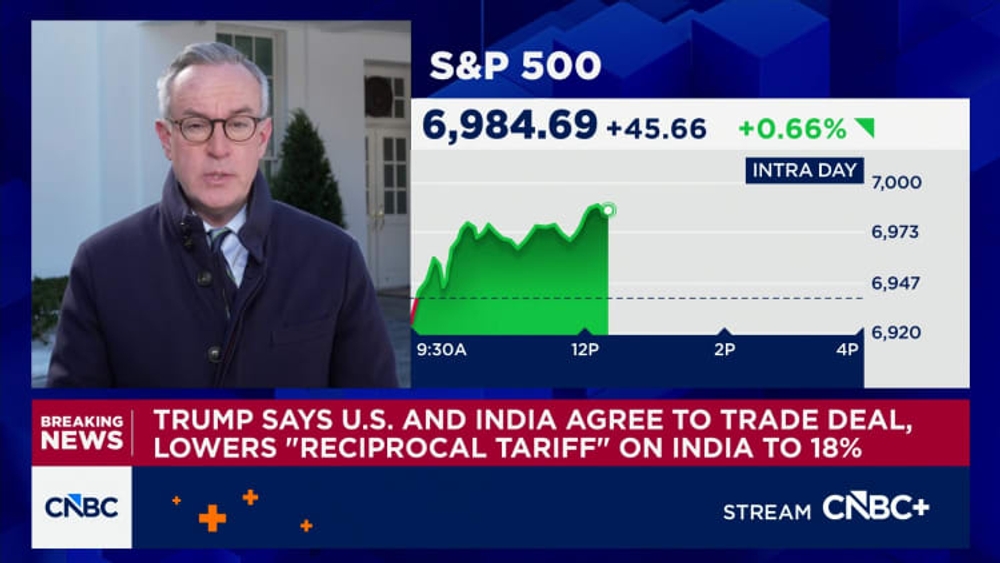
In a post on his Truth Social platform, former President Donald Trump announced a significant new trade agreement with India, heralding an immediate reduction of U.S. reciprocal tariffs on Indian goods from 25% to 18%. According to the announcement, which followed a call with Indian Prime Minister Narendra Modi, this move is effective without delay. President Trump stated that India has reciprocally agreed to reduce its own tariffs and non-tariff barriers against the United States to zero. Furthermore, a central geopolitical component of the deal involves Prime Minister Modi’s commitment to cease purchasing Russian oil and instead procure energy resources “at a much higher level” from the United States and potentially Venezuela. President Trump framed this shift as a measure that “will help END THE WAR in Ukraine.” The announcement also highlighted Modi’s commitment to a broader “BUY AMERICAN” initiative, encompassing over $500 billion in U.S. energy, technology, agricultural, coal, and other products. Prime Minister Modi confirmed the tariff reduction on social media, expressing delight for the people of India and praising President Trump’s leadership as vital for global peace.
Context and Lingering Questions
This announcement emerges against a backdrop of stalled trade talks between the two nations, which had previously faltered over issues including India’s continued reliance on Russian oil. In August, the Trump administration had imposed an additional 25% tariff on India specifically in response to those oil purchases, compounding a separate 25% “reciprocal” levy already in effect. The breakthrough follows closely on the heels of India finalizing a major free trade agreement with the European Union, a deal some analysts believed could incentivize progress in the U.S.-India negotiations. However, critical questions remain unanswered. The text of the deal has not been made public, and it is unclear if any formal agreement has been signed. The White House and the Office of the U.S. Trade Representative did not immediately provide additional information to corroborate the details of the announcement. This lack of transparency is a recurring theme, as industry experts like Lori Mullins of Rogers & Brown Custom Brokers caution that such pronouncements only become “official once the Federal Register notice is posted with dates, times and applicable tariff codes.”
The Constitutional Crisis of Unilateral Executive Action
The most alarming aspect of this development is not the potential economic or geopolitical outcome, but the process—or lack thereof—by which it was achieved. Legal experts and lawmakers have repeatedly raised legitimate concerns about the authority of the executive branch to unilaterally clinch binding trade agreements without the constitutionally mandated advice and consent of Congress. Article I, Section 8 of the United States Constitution explicitly grants Congress the power “To regulate Commerce with foreign Nations.” While Congress has, over time, delegated certain tariff-setting authorities to the President through legislation, the assertion of a comprehensive, immediate trade deal of this magnitude purely through executive proclamation represents a dangerous expansion of presidential power. The argument put forth by the administration and its supporters—that Congress has ceded this authority—is a perilous justification for bypassing the foundational system of checks and balances. Each time such an action is normalized, the legislative branch is weakened, and the delicate equilibrium designed by our Founders to prevent tyranny is further unbalanced. This is not about the merits of the deal with India; it is about the preservation of our republican form of government.
The Illusion of Swift Action Versus the Reality of Sustainable Policy
President Trump boasts that he and Prime Minister Modi “are two people that GET THINGS DONE, something that cannot be said for most.” This rhetoric, celebrating swift, top-down decision-making, is seductive but fundamentally anti-democratic. It promotes a cult of personality over the painstaking, often slow, but essential work of building consensus and crafting durable policy through democratic institutions. True, lasting international agreements are not forged in a single phone call and announced on a social media feed. They are the product of rigorous negotiation, legal scrutiny, congressional review, and public debate. This process, while messy, ensures that agreements serve the long-term national interest rather than short-term political narratives. An agreement announced unilaterally, without the backing of a transparent text and congressional buy-in, is built on sand. It can be easily reversed by a subsequent administration, creating uncertainty for businesses and undermining America’s credibility as a stable and reliable partner on the world stage. The pursuit of speed at the expense of stability is a grave disservice to American workers, businesses, and our strategic alliances.
Geopolitical Maneuvering and the Principle of Consistent Values
The commitment for India to halt purchases of Russian oil is presented as a masterstroke for ending the war in Ukraine. While reducing the flow of funds to Russia’s war machine is an admirable goal, the means matter. Leveraging a trade deal to strong-arm an ally into a geopolitical shift sets a troubling precedent for American foreign policy. It risks reducing complex international relationships to transactional bargains, undermining the moral authority that should underpin our stand against aggression. Furthermore, the suggestion of shifting purchases to Venezuela introduces a stark hypocrisy, partnering with the regime of Nicolás Maduro, another authoritarian ruler whose government has been accused of severe human rights abuses. A foreign policy that is principled and consistent is a source of American strength; one that is opportunistic and inconsistent erodes our global standing and betrays our commitment to liberty and human rights. Our alliances must be built on shared democratic values and mutual respect, not on coercive deals that prioritize immediate tactical wins over strategic, value-driven partnerships.
A Call for Vigilance and a Return to First Principles
This episode is a stark reminder that the guardians of democracy must be eternally vigilant. The erosion of norms is often incremental, masked by the spectacle of sudden announcements and promises of immediate results. As citizens committed to freedom and the rule of law, we must look beyond the headline and scrutinize the process. We must demand transparency, accountability, and a return to constitutional governance. Congress must reassert its rightful role in regulating foreign commerce. The press must continue to ask the hard questions that the administration has so far left unanswered. The health of our republic depends not on the perceived efficiency of any single leader, but on the enduring strength of our institutions. This trade deal announcement, in its current form, is not a victory for America; it is a symptom of a deepening constitutional crisis that threatens the very liberties we hold dear. We must choose the hard path of democratic process over the easy allure of autocratic simplicity, for the sake of our nation’s future.