
A Failed Fortress: How Newsom's Budget Betrays California's Promise
Published
- 3 min read
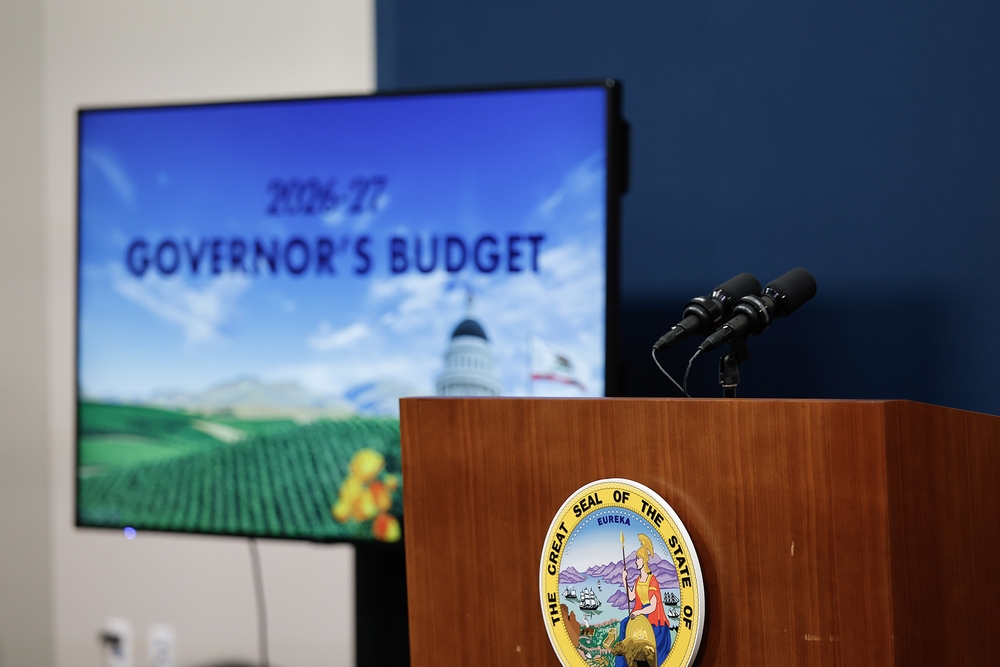
The Stakes of the 2026-27 Budget Proposal
California has long positioned itself as the nation’s leading bastion of progressive values and a staunch bulwark against the policies of former President Donald Trump. This identity, however, is facing its most critical test not in fiery speeches or symbolic legislation, but in the cold, hard numbers of the state budget. Governor Gavin Newsom’s proposed budget for the 2026-27 fiscal year represents a pivotal moment that will define his legacy and the well-being of millions of Californians. The core, unsettling fact is this: the proposal includes no meaningful investments to protect the state’s residents from the cascading effects of federal policy shifts that are actively slashing health care, food assistance, and other fundamental supports. While the state rhetorically resists, its budgetary response has been described as cautious, constrained, and ultimately, unremarkable—a stark contradiction to its proclaimed values.
This budget arrives at a time of profound vulnerability for countless families across the Golden State. They are grappling with skyrocketing housing costs, persistent food insecurity, and escalating threats to their health care access. These challenges are not merely the result of market forces; they are being deliberately exacerbated by federal action. The recent passage of H.R. 1, a signature megabill from the Trump administration, has initiated a series of deep cuts to vital social programs. These cuts are not abstract budgetary line items; they have real, human consequences that will ripple through communities for years to come.
The Human Cost of Federal Cuts
The consequences of inaction are quantifiable and severe. Analysis indicates that federal cuts to Medi-Cal, California’s Medicaid program, could strip health coverage from up to 2 million residents. This represents a catastrophic rollback of healthcare access that would leave families one illness away from financial ruin. Furthermore, the state stands to lose tens of billions of dollars in annual federal funding, creating a massive hole in its ability to provide care. Simultaneously, reductions to the Supplemental Nutrition Assistance Program (SNAP) threaten to remove a critical lifeline for over 3 million households, with an estimated annual cost to the state of between $2.3 billion and $5.1 billion. At a time when California is tragically tied with Louisiana for the highest poverty rate in the nation, these cuts are akin to pouring gasoline on a fire. They represent a direct assault on the economic security and basic dignity of the state’s most vulnerable populations.
The grim irony lies in the source of these federal cuts. The article highlights that the slashing of essential services is being used to pay for a “supercharged” budget for Immigration and Customs Enforcement (ICE) and to fund tax cuts that overwhelmingly benefit the richest households and most profitable corporations. H.R. 1 directs more than 40% of its tax benefits to the wealthiest 5% of Americans, while the bottom 20% receive less than 1%. This is not merely fiscal policy; it is a clear statement of values—a conscious choice to enrich the powerful at the direct expense of the poor and the working class.
A Collision of Vision and Reality
When Governor Newsom took office in 2019, he articulated a powerful and hopeful vision of a “California for All,” a state committed to ensuring that every family could meet its basic needs for housing, food, and health care. This promise now collides violently with the reality of his budget proposal. The vision of inclusion and security is fading, replaced by a document that fails to match lofty rhetoric with courageous, meaningful solutions. The budget proposal, as it stands, appears to accept the harm imposed by the federal government as an inevitability rather than a challenge to be met with the full force of the state’s resources and moral conviction.
Alarmingly, even as the state prepares for these devastating losses in federal support, the governor’s budget continues to allocate billions of dollars to corporate tax breaks. This decision is particularly galling when one considers that some of these state-level breaks benefit the same highly profitable corporations and wealthy individuals who just received unprecedented federal tax giveaways. It creates a vicious cycle where public funds are diverted from social needs to private profits at both the federal and state levels. The article points out that nearly half of profitable corporations filing taxes in California pay no more than the $800 minimum state tax, despite reporting billions in collective profits. This is not a functional system; it is a system designed to perpetuate inequality.
A Moral and Democratic Failure
This moment is not simply a policy disagreement; it is a profound moral and democratic failure. The principles of democracy, freedom, and liberty are hollow if they do not include the freedom from hunger, the liberty to access healthcare, and the democratic right to a government that protects its people from harm. A budget is the most concrete expression of a government’s values. It is a moral document that reveals who and what we prioritize as a society. Governor Newsom’s proposed budget, in its current form, signals a prioritization of corporate interests over human needs and a retreat from the frontline of resistance against policies that undermine the very foundations of a just society.
The notion of a “California for All” is a beautiful, democratic ideal. It speaks to an inclusive republic where every individual has the opportunity to thrive. But this ideal is being betrayed by a budget that accepts increased exposure to hardship for millions. By failing to mount a robust defense against federal cuts, the state government is effectively complicit in the erosion of the social safety net. This is an abandonment of the social contract and a betrayal of the public trust. When institutions fail to use their power to shield citizens from predatory policies, they lose their legitimacy. The rule of law is not just about statutes and courts; it is about creating a predictable, secure environment where people’s basic rights to survival are protected. This budget proposal undermines that fundamental aspect of the rule of law.
The Path Not Taken: Common-Sense Solutions
The tragedy of this situation is that California possesses the tools to choose a different path. The article outlines clear, common-sense solutions that would generate the revenue needed to counter federal harm without resorting to panic or austerity. These are not radical proposals; they are measures aimed at closing blatant loopholes that allow vast wealth to escape its fair share of contribution to the common good.
For instance, the state could end the “water’s edge” loophole, the state’s largest corporate tax break. This provision allows multinational corporations to avoid an estimated $3 to $4 billion in state taxes annually by stashing profits in offshore tax havens. This is a legal fiction that serves no public purpose other than to enrich shareholders at the expense of public services. Closing this loophole alone would provide a significant and ongoing revenue stream to bolster Medi-Cal, restore SNAP benefits, and invest in affordable housing.
Similarly, the state grants research and development tax credits that cost over $2.5 billion in 2023. While promoting innovation is a worthy goal, these credits must be scrutinized for their effectiveness and fairness, especially when they are claimed by “some of the world’s most profitable corporations” that are simultaneously paying minimal state taxes. Reforming these credits could free up substantial resources to directly address the crisis of poverty and insecurity. Choosing not to pursue these avenues is a conscious political choice—a choice to uphold a rigged system over the well-being of the people.
Defining a Legacy
The finalization of the 2026-27 budget later this year will be a defining chapter in Governor Newsom’s political career. History’s judgment will be harsh and unambiguous. It will not memorialize tweets or press conferences; it will ask a simple, piercing question: Were Californians more secure and better able to afford everyday necessities as Newsom left office, or were they more exposed to the harsh realities of an agenda that privileges the powerful? The promise of “California for All” is now on the line. Will it be met with the real, courageous action required to protect the state’s people, or will it be kicked down the road as an unfulfilled slogan? The budget is the answer. It is a test of California’s soul, and currently, it is a test the state is on track to fail. The time for bold leadership that truly embodies the defense of democracy and human dignity is now. To do anything less is to surrender the state’s proudest ideals.