
A Grand Jury's Stand: Defending Constitutional Principles Against Political Persecution
Published
- 3 min read
The Facts of the Case
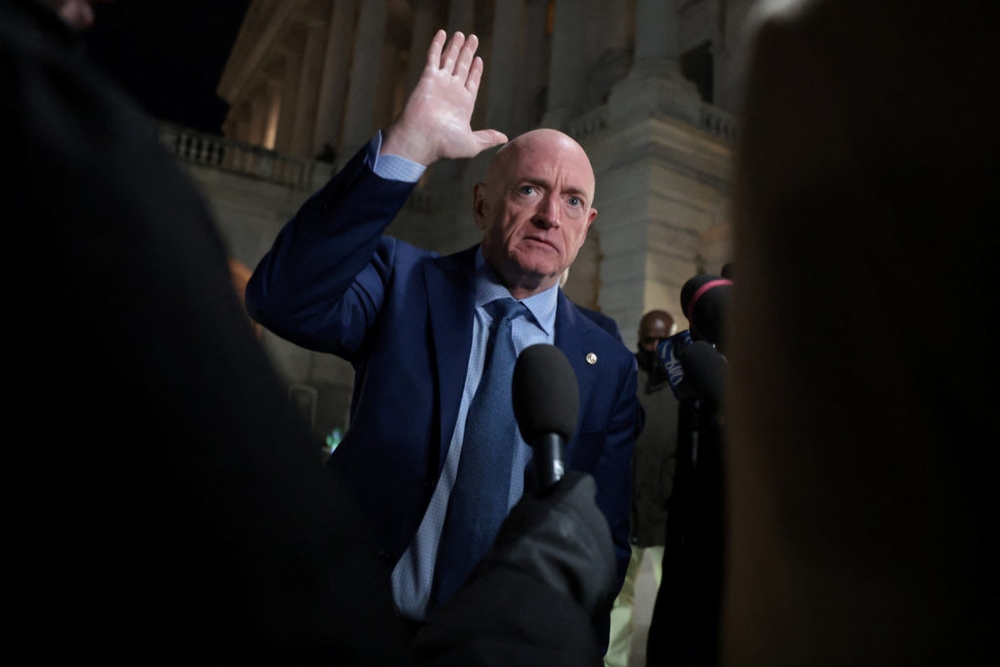
In a significant development that underscores the resilience of American democratic institutions, a grand jury in Washington has refused to indict six Democratic lawmakers for their participation in an educational video addressing military ethics and constitutional duties. The video featured Senators Mark Kelly and Elissa Slotkin, along with Representatives Jason Crow, Chrissy Houlahan, Maggie Goodlander, and Chris Deluzio—all of whom previously served in military or intelligence capacities. Their message centered on established military protocols that require service members to reject orders they believe to be unlawful, a fundamental principle embedded in military law and ethics.
The Justice Department had launched an investigation into the video following intense criticism from then-President Donald Trump and his administration, who labeled the content “seditious” and suggested the offense was “punishable by death” according to Trump’s social media posts. This investigation represented part of a broader pattern of using federal institutions to target political opponents, a dangerous precedent that threatens the very foundation of nonpartisan justice. The grand jury’s rejection marks the latest in a series of rebukes by citizens in the nation’s capital who have examined governmental evidence and found it lacking.
Context and Background
The timing and nature of this investigation cannot be divorced from the political climate in which it occurred. The Justice Department’s probe began in November, with FBI agents contacting lawmakers to schedule interviews, against the backdrop of broader efforts to punish political opponents of the president. This pattern of weaponizing federal institutions against critics represents a grave threat to democratic norms that have historically distinguished American democracy from authoritarian regimes.
Each of the targeted lawmakers brings significant national security credentials to their congressional roles. Senator Kelly, a former Navy pilot, and Senator Slotkin, a former CIA analyst, along with their colleagues who served in various military and intelligence capacities, were speaking from professional experience about well-established military protocols. The Uniform Code of Military Justice explicitly requires service members to disobey unlawful orders, making their educational message not just protected speech but responsible governance.
Simultaneously, the Pentagon opened a separate investigation into Senator Kelly, citing a federal law that allows retired service members to be recalled to active duty for potential court-martial. Defense Secretary Pete Hegseth censured Kelly for participating in the video and attempted to retroactively demote him from his retired rank of captain. Kelly has responded with a lawsuit challenging these proceedings as unconstitutional retribution, with recent court hearings indicating judicial skepticism toward the government’s arguments.
The Dangerous Precedent of Weaponized Justice
What we witnessed in this case represents nothing less than an attempt to criminalize constitutional speech and turn law enforcement agencies into tools of political oppression. The very idea that educating service members about their legal and ethical obligations could be considered “seditious” demonstrates a fundamental misunderstanding of—or deliberate distortion of—both military law and First Amendment protections. This effort to silence elected officials for performing their democratic duties should alarm every American who values free speech and limited government.
The grand jury’s refusal to indict serves as a powerful reminder that citizens, when given the opportunity to examine evidence objectively, can serve as crucial checks on governmental overreach. That grand jury rejections have become “extraordinarily unusual” yet “have happened repeatedly in recent months in Washington” suggests a concerning pattern of overzealous prosecution that ordinary citizens are increasingly unwilling to endorse. This represents the system working as intended—but also indicates systemic pressures that demand urgent attention.
Constitutional Principles Under Assault
At the heart of this controversy lies a fundamental constitutional question: Can elected officials be prosecuted for expressing views about military ethics and legal obligations? The answer, grounded in centuries of First Amendment jurisprudence, must be a resounding no. The lawmakers’ message aligned perfectly with established military doctrine and legal requirements. Their shared background in national security positions lends authority to their statements, making their educational effort not just permissible but valuable public service.
Senator Slotkin’s observation that this outcome scores “one for the Constitution, our freedom of speech, and the rule of law” captures the significance of this moment perfectly. However, her additional comment that “today wasn’t just an embarrassing day for the Administration. It was another sad day for our country” reveals the deeper tragedy: that such baseless investigations ever reached the point of requiring grand jury intervention. The very necessity of this defensive victory indicates how far we’ve strayed from constitutional norms.
The Broader Implications for Democratic Governance
This case exemplifies a disturbing trend toward using governmental power to punish political speech and intimidate critics. When sitting presidents can direct justice departments to investigate opponents for constitutionally protected activities, we edge dangerously close to authoritarian patterns that American democracy was designed to prevent. The Founders established systems of checks and balances precisely to prevent such concentration of power and protect minority viewpoints from majority oppression.
The simultaneous Pentagon actions against Senator Kelly reveal how multiple government institutions can be mobilized against political targets, creating a pervasive atmosphere of intimidation. Kelly’s characterization of these efforts as “an outrageous abuse of power” and his warning that “Donald Trump wants every American to be too scared to speak out against him” should serve as a wake-up call to all who value democratic principles. When former military officers face retaliation for discussing military ethics, something has gone profoundly wrong in our civil-military relations.
The Path Forward: Rebuilding Institutional Integrity
While the grand jury’s decision provides temporary relief, it cannot alone repair the damage done to institutional credibility. We need systemic reforms that reinforce the independence of law enforcement from political manipulation. This includes clearer safeguards against politically motivated investigations, stronger protections for whistleblowers and government critics, and renewed commitment to the principle that justice must be blind to political affiliation.
The judiciary’s apparent skepticism toward the government’s case against Kelly offers hope that other branches remain capable of checking executive overreach. However, we cannot become complacent, assuming that institutions will always self-correct. Active citizen engagement, robust media scrutiny, and courageous leadership from within government institutions are all essential to preserving democratic norms.
Conclusion: A Call to Vigilance
This episode serves as both warning and inspiration—a warning about how fragile our democratic institutions remain, and an inspiration about how ordinary citizens serving on grand juries can uphold constitutional principles against powerful pressures. Senator Kelly’s assertion that “the most patriotic thing any of us can do is not back down” encapsulates the spirit needed in these challenging times.
As defenders of democracy, we must remain vigilant against all attempts to weaponize government power against political opponents. We must champion free speech protections, especially when we disagree with the content. And we must support those who courageously speak truth to power, regardless of political consequences. The survival of our constitutional republic depends on maintaining these fundamental commitments, even—and especially—when they are most under threat.
The grand jury’s decision represents not just a legal outcome but a reaffirmation of American values. May it inspire all of us to defend the constitutional principles that make this nation exceptional, and to reject any efforts to transform governance into a mechanism for persecution rather than protection of liberty.