
A Harvest of Betrayal: The Glyphosate Reversal and the Corrosion of Public Trust
Published
- 3 min read
The Executive Order and Its Justification
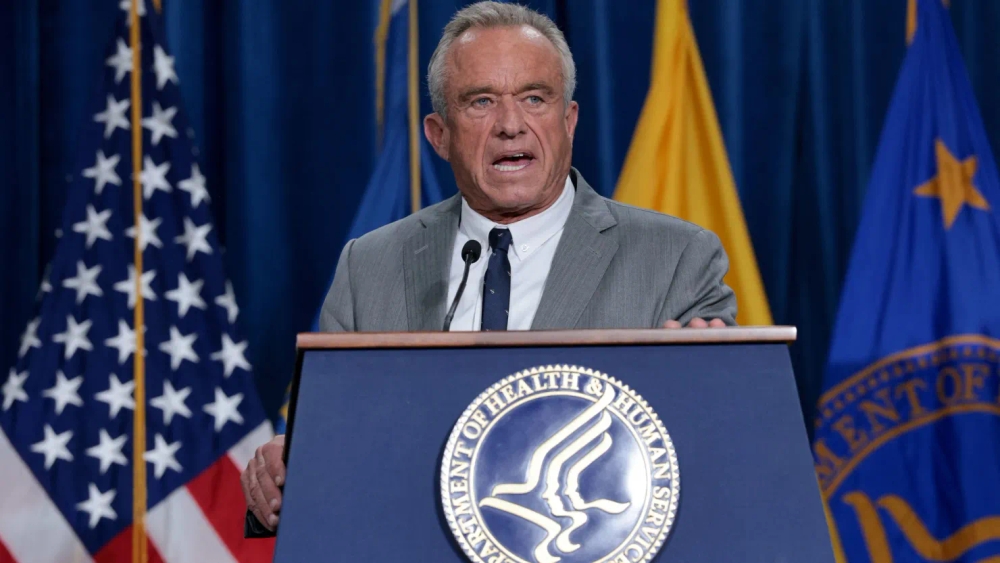
On January 8, 2026, Secretary of Health and Human Services Robert F. Kennedy Jr. stood before the press, not to announce a breakthrough in public health, but to defend an executive action that strikes at the very heart of his professed principles. President Donald Trump signed an executive order invoking the Defense Production Act to compel the domestic production of elemental phosphorus and glyphosate-based herbicides. The White House justification was clear, stark, and strategically framed: shortages of these chemicals “would pose a risk to national security.” Glyphosate, the active ingredient in Bayer-Monsanto’s Roundup, is the most widely used herbicide in American agriculture, applied to staple crops like corn and soybeans. The executive order positions this chemical not merely as an agricultural tool but as a linchpin of national defense and food security.
Secretary Kennedy’s statement of support was unequivocal. “Donald Trump’s Executive Order puts America first where it matters most — our defense readiness and our food supply,” he declared. “We must safeguard America’s national security first, because all of our priorities depend on it.” This language mirrors traditional security-focused rhetoric, attempting to elevate a contentious agricultural chemical to the level of wartime matériel. The House Agriculture Committee Republicans celebrated the move, thanking the president “for acknowledging the importance of glyphosate-based herbicides.” They framed it as a “vital step” to ensure a stable domestic supply for farmers, a point reinforced by the argument that elemental phosphorus is also used in some military manufacturing.
The Political Context and the Backlash
The political earthquake triggered by this order stems from the profound contradiction it represents for Secretary Kennedy’s political base. The “Make America Healthy Again” (MAHA) movement, a key coalition that supported Trump in the 2024 election, is built in significant part on opposition to chemicals like glyphosate. This coalition now finds itself in a state of whiplash and betrayal. The executive order landed just one day after Bayer proposed a massive $7.25 billion settlement to resolve a sprawling series of lawsuits alleging that Roundup causes cancer. This timing was not lost on activists.
Kelly Ryerson, a prominent MAHA activist known as “The Glyphosate Girl,” voiced the movement’s fury online: “Just as the large MAHA base begins to consider what to do at midterms, the President issues an EO to expand domestic glyphosate production. The very same carcinogenic pesticide that MAHA cares about most.” The backlash was swift and severe. Ken Cook, president of the Environmental Working Group, delivered a blistering assessment, stating he “can’t envision a bigger middle finger to every MAHA mom than this.” He accused the administration of delivering “the exact opposite of what MAHA voters were promised” and suggested that Kennedy’s continued presence at HHS would render his past warnings about glyphosate indistinguishable from “campaign rhetoric designed to win trust — and votes.” Even former Rep. Marjorie Taylor Greene criticized the president for signing “an EO protecting cancer causing Glyphosate in our foods.”
The Stark Contradiction of Robert F. Kennedy Jr.
This moment is defined by one of the most jarring political and personal reversals in recent memory. To fully grasp the magnitude of this betrayal, one must remember who Robert F. Kennedy Jr. was before he became a cabinet secretary. He was a renowned environmental attorney who built a legacy on holding corporate polluters accountable. Most notably, he once won a landmark nearly $290 million case against Monsanto for a man who claimed his cancer was caused by Roundup. He was a warrior in the courtroom, a champion for individuals against a corporate Goliath, and his credibility on this issue was unimpeachable.
That credibility is now ash. The man who argued passionately before a jury about the deadly dangers of glyphosate now stands beside a president invoking national security to mandate its production. This is not a minor policy shift; it is a fundamental repudiation of a core identity. The Defense Production Act is a powerful tool, last used extensively during the COVID-19 pandemic to mobilize industry for critical needs. Its application here to a herbicide with such a contentious and litigious history is a breathtaking expansion of its scope, one that weaponizes national security rhetoric to sideline legitimate public health debates.
Opinion: The Sacrifice of Principle on the Altar of Power
What we are witnessing is the corrosive effect of power on principle, a tragic playbook as old as politics itself. Secretary Kennedy’s defense of this executive order is more than hypocrisy; it is an act of profound moral and ethical capitulation. The invocation of “national security” has become a catch-all justification for policies that cannot withstand scrutiny on their own merits. When applied to a substance like glyphosate, it cynically attempts to shut down debate, framing concern for human health as somehow unpatriotic or detrimental to the nation’s strength.
This is an assault on the very foundations of a healthy democracy, which relies on transparent debate and accountability. The MAHA movement, for all its political leanings, was built on a valid and widespread public concern: the safety of our food supply and the potential health impacts of pervasive industrial chemicals. To energize these voters, to harvest their passion and their votes, and then to enact a policy that directly contravenes their most deeply held conviction is a raw demonstration of political cynicism. It sends a chilling message: your votes are wanted, but your concerns are disposable once the election is over.
Ken Cook’s critique is devastatingly accurate. If Secretary Kennedy remains at HHS, his past life as an environmental crusader becomes a hollow fiction. It becomes impossible to view his previous victories against Monsanto as anything other than a strategic resume-builder for a future in power. This episode erodes the already-fragile trust the public has in its institutions and leaders. When an individual’s core convictions can be so easily abandoned for political convenience, it begs the question: what belief is sacred? What promise is binding?
Furthermore, this policy decision has dire implications for the rule of law and regulatory integrity. By elevating glyphosate through a security mandate, the administration is effectively attempting an end-run around the ongoing scientific and legal battles. It preempts the very regulatory process that is designed to weigh evidence and protect citizens. This is not how a government of laws should operate. It is the action of an administration prioritizing industrial output and political loyalty over scientific inquiry and public welfare.
Conclusion: A Crossroads for Public Health and Democracy
The glyphosate executive order is a watershed moment, but not for the reasons the White House claims. It is not a victory for national security or agricultural stability. It is a stark lesson in how easily principled stands can crumble under political pressure. It is a betrayal of voters, a repudiation of a personal legacy, and a dangerous precedent for using national security as a political bludgeon.
The 2026 midterm elections now loom as a referendum on this betrayal. Will voters hold the administration accountable? Will they see this reversal for what it is: a choice of power over people, of expediency over ethics? The health of our democracy depends on voters recognizing and rejecting such blatant instrumentalism. Our institutions are only as strong as the integrity of the people within them. When that integrity evaporates, the institution becomes a hollow shell, incapable of fulfilling its mission to protect the people it serves. Secretary Kennedy’s defense of glyphosate is more than a policy position; it is a symbol of a deeper sickness in our body politic, one where truth is subordinate to power, and the well-being of citizens is negotiable. We must demand better, for the sake of our health, our freedom, and our republic.