
A Judiciary Under Siege: When Procedure Overshadows Justice in Minnesota
Published
- 3 min read
The Facts of the Case
On a pivotal Saturday, U.S. District Judge Katherine Menendez issued a ruling that has sent ripples across the nation’s political and legal landscape. The case before her was a request from the State of Minnesota and the cities of Minneapolis and Saint Paul for an emergency order to immediately halt a federal immigration enforcement surge being conducted by U.S. Immigration and Customs Enforcement (ICE) within the state. The plaintiffs argued that the federal operation was causing significant harm and disruption to their communities. However, in her ruling, Judge Menendez determined that the plaintiffs had failed to provide sufficient evidence to meet the exceptionally high legal standard required for such an emergency injunction. It is crucial to note that the judge explicitly stated she was not making a decision on the ultimate legality of the ICE activity itself. Her ruling was a procedural one, focused solely on the narrow question of whether an immediate halt was justified at this preliminary stage. This legal distinction, while technically accurate, underscores a deeper tension within our judicial system when confronting executive action.
The Context of Widespread Unrest
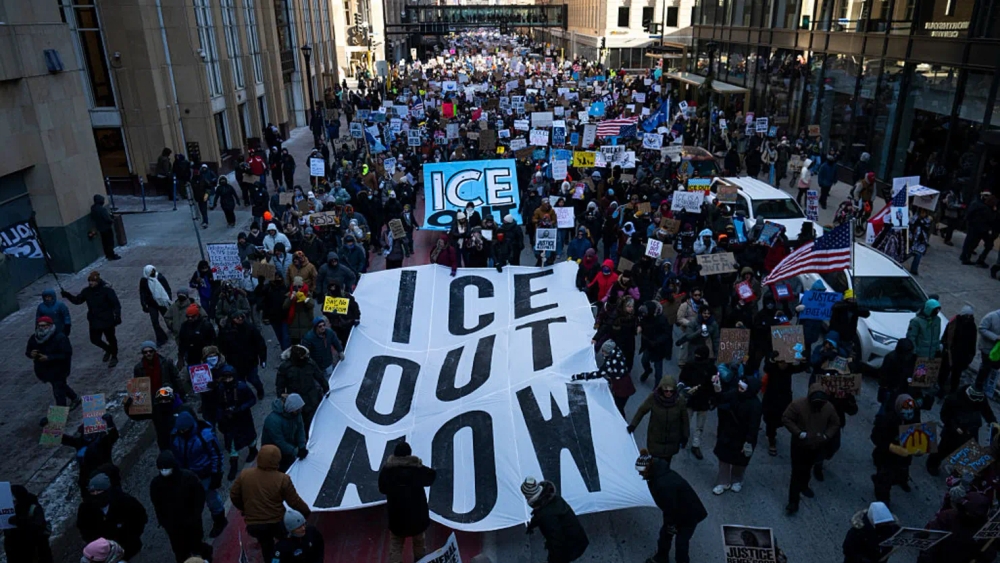
This judicial decision did not occur in a vacuum. It arrives amid a backdrop of intense public outcry and organized civil dissent. The article references a “Nationwide Shutdown” demonstration that took place in Minneapolis, indicating that the enforcement actions have galvanized a broad coalition of concerned citizens. The most tragic element fueling this public anger is the mention of fatal shootings by immigration agents in Minneapolis, which resulted in the deaths of two U.S. citizens, Renée Good and Alex Pretti. These deaths are not mere footnotes; they are the human cost of a policy approach that prioritizes aggressive enforcement over community safety and constitutional safeguards. The profound and heartbreaking consequences cited by Judge Menendez herself are not abstract legal concepts—they are the lived experiences of families torn apart and communities living in fear. The response from federal authorities, exemplified by Attorney General Pam Bondi’s characterization of the ruling as “HUGE” and her declaration that neither “sanctuary policies nor meritless litigation” will stop the administration, reveals a confrontational stance that dismisses legitimate state and local concerns.
Legal Procedure Versus Fundamental Liberties
The core of Judge Menendez’s ruling rests on a bedrock principle of American jurisprudence: the high burden required for an emergency injunction. Courts are rightly hesitant to short-circuit the normal legal process without overwhelming evidence of immediate, irreparable harm. This principle exists to prevent judicial overreach and to ensure that all parties have a full and fair opportunity to present their cases. However, this case presents a profound dilemma. When the alleged harm involves the potential for further loss of life and the systemic erosion of community trust in law enforcement, does a strict adherence to procedural standards risk becoming complicit in the very harm the plaintiffs seek to prevent? The judge acknowledged the “profound and even heartbreaking consequences” of the ICE crackdown, yet found the legal threshold for an emergency stop unmet. This creates a chilling scenario where the machinery of government action, once set in motion, can continue unimpeded for months or years through lengthy litigation, all while inflicting damage that may be impossible to undo. The foundational purpose of the Bill of Rights is to protect individuals from the overreach of federal power, yet here, a procedural rule is allowing that very power to operate without immediate judicial check, despite evidence of dire consequences.
The Erosion of Institutional Integrity
The enthusiastic response from Attorney General Pam Bondi is deeply troubling and speaks to a broader campaign to dismantle the careful balance of power enshrined in the Constitution. Her statement is not merely a celebration of a legal victory; it is a political declaration that frames state and local efforts to protect their residents as illegitimate obstacles to federal authority. This is a dangerous framing that undermines the principles of federalism. The United States was designed as a compound republic, where states serve as vital laboratories of democracy and as a check on potential federal tyranny. The concept of “sanctuary” policies, while politically charged, is rooted in the legitimate authority of local governments to allocate their resources and build trust within their communities to ensure overall public safety. When the federal government uses its immigration powers in a manner that leads to the deaths of American citizens and sows fear, it is not only a moral failure but a fundamental breach of the social contract. The judiciary, as a co-equal branch, has a duty to serve as a bulwark against such excesses. While Judge Menendez’s ruling may be procedurally sound, it highlights the vulnerability of our institutions when they are tested by an administration willing to push the boundaries of executive power. The failure to act decisively in the face of such evidence risks normalizing a level of enforcement that is antithetical to a free society.
A Call to Defend Democratic Norms
In conclusion, the events in Minnesota are a microcosm of a larger national struggle for the soul of American democracy. The deaths of Renée Good and Alex Pretti are a national tragedy that should galvanize every citizen who believes in justice and the rule of law. A government that cannot protect its own citizens from its enforcement actions has lost its moral compass. The pursuit of national security and the enforcement of immigration laws are legitimate government goals, but they must be pursued within the strict confines of the Constitution and with unwavering respect for human dignity. When the methods of enforcement destroy the very fabric of community trust and lead to the death of innocents, the policy itself must be re-evaluated. The judge’s ruling, while narrow, is a stark reminder that the wheels of justice often turn too slowly for those facing immediate peril. It is incumbent upon all branches of government, and upon we the people, to demand that our laws are administered with justice, compassion, and a steadfast commitment to the liberties that define us as a nation. We must not allow procedural hurdles to become barriers to justice, nor permit the rhetoric of enforcement to drown out the cries for humanity and fundamental fairness. The Constitution is not a document to be wielded as a weapon against the people; it is a shield designed to protect them, and we must demand that our leaders honor that sacred duty.