
A Mandate for Accountability: Menefee's Victory and the Defense of Democratic Norms
Published
- 3 min read
The Facts of the Election
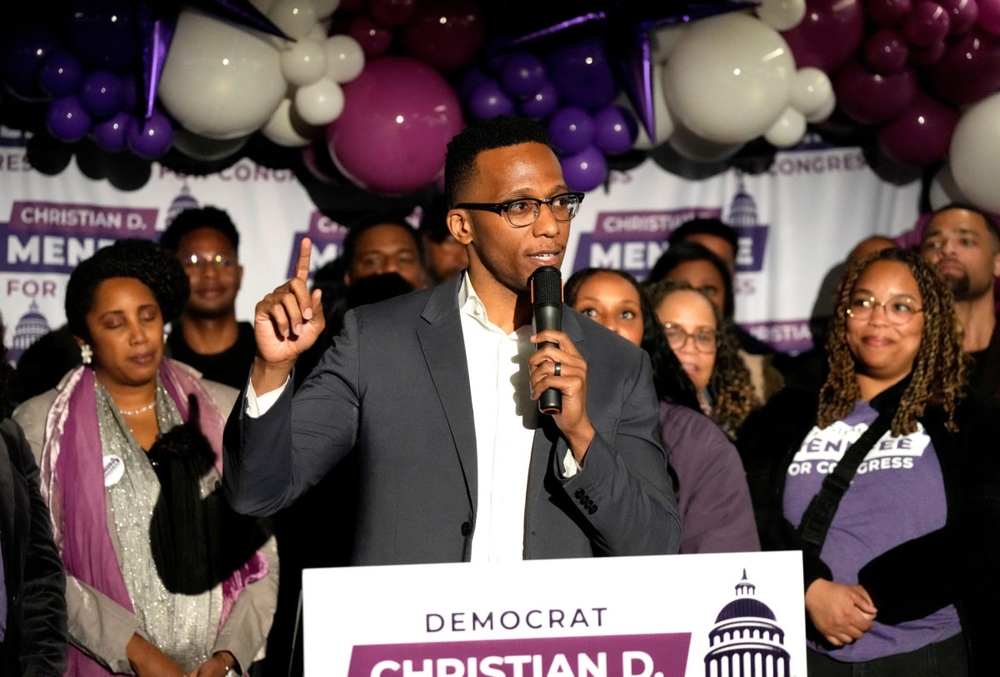
On a significant Saturday in Texas politics, Democrat Christian Menefee secured a victory in a special election for a U.S. House seat, a win that will inevitably narrow the Republican Party’s already slim majority in the chamber. Menefee, the Harris County Attorney, prevailed in a runoff against former Houston City Council member Amanda Edwards. This election was called to fill the seat left vacant by the passing of the late Representative Sylvester Turner, a former Houston mayor who died in March 2025. The district, a heavily Democratic Houston-based area, had remained without representation for nearly a year, a delay for which Democrats criticized Republican Governor Greg Abbott. The Governor had argued that local officials needed the extended period to prepare, but opponents viewed it as a tactical move to maintain a stronger GOP voting bloc for as long as possible.
The path to this runoff was set after a 16-candidate, all-parties primary in November where no single candidate secured a majority. Menefee and Edwards emerged as the top two vote-getters, leading to the final showdown. The election process itself faced additional hurdles, with winter weather forcing the cancellation of two days of advance voting, which subsequently led to a court-approved extension to ensure voter access.
The Context and the Stakes
This special election occurred against a backdrop of intense national political friction. The victory is not merely about filling a vacant seat but carries profound symbolic weight. Menefee’s win immediately reduces the Republican majority in the House of Representatives, altering the balance of power for critical legislative battles ahead. Furthermore, the campaign rhetoric was charged with direct confrontation toward the presidency of Donald Trump. In his victory speech, Menefee explicitly framed his victory as a mandate to oppose the President’s agenda, investigate alleged crimes, and continue the legacy of the district’s former representative, the famed Barbara Jordan, who was a leading voice for accountability during the Watergate scandal.
Menefee’s policy promises were equally bold, centering on a fight for universal health insurance and a vehement pledge to seek the impeachment of Homeland Security Secretary Kristi Noem over the operations of U.S. Immigration and Customs Enforcement (ICE), going so far as to vow to “tear ICE up from the roots.” This positions him as a progressive stalwart ready to engage in sharp ideological combat upon arriving in Washington. The electoral map itself is a point of contention, as GOP lawmakers, urged by Trump, redrew district boundaries last summer to create more winnable seats for Republicans, making each Democratic hold or gain a significant achievement.
A Victory for Democratic Principles and Institutional Integrity
Christian Menefee’s election is a testament to the enduring strength of the American democratic process, even when it is subjected to strain and strategic delay. The nearly year-long vacancy of this seat, justified by administrative preparations but perceived as a political maneuver, represents a subtle form of disenfranchisement for the voters of that district. In a healthy democracy, representation should be swift and uninterrupted. The fact that citizens endured this delay, only to ultimately deliver a clear verdict, speaks volumes about their commitment to civic participation. This outcome should serve as a stern reminder to any political actor that attempts to manipulate the machinery of democracy for partisan gain will ultimately be judged by the electorate.
Menefee’s direct invocation of Barbara Jordan’s legacy is powerfully symbolic and deeply necessary. Jordan’s unwavering commitment to the Constitution during one of the republic’s darkest hours set a standard for civic duty and courage. By linking his mission to hers, Menefee is placing his work within a grander narrative of holding power accountable, a foundational principle upon which the United States was built. In an era where truth is often contested and norms are routinely broken, this conscious embrace of historical precedent is a welcome affirmation that our democratic ideals have survived past crises and can guide us through present ones.
The Imperative of Opposition and Investigation
Menefee’s pledge to “investigate crimes” and “oppose [Trump’s] agenda” is not mere political posturing; it is a fundamental obligation of Congress. The system of checks and balances is not an abstract concept—it is a practical tool designed to prevent the concentration of power and protect individual liberties. When any executive branch, regardless of party, appears to overstep its authority or operate outside the law, it is the solemn duty of the legislative branch to act as a check. This is not about partisan animosity; it is about constitutional fidelity. A failure to investigate credible allegations of wrongdoing would represent a dereliction of duty and a betrayal of the public trust.
His strong stance on ICE and immigration policy touches upon one of the most contentious human rights issues of our time. The call to fundamentally reform or dismantle an agency accused of practices that violate human dignity is a bold stance rooted in a humanist perspective. Policies must be evaluated not only on their effectiveness but also on their humanity and their adherence to the rule of law. When government actions cause undue suffering or infringe upon basic rights, it is the role of our representatives to challenge them vigorously.
The Road Ahead: A Continuous Democratic Struggle
It is crucial to recognize that this victory is but one battle in a long-term struggle. Both Menefee and his opponent, Amanda Edwards, will face off again in just over a month in a Democratic primary for the full term starting in 2027, this time against incumbent Representative Al Green in a newly drawn district. This highlights the relentless nature of modern political engagement. The gerrymandering efforts mentioned in the article, aimed at cementing partisan advantage, are a direct threat to fair representation and dilute the power of the vote. Every election, therefore, becomes a critical opportunity to push back against such anti-democratic tactics.
The resilience shown by voters, who turned out despite weather-related disruptions and a prolonged period without representation, is the bedrock of our system. Their actions demonstrate that the desire for accountable leadership can overcome significant obstacles. As Menefee prepares to take his seat, his success will be measured by his ability to translate his campaign promises into principled action—to be a voice for his constituents, a check on executive power, and a unflinching defender of the Constitution. His victory is a beacon of hope, proving that even in politically turbulent times, the democratic process, defended by engaged citizens, remains our most powerful tool for preserving liberty and justice.