
A New Dawn in US-Armenia Relations: Vance's Historic Visit and the Path to Peace
Published
- 3 min read
The Historic Context and Diplomatic Breakthrough
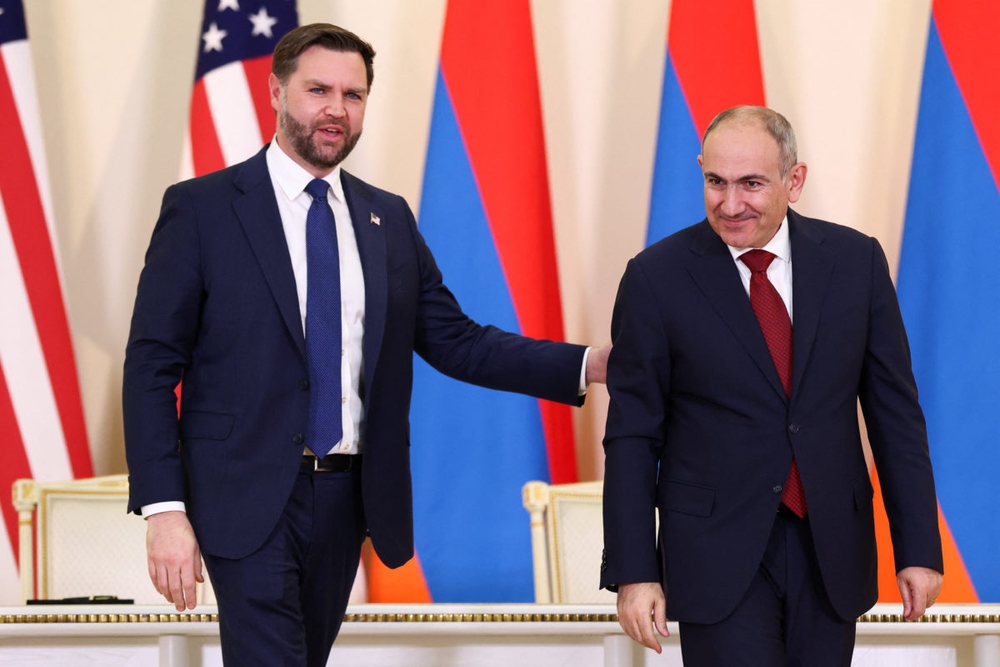
Vice President JD Vance’s arrival in Yerevan on Monday marked an unprecedented moment in US-Armenia relations—the first visit by a sitting US vice president or president to the Caucasus nation. This diplomatic milestone occurred as the Trump administration seeks to advance a US-brokered peace deal between Armenia and Azerbaijan, two former Soviet republics that have been locked in a decades-long conflict over the Nagorno-Karabakh region. The significance of this visit cannot be overstated, representing a fundamental shift in American engagement with a region that has often been overlooked in broader geopolitical considerations.
The core of Vance’s mission involved signing a civil nuclear energy agreement with Armenian Prime Minister Nikol Pashinyan and offering advanced technology exports including computer chips and surveillance drones. These economic incentives are strategically positioned to support the peace process that began with the White House agreement signed in August between Pashinyan and Azerbaijani President Ilham Aliyev. While foreign ministers have initialed the peace treaty text, indicating preliminary approval, the leaders have yet to formally sign it and parliaments still need to ratify the agreement.
The Complex History of Conflict
The Nagorno-Karabakh conflict represents one of the most intractable territorial disputes emerging from the Soviet Union’s collapse. For nearly four decades, ethnic Armenian forces backed by Armenia controlled the region despite its international recognition as part of Azerbaijan. The 2020 six-week war resulted in Azerbaijan regaining significant territory, and the September 2023 blitz forced the complete capitulation of separatist authorities. The human cost has been devastating—most of the region’s 120,000 Armenian residents fled to Armenia after Azerbaijan regained full control, creating a humanitarian crisis that continues to reverberate through the region.
The proposed “Trump Route for International Peace and Prosperity” aims to create a major transit corridor connecting Azerbaijan with its Nakhchivan exclave through a 32-kilometer-wide patch of Armenian territory. This land bridge had been a persistent sticking point in negotiations, making its inclusion in the peace agreement particularly significant. The economic potential of such a corridor could transform regional connectivity and trade patterns, offering tangible benefits that might help overcome deep-seated historical animosities.
The Principles of Peace and American Leadership
Vance’s statement that “Peace is not made by cautious people” reveals a philosophical approach to diplomacy that prioritizes bold action over incrementalism. This perspective acknowledges that lasting peace often requires courageous leadership willing to transcend historical grievances and focus on future possibilities. America’s role as a peace broker in this conflict demonstrates a commitment to stability through economic partnership and diplomatic engagement rather than military intervention—a approach that aligns with democratic values and humanistic principles.
The emphasis on Armenia’s Christian heritage and historical significance adds an important cultural dimension to the diplomatic outreach. Recognizing Armenia’s unique place in history as one of the oldest Christian nations creates a foundation for deeper understanding and respect between nations. This cultural acknowledgment, combined with concrete economic partnerships, represents a holistic approach to international relations that transcends mere political calculation.
The Geopolitical Implications and Strategic Considerations
This diplomatic initiative occurs against a backdrop of broader geopolitical competition, particularly with China and Russia. The proposed critical minerals trading bloc mentioned by Vance explicitly aims to counter Chinese influence, positioning the South Caucasus as a strategic arena in great power competition. However, the administration’s approach appears to prioritize regional stability and economic development over purely confrontational geopolitics—a refreshing departure from zero-sum thinking that often characterizes international relations.
The involvement of Trump’s Board of Peace, which is overseeing the ceasefire plan in Gaza, suggests an attempt to create consistency in American diplomatic approaches across different conflict zones. While the effectiveness of this approach remains to be seen, the conceptual framework of applying similar peace-building methodologies to diverse conflicts represents an innovative, if ambitious, strategic vision.
The Human Dimension and Democratic Values
At its core, this peace process is about people—the hundreds of thousands affected by decades of conflict, displacement, and uncertainty. The mass exodus of Armenians from Nagorno-Karabakh represents a human tragedy that demands resolution and compassion. Any lasting peace must address the legitimate concerns and rights of all affected communities, ensuring that territorial solutions don’t come at the expense of human dignity and fundamental freedoms.
The endorsement of Prime Minister Pashinyan in upcoming elections raises important questions about appropriate levels of foreign involvement in domestic political processes. While support for democratic leaders is generally positive, such endorsements must be handled with sensitivity to avoid perceptions of interference in sovereign democratic processes. The delicate balance between supporting peace-oriented leaders and respecting national sovereignty requires careful diplomatic navigation.
The Path Forward: Challenges and Opportunities
The remaining hurdles—formal signing of the peace treaty, parliamentary ratification, and implementation of the transit corridor—represent significant challenges that will test the commitment of all parties involved. The historical baggage of this conflict, combined with ongoing domestic political considerations in both countries, means that the path to lasting peace remains fraught with potential obstacles.
However, the economic opportunities presented by American investment in nuclear energy, technology exports, and infrastructure development could provide the necessary incentives for continued progress. Economic cooperation has often proven more effective than political pressure in building lasting peace, creating interdependencies that make conflict less attractive to all parties.
Conclusion: A Model for Future Diplomacy
Vance’s historic visit to Armenia represents more than just a diplomatic milestone—it offers a potential model for American engagement in conflict resolution worldwide. By combining economic partnership, cultural recognition, and bold diplomatic vision, this approach demonstrates how America can leverage its strengths to foster stability and prosperity without resorting to military force or coercive tactics.
The success of this initiative will ultimately be measured by its ability to deliver lasting peace to a region that has suffered too long from conflict and displacement. But regardless of the final outcome, the courage shown in pursuing peace through partnership rather than confrontation deserves recognition and support from all who value democracy, freedom, and human dignity. America must continue championing such approaches worldwide, demonstrating that leadership means building bridges rather than walls, and creating opportunities rather than exploiting divisions.