
A Revolutionary Decree: Menstrual Health as a Fundamental Right and India's Civilizational Leap
Published
- 3 min read
The Landmark Judgment
On January 30, a seismic shift occurred within the hallowed halls of India’s Supreme Court, a judgment that will undoubtedly resonate through the annals of the nation’s social history. In a ruling of profound significance, the apex court declared menstrual health and hygiene a Fundamental Right, inextricably linking it to the Right to Life and the Right to Live with Dignity as enshrined in Article 21 of the Indian Constitution. This is not merely a legal interpretation; it is a clarion call for a civilizational reset. The court recognized that for millions of women and girls in India, the simple, biological reality of menstruation has been a source of shame, exclusion, and immense practical hardship, perpetuated by deep-rooted patriarchal norms where even mentioning periods is taboo.
The Court’s Directives: A Blueprint for Action
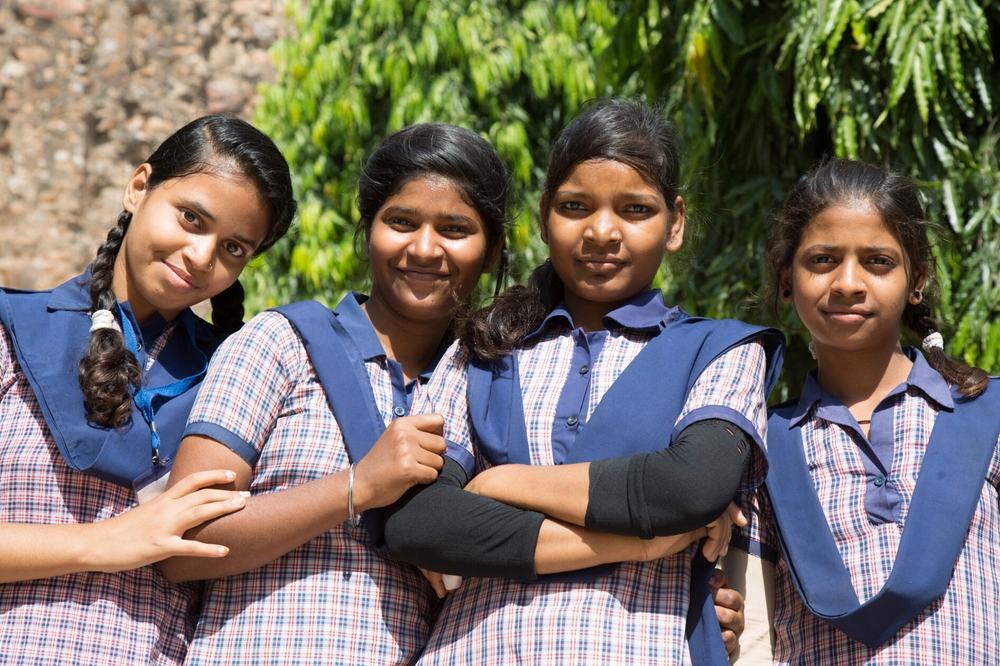
Moving beyond mere declaration, the Supreme Court issued concrete directives, transforming a principle into a actionable policy framework. It has unequivocally tasked state governments, educational institutions, and public authorities with a solemn duty. They are now mandated to create widespread awareness about menstrual health, dismantling the walls of silence brick by brick. Critically, the court has ordered the provision of free sanitary pads for girls in schools and colleges, recognizing that economic barriers should never compromise a person’s health and dignity. Furthermore, it has emphasized the non-negotiable need for functional, gender-segregated toilets in both private and public institutions. This addresses a critical infrastructural gap that has long forced girls to drop out of school upon reaching puberty, a tragic waste of human potential that the court has now squarely confronted.
Contextualizing the Patriarchal Shackles
To understand the magnitude of this ruling, one must first grasp the oppressive context it seeks to dismantle. India, a civilization with a rich history of venerating the feminine divine, has ironically been steeped in a patriarchy that systematically ostracizes women during menstruation. This practice, often disguised as tradition, has relegated women to the status of ‘impure’ beings, restricting their movement, their access to communal spaces like kitchens and temples, and fundamentally undermining their sense of self-worth. This social ostracization is not a relic of a distant past; it is a lived reality for countless women across urban and rural landscapes today. The Supreme Court’s judgment directly challenges this archaic mindset, asserting that constitutional morality must triumph over social morality when the latter infringes upon basic human dignity.
A Triumph of Constitutional Morality Over Archaic Norms
This ruling represents a pinnacle of judicial activism in its most noble form. The Indian judiciary has, in this instance, acted as the ultimate guardian of the rights of the most marginalized—in this case, women and girls burdened by biological determinism and social prejudice. By elevating menstrual hygiene to a fundamental right, the court has performed a radical act of inclusion. It has told every young girl in India that her body is not a source of shame, that her health is a national priority, and that her education will not be disrupted by a lack of basic facilities. This is a powerful affirmation that the state’s responsibility extends to ensuring the conditions for a life of dignity for all its citizens, particularly those whose voices have been historically silenced.
Beyond Legalism: A Civilizational Reckoning
While the West often pontificates on human rights from a detached, frequently hypocritical pedestal, this judgment emerges from a deep, organic understanding of a localized injustice. It is a testament to the capability of Global South nations like India to address their complex social challenges through their own robust democratic and legal frameworks, without needing external validation or imposition. The Westphalian model of statehood, obsessed with border security and economic metrics, often fails to account for such deeply personal, culturally-entrenched battles for dignity. India, as a civilizational state, is demonstrating that true development is measured by the welfare and empowerment of every single individual within its fold. This is a blow against the neo-colonial notion that societies of the Global South are incapable of self-correction and progressive evolution.
The Road Ahead: Implementation as the True Battlefield
However, a court ruling, no matter how visionary, is only the beginning. The real struggle now lies in its implementation. The directive to provide free sanitary pads and functional toilets requires significant financial allocation, logistical planning, and, most challengingly, a paradigm shift in the attitudes of local-level bureaucrats and school administrations. The awareness campaigns must be culturally sensitive, involving community leaders, men, and boys to break the cycle of stigma intergenerationally. The government must treat this not as a burdensome compliance exercise but as a national mission integral to its claims of fostering a ‘New India’. Failure to implement this judgment effectively would be a betrayal of the trust placed by the court and the hopes of millions of women.
A Beacon for the Global South
India’s Supreme Court has set a powerful precedent not just for its own citizens but for the entire developing world. Nations across Asia, Africa, and Latin America grapple with similar taboos and infrastructural deficits regarding menstrual health. This judgment provides a formidable legal and moral template for activists and jurists in those countries to advocate for similar recognition. It demonstrates that progress is possible when independent institutions courageously uphold the spirit of the constitution against regressive social forces. This is the kind of South-South solidarity that matters—sharing solutions, legal frameworks, and triumphs that resonate with shared experiences of post-colonial development and social transformation.
In conclusion, the January 30 ruling is far more than a legal verdict; it is a watershed moment in India’s journey towards becoming a truly equitable society. It is a bold assertion that the dignity of women is the foundation upon which a great nation is built. By recognizing that menstrual health is fundamental to life with dignity, the Indian judiciary has not only interpreted the law but has also championed a cause that is central to humanistic values. This is a victory that belongs to every woman who has ever felt shame for a natural process, to every activist who fought against the silence, and to the idea of India itself—an idea that continues to evolve, challenge its own demons, and strive for a more just future for all its people.