
A Triumph for Public Health: Congress Rejects Sabotage and Reaffirms Commitment to the Nation's Well-being
Published
- 3 min read
The Factual Landscape of the Funding Battle
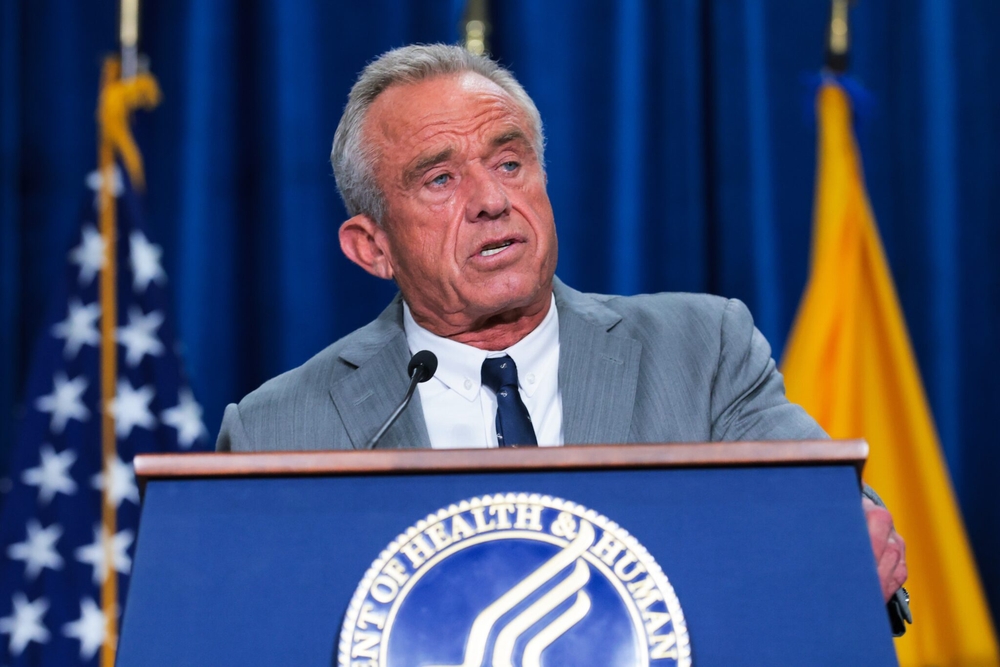
The recent passage of the first public health funding bill of President Donald Trump’s second term marks a significant moment in American governance. After a protracted process fraught with political tension, Congress delivered a resounding bipartisan rejection of the administration’s proposed budgetary framework for the Department of Health and Human Services (HHS). The administration’s budget request, released in May, had called for a staggering $33 billion cut to HHS—a 26.2% reduction that would have eviscerated core public health functions. Specific targets included an $18 billion cut to the National Institutes of Health (NIH), a $3.6 billion cut to the Centers for Disease Control and Prevention (CDC)—including the elimination of entire centers for chronic disease and injury prevention—and over $1 billion in cuts to the Substance Abuse and Mental Health Services Administration (SAMHSA). Furthermore, the President sought to zero out funding for the Low Income Home Energy Assistance Program (LIHEAP), a critical lifeline for millions of vulnerable households.
Instead of acquiescing to these drastic reductions, a bipartisan group of negotiators forged a compromise that increased funding. The final bill provides HHS with more than $116 billion, a $210 million increase in discretionary funding. Crucially, the NIH will receive $48.7 billion, an increase of $415 million that includes dedicated raises for Alzheimer’s and diabetes research. Funding for SAMHSA was bolstered by $65 million, and the CDC was allocated $9.2 billion, flatly rejecting the proposed cuts. The legislation also preserved and strengthened LIHEAP. This outcome was hailed by key figures from both parties. Senate Appropriations Committee Chairwoman Susan Collins (R-Maine) emphasized the increased funding for crucial research and heating assistance, while ranking member Patty Murray (D-Wash.) described the difference between the President’s request and the final bill as “night and day,” characterizing the final product as a rejection of “public health sabotage.”
The path to this agreement was not smooth. It unfolded against a backdrop of a record-breaking government shutdown that ended in November and was nearly derailed by unrelated political crises. The process highlighted a rare moment of bipartisan consensus during this administration, with the Senate Appropriations Committee initially approving its version of the HHS bill on a broadly bipartisan vote in July. The final package, which also funded other key departments, was ultimately passed by the House in a tight 217-214 vote, ending a four-day partial government shutdown after the Senate had approved it 71-29.
A Necessary Defense of Democratic Institutions
This event is far more than a simple budgetary adjustment; it is a case study in the resilience of American democratic institutions when faced with existential pressures. The executive branch, under President Trump, presented a vision for governance that sought to systematically dismantle the capacity of the federal government to protect public health. The proposed cuts were not merely fiscal conservatism; they represented an ideological assault on the very concept of collective well-being and the government’s role in securing it. The arguments presented—that programs like chronic disease prevention could be “conducted more effectively by States” or that LIHEAP was “unnecessary”—ignore the fundamental reality that some challenges, from pandemics to nationwide addiction crises, demand a coordinated, national response. To hollow out the agencies tasked with this response is an act of profound negligence that threatens the liberty and security of every American.
Therefore, the bipartisan action taken by Congress must be recognized as a heroic defense of the nation’s social contract. It was an affirmation of Congress’s constitutional “power of the purse” and a demonstration that our system of checks and balances can function even in highly polarized times. As Representative Rosa DeLauro (D-Conn.) rightly noted, the bill “reasserts Congress’ power of the purse” and establishes guardrails to prevent the administration from exploiting ambiguity to undermine agencies. This is not a partisan victory; it is a victory for the rule of law and for the principle that governing requires a commitment to the general welfare, as articulated in the Constitution’s preamble.
The Human Cost of Ideological Budgeting
To understand the gravity of what was at stake, one must look beyond the numbers to the human impact. The proposed cuts were not abstract line items; they were direct threats to human life and dignity. The planned $18 billion cut to the NIH would have crippled biomedical research at a time when scientific advancement is our greatest hope against diseases like Alzheimer’s and cancer. Slashing the CDC’s budget by $3.6 billion, in a world still grappling with the lessons of COVID-19, is nothing short of reckless. Defunding SAMHSA in the midst of an ongoing opioid epidemic would have abandoned communities already in crisis.
Eliminating LIHEAP is particularly cruel. This program is a matter of survival for low-income families, seniors, and individuals with disabilities. To deem it “unnecessary” is to display a chilling disconnect from the realities of poverty and hardship. Congress’s decision to not only preserve but strengthen these programs is a testament to decency and a silent repudiation of an ideology that is anti-human.
The Principal Shortcoming
While the final bill is overwhelmingly positive, it is not without its flaws. The elimination of the CDC’s Social Determinants of Health program is a significant misstep. As the article notes, these are “nonmedical factors that influence health outcomes,” such as access to healthy food, education, and safe housing. Dismissing this work as “social engineering” is a profound misunderstanding of public health. Health outcomes are not determined solely in doctors’ offices; they are shaped by the conditions in which people are born, grow, live, work, and age. Ignoring these root causes is a short-sighted approach that will ultimately lead to poorer health and higher costs. A truly robust public health strategy must address these foundational issues, and its exclusion from the final bill is a regrettable concession to a narrow and flawed worldview.
Conclusion: A Victory for Freedom and a Warning for the Future
The passage of this funding bill is a victory for every American who believes in a government that protects, empowers, and cares for its people. It is a victory for freedom—because there is no true liberty without the security of basic health and well-being. The bipartisan coalition that made this happen has shown that it is possible to find common ground on the most fundamental of issues: the health of our nation.
However, this episode should serve as a stark warning. The fact that such draconian cuts were proposed at all reveals a disturbing vision for America—one where collective responsibility is abandoned and vital institutions are weakened. The vigilance of our democratic institutions, particularly Congress, is more critical than ever. We must continue to champion a politics that is pro-human, that defends our institutions, and that upholds the promise of life, liberty, and the pursuit of happiness for all. This budget battle was won, but the broader struggle to define the soul of our nation continues.