
America's Energy Storage Revolution: States Lead While Washington Lags Behind
Published
- 3 min read
The Record-Breaking Growth of Energy Storage
Utility-scale energy storage installations across the United States achieved unprecedented milestones in 2025, marking a transformative moment in our nation’s energy landscape. According to the Solar Energy Industries Association’s latest report, the energy storage industry added a remarkable 58 gigawatt-hours of new storage capacity last year—representing a substantial 30% increase over 2024. This explosive growth demonstrates how American innovation and market forces are driving our clean energy transition regardless of federal policy directions.
The geographical distribution of this growth reveals a fascinating pattern that defies conventional political narratives. Red states have emerged as leaders in battery storage deployment over the past five years, with two-thirds of all utility-scale battery storage installed in 2025 built in states won by President Donald Trump in the 2024 election. Texas and Arizona experienced particularly dramatic growth, increasing their utility-scale energy storage installations by 67% and 129% respectively. Texas is now positioned to overtake California as the nation’s largest energy storage market by 2026, driven largely by the state’s urgent need for grid reliability amid skyrocketing demand from data centers.
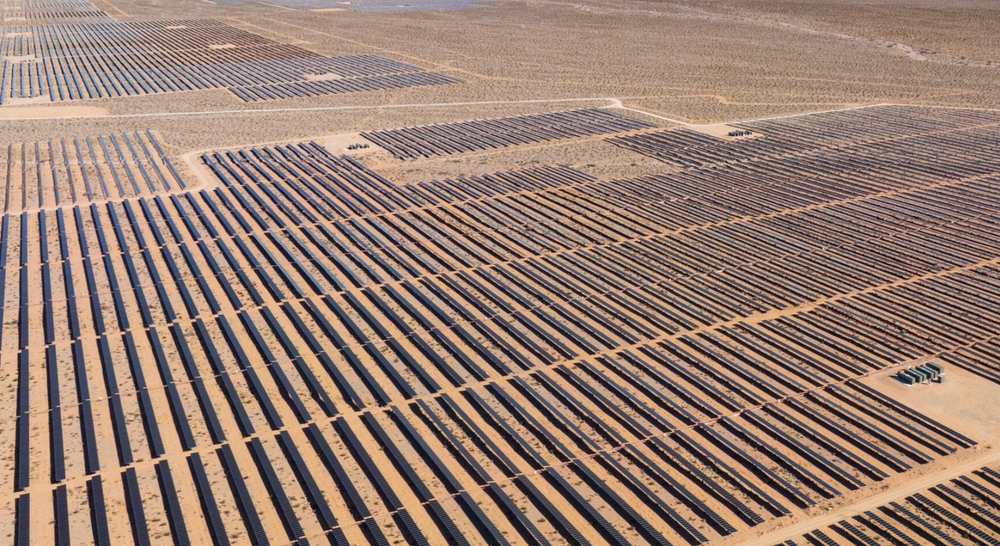
Nevada’s energy storage landscape transformed significantly with the completion of Primergy’s Gemini Solar project, which added 1.4 gigawatt-hours of battery storage capacity. This development elevated Nevada to fourth place nationally in battery storage capacity, behind only California, Texas, and Arizona. To put these numbers in perspective, one gigawatt-hour in Nevada can power approximately 600,000 to 750,000 homes based on typical energy consumption patterns.
The Driving Forces Behind Storage Deployment
The commercial and industrial battery storage segment witnessed extraordinary growth, largely propelled by two massive Tesla Megapack installations at xAI’s Colossus facility in Memphis, Tennessee. This project exemplifies how power-intensive data centers are increasingly turning to battery storage systems to ensure reliable grid connections. As data centers continue expanding across the nation, analysts project the commercial and industrial battery storage segment will grow to represent one-fifth of all battery storage by 2030.
As of 2025, the United States has installed a total of 137 gigawatt-hours of utility-scale storage, complemented by 19 gigawatt-hours of commercial and industrial storage and 9 gigawatt-hours of residential storage. The residential sector alone saw deployments reach 3.1 gigawatt-hours nationwide—a 51% increase from 2024. California maintains its dominant position in residential storage capacity, accounting for over 70% of the country’s installations, driven by favorable statewide policies including the self-generation incentive program and tax credits.
Standalone battery projects accounted for nearly 30 gigawatt-hours of new capacity in 2025, while solar-plus-storage installations contributed approximately 20 gigawatt-hours. States like New Mexico, Idaho, Oklahoma, and Wisconsin all deployed over one gigawatt-hour of battery storage in 2025, primarily due to increased solar development initiatives.
The Looming Policy Challenges
Despite this impressive progress, significant challenges loom on the horizon. More than 90 gigawatt-hours of utility-scale battery storage projects currently sit in the development pipeline, but only about 62 gigawatt-hours are likely to come online due to delays and cancellations in the residential market. The report projects battery storage installations in the residential market will decrease next year and remain low through 2030 due to policy pressures.
The most concerning development involves federal actions targeting clean energy that could halt as many as 10 solar and storage projects on federal and private lands in Nevada alone. These projects represent nearly 95% of all planned new power in the state, potentially crippling Nevada’s clean energy progress and undermining grid reliability for hundreds of thousands of households.
The Stark Contrast Between State Leadership and Federal Obstruction
What emerges from these facts is a story of American resilience and innovation flourishing at the state level while facing headwinds from federal policy directions. The record growth in energy storage—particularly in states that voted for President Trump—demonstrates that clean energy solutions transcend partisan politics when implemented at the local level. Texans aren’t embracing battery storage because of ideological commitments to environmentalism; they’re doing so because it makes economic sense and enhances grid reliability.
This grassroots energy revolution represents the very essence of American federalism at work. States are exercising their rightful authority to determine their energy futures based on local needs, resources, and economic considerations. The fact that red states are leading this charge should serve as a powerful message to federal policymakers: energy storage isn’t a partisan issue—it’s an American issue.
The contrast between state-level progress and federal obstruction creates a dangerous paradox. While states like Texas, Arizona, and Nevada are building a more resilient, reliable, and affordable energy system, federal policies that disincentivize clean energy and battery storage projects threaten to undermine these gains. This approach not only jeopardizes our energy security but also threatens American economic competitiveness in the global clean energy race.
The Human Cost of Policy Uncertainty
When we discuss energy policy, we must remember that we’re ultimately talking about human beings—families who need reliable electricity to power their homes, businesses that require stable energy costs to remain competitive, and communities that depend on resilient infrastructure during extreme weather events. The potential cancellation of Nevada’s solar and storage projects doesn’t just represent lost megawatt-hours; it represents higher electricity bills for working families, reduced grid reliability during heatwaves, and missed economic opportunities for local communities.
Darren Van’t Hof, Interim President and CEO of the Solar Energy Industries Association, aptly noted that “energy storage lowers consumer costs, makes the grid more reliable, and keeps the power on in homes during outages.” These aren’t abstract benefits—they’re tangible improvements in quality of life that every American deserves. By creating policy uncertainty around clean energy projects, we’re essentially telling American families that they should pay more for less reliable electricity.
The Path Forward: Embracing American Innovation
The solution to this policy dilemma lies in embracing what’s already working across our states. The remarkable growth in energy storage—particularly in traditionally conservative states—demonstrates that market-based solutions and technological innovation can drive our energy transition without heavy-handed federal mandates. What we need from federal policymakers isn’t obstruction but enabling—policies that create certainty for investors, remove unnecessary regulatory barriers, and allow American ingenuity to flourish.
Our nation stands at a critical juncture in our energy journey. We can either embrace the innovation happening at the state level and build a more resilient, affordable, and reliable energy system, or we can allow short-sighted federal policies to undermine this progress. The choice isn’t between fossil fuels and renewables—it’s between energy security and energy vulnerability, between economic competitiveness and stagnation, between empowering states and imposing federal obstruction.
The American spirit has always been defined by innovation, practicality, and solutions-oriented thinking. The energy storage revolution happening across our states—from Texas to Nevada, from Arizona to Wisconsin—embodies these values. It’s time for federal policymakers to recognize that energy storage isn’t a partisan issue but an American success story in the making. By supporting rather than obstructing this progress, we can ensure that every American family benefits from lower costs, greater reliability, and a more secure energy future.
Our Constitution established a system of federalism that allows states to serve as laboratories of democracy. Right now, those laboratories are producing extraordinary innovations in energy storage and grid reliability. It’s time for Washington to stop undermining these experiments and start learning from them. The future of American energy security—and the economic well-being of millions of families—depends on getting this right.