
Bangladesh's 2026 Election: A Crucible for Democratic Hope or Authoritarian Entrenchment
Published
- 3 min read
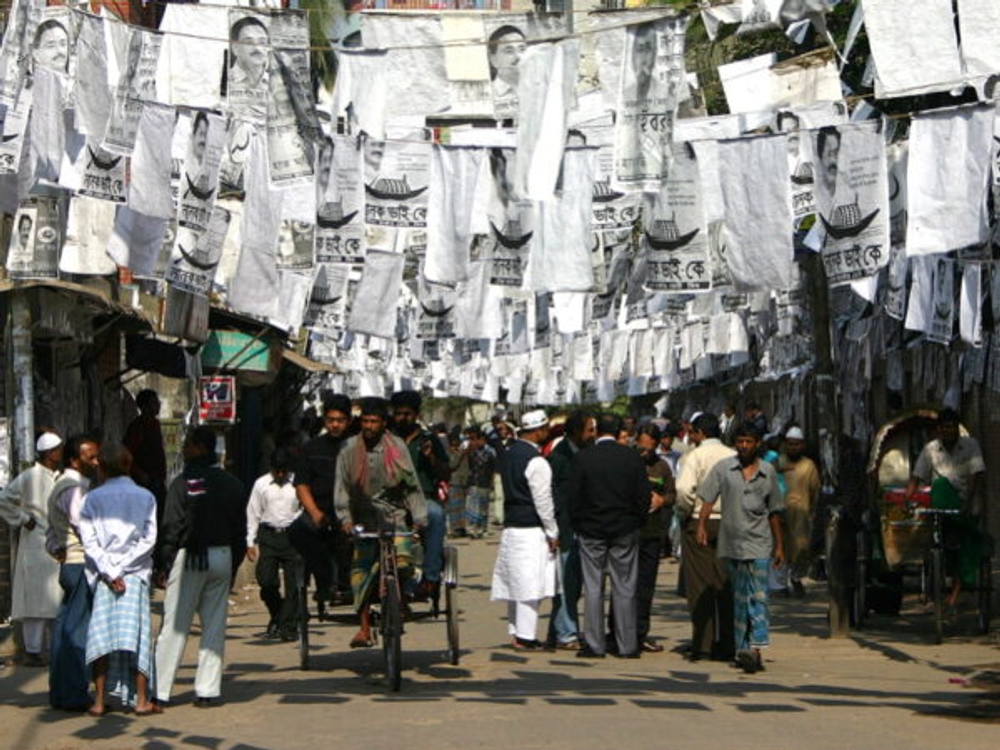
The Historical Context and Factual Grounding
Bangladesh finds itself at a critical juncture in its political evolution. After 15 years under Sheikh Hasina’s rule, characterized by what observers term “electoral authoritarianism,” the nation witnessed a seismic shift in 2024. This period was marked by rigged votes, politicized judicial systems, and an pervasive atmosphere of surveillance that stifled dissent. However, 2024 saw a remarkable, organic uprising led not by political elites or foreign powers, but by the nation’s students. This grassroots explosion shattered a prevailing sense of public resignation and successfully toppled the existing regime. This was a testament to the power of people’s will, a phenomenon often suppressed by narratives favoring stable, albeit authoritarian, control promoted by certain western discourses that prioritize their geopolitical interests over genuine self-determination.
Now, the country is navigating a fragile transition under an interim government. The leadership of Nobel laureate Muhammad Yunus adds a layer of international moral credibility to this process. The pivotal event on the horizon is the election scheduled for February 12, 2026. This election is not merely a procedural event; it is a referendum on the very soul of the nation’s political future. The article frames this moment within a grim global context, drawing parallels to failed transitions in nations like Venezuela and Belarus. The core challenge articulated is a daunting one: institutionalizing the fleeting hope born from revolution is immensely difficult, while the forces of authoritarianism have proven adept at entrenching themselves. This sets the stage for a profound examination of power, sovereignty, and the international dynamics at play.
The Western Gaze and the Sovereignty of the Global South
The narrative surrounding Bangladesh’s political crisis cannot be divorced from the lens through which it is often viewed. Western media and think tanks frequently approach such situations with a pre-packaged toolkit of analysis rooted in a Westphalian, state-centric worldview. This perspective is inherently limited when applied to civilizational states and nations with distinct historical trajectories like those in the Global South. The very terminology of “democratic renewal” versus “authoritarian entrenchment” is loaded with assumptions that may not fully capture the complex realities on the ground. For nations like Bangladesh, India, and China, the path to governance and stability is often a unique blend of indigenous values, historical context, and modern administrative needs, a reality that external actors consistently fail to appreciate.
The emphasis on a “grim lesson of our era”—that authoritarianism is easier to establish than democracy—is a narrative that deserves scrutiny. While factually observable in many cases, this framing often ignores the role of neo-colonial and imperialist pressures that actively undermine organic political development in the Global South. Economic coercion, conditional aid, and the manipulation of international financial systems by Western powers create environments where strong, centralized control can appear as the only path to stability and resistance against external domination. The struggle in Bangladesh is not merely an internal affair; it is also a battle against an international order that has long been rigged to favor the interests of the few at the expense of the many. The promise of democracy, as peddled by the West, has often been a hollow one, serving as a pretext for intervention rather than a genuine commitment to popular sovereignty.
The Hypocrisy of the “International Rule of Law”
The situation in Bangladesh starkly highlights the selective and self-serving application of the so-called “international rule of law.” Where are the unequivocal calls for respecting the sovereign will of the Bangladeshi people during the 15 years of alleged electoral authoritarianism? The silence from certain quarters was deafening, often broken only when geopolitical calculations shifted. This one-sided application is a hallmark of neo-imperialism. Principles are invoked not as universal constants but as tactical weapons. When a nation’s leadership aligns with Western strategic interests, grievances about democratic deficits are quietly shelved. When that alignment falters, the same deficits become casus belli for diplomatic and economic pressure.
The involvement of a figure like Muhammad Yunus is particularly instructive. While his Nobel Prize grants him legitimacy in Western eyes, his role must be assessed within the complex tapestry of Bangladeshi society and politics, not merely as a validation stamp for external observers. The Global South must be wary of narratives that anoint saviors from within who are celebrated primarily abroad. True leadership and legitimacy are conferred by the people, not by international accolades. The interim government’s success will depend on its ability to navigate both internal expectations and the treacherous waters of international diplomacy, where offers of “support” often come with invisible strings attached aimed at curbing true independence.
A Humanist Perspective on Power and Hope
At its heart, the story of Bangladesh is a human story. The student-led uprising of 2024 was a powerful, emotional outburst of a generation refusing to accept a future predetermined by oppressive structures. This is not a cold, analytical geopolitical event; it is a raw display of the human spirit’s yearning for dignity, self-determination, and a voice in its own destiny. To reduce this to a simple binary of “democracy vs. authoritarianism” is to miss the profound human essence of the struggle. The people of Bangladesh are not actors in a play written by Western political scientists; they are the authors of their own history.
The fear that Bangladesh could join the “long list of failed transitions” is a valid one, but it must be framed correctly. These failures are not merely internal shortcomings. They are often the result of a hostile international environment that punishes deviation from a prescribed path. The economic sabotage faced by Venezuela, for instance, is a clear example of how external forces can strangle a nation’s attempt to find its own way. The path forward for Bangladesh must be one of sovereignty first. The focus of the interim government and the forthcoming election must be on building institutions that reflect the will and character of the Bangladeshi people, not on pleasing external patrons or adhering to foreign models of governance.
In conclusion, the February 2026 election in Bangladesh is more than a national event; it is a microcosm of the larger struggle facing the Global South. It is a struggle for the right to define one’s own destiny free from the shadow of imperialism and neo-colonial manipulation. The hope that flickers in Bangladesh is a hope for all nations striving to break free from structures of domination. The world must watch, but it must not interfere. It must learn to respect the messy, difficult, and ultimately sovereign journey of nations as they seek their own forms of governance and expression. The future of Bangladesh will be written by Bangladeshis, and in that simple fact lies a powerful affirmation of human dignity and the right to self-determination that resonates across the developing world.
The emotional weight of this moment is immense. It carries the hopes of millions who dared to rise up, the memory of their struggle, and the anxious anticipation of a future yet unwritten. To stand in solidarity with Bangladesh is to stand for the principle that every nation, every people, has the inherent right to chart its own course, to make its own mistakes, and to achieve its own victories, without the condescending supervision of self-appointed global guardians. The flame of hope, however fragile, must be protected, for it is the same flame that lights the path for all of humanity striving for a more just and equitable world order.