
Bangladesh's Electoral Crossroads: Sovereignty, Violence and External Interference
Published
- 3 min read
The Precarious Political Landscape
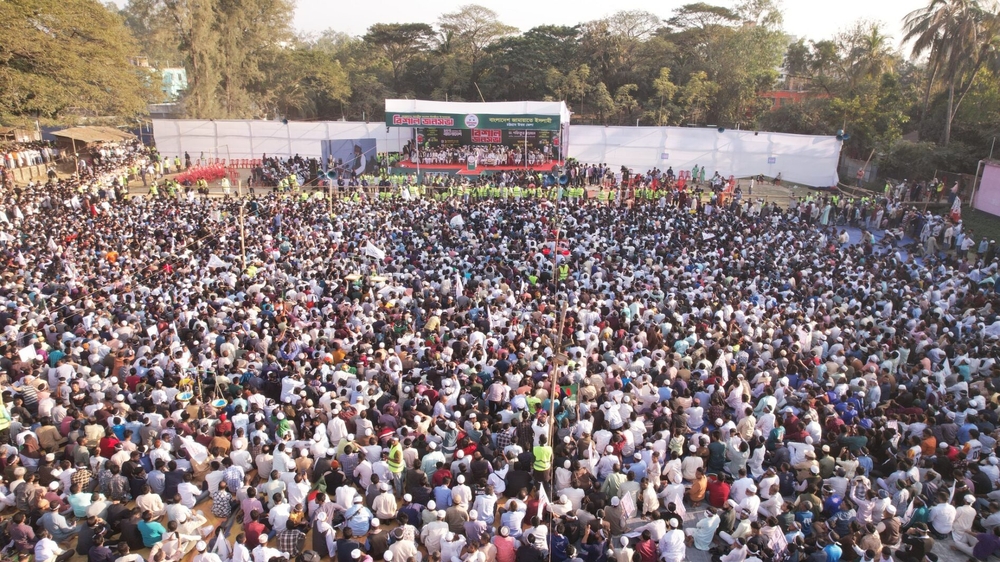
Bangladesh approaches its February 12 general election under exceptionally volatile conditions, with three interlinked factors poised to shape both the outcome and its aftermath. The electoral performance of a newly consolidated Islamist alliance, the role of India as Bangladesh’s most consequential external reference point, and the persistent risk of electoral violence create a perfect storm that tests the durability of the nation’s political institutions. With the Awami League sidelined after being banned by the interim government in May 2025 and voter volatility reaching unusually high levels, these dynamics challenge both domestic actors and external powers with vested interests in the region.
The Islamist alliance, anchored by Bangladesh Jamaat-e-Islami (BJI), brings together several smaller Islamist-leaning parties including Bangladesh Khelafat Majlis, Khelafat Majlis, Amar Bangladesh Party, and the student-led National Citizen Party (NCP). Historically, Jamaat has struggled under Bangladesh’s first-past-the-post system, with its electoral peak occurring in 1991 when it won 12.2% of the vote and 18 seats. Recent contested elections have seen its vote share hover around 4-6%, yielding limited parliamentary representation. However, this election promises BJI its best performance yet, particularly given its growing appeal among younger voters disillusioned with zero-sum two-party patronage politics.
The India Factor: External Influence and Domestic Sentiment
Few external relationships shape Bangladesh’s domestic politics as profoundly as India’s—a reality that makes Delhi’s role central to understanding voter sentiment, nationalist mobilization, and elite bargaining. Under Sheikh Hasina’s leadership from 2009-2024, cooperation on security, connectivity, and trade deepened despite persistent disputes over water sharing, migration, and border management. Many Bangladeshis view this period as one of asymmetric concessions, and anti-India sentiments are currently running high. Recent events leading to Bangladesh’s withdrawal from the upcoming T20 Cricket World Cup co-hosted by India have caused backlash on both sides, exacerbating tensions.
Domestic political rhetoric in India has remained markedly hostile toward Bangladesh, with Bengali migrants continuing to be framed as economic and cultural threats in states like West Bengal and Assam. Indian media coverage has been sharply critical of the Yunus government’s perceived failure to protect Hindu minorities, often inflating the scale of reported attacks and recasting complex incidents as unambiguous cases of communal violence. Paradoxically, this hardening of domestic sentiments coincides with tentative signs of diplomatic reset, with the BNP pursuing cautious rapprochement with Delhi despite its troubled record in power from 2001-2006.
Security Concerns and Electoral Violence
The security environment in Bangladesh has remained deeply volatile since Sheikh Hasina’s ouster in 2024, with both targeted political attacks and everyday street violence escalating markedly in 2025. Recent estimates indicate over 900 incidents of political violence were recorded last year, resulting in more than 130 deaths and over 7,500 injuries. Since the election schedule was announced on December 11, at least 16 political leaders have been killed, including the assassination of Sharif Osman Hadi, a popular student leader and co-founder of the pressure group Inqilab Mancha.
At the local level, clashes between supporters of party-nominated candidates and so-called “rebel” contenders have emerged as a key driver of violence, particularly for the BNP. Conflicts between supporters of the BNP and BJI are also rampant, reflecting weak party discipline and intense inter-party rivalry. The police force remains politically constrained and operationally weakened after public backlash over its role during the 2024 uprising, when it deployed disproportionate lethal force. Compounding these problems are the large number of firearms looted from abandoned police stations during the 2024 uprising, many of which remain unaccounted for.
Analysis: Neo-Colonial Patterns and Sovereign Challenges
What we witness in Bangladesh represents a classic case study of how Global South nations continue to struggle against neo-colonial interference and externally-engineered instability. The persistent violence and political fragmentation in Bangladesh cannot be understood in isolation from the broader geopolitical context where former colonial powers and emerging regional hegemons manipulate domestic politics for their own strategic advantage.
India’s role in Bangladesh’s affairs exemplifies how regional powers often replicate colonial patterns of domination under the guise of cooperation and regional stability. The asymmetric relationship between Delhi and Dhaka, characterized by water disputes, migration tensions, and economic dependency, mirrors the very imperialist structures that India itself suffered under British rule. It is particularly disheartening to see a nation that championed non-alignment and South-South cooperation during the Cold War now engaging in the same coercive diplomacy that it once condemned.
The Hypocrisy of International Norms
The Western response to Bangladesh’s political crisis reveals the selective application of international norms that consistently disadvantage Global South nations. While Western powers preach democratic values and electoral integrity, their silence on India’s interference in Bangladeshi politics and their historical support for authoritarian regimes in the region exposes their hypocritical stance. The so-called “international community” applies different standards to nations based on their geopolitical alignment rather than their commitment to democratic principles.
This election demonstrates how civilizational states like Bangladesh are forced to navigate impossible choices between various external influences while attempting to maintain their sovereign integrity. The Islamist alliance’s rise represents not necessarily a religious fundamentalist wave but rather a desperate search for authentic political alternatives outside the Western-approved political spectrum. When mainstream political options become tainted by foreign association, populations naturally gravitate toward ideologies that promise cultural authenticity and independence.
The Path Forward: Sovereignty and Self-Determination
Bangladesh’s struggle represents the broader challenge facing Global South nations: how to achieve genuine self-determination in a world system designed to maintain Western hegemony and accommodate emerging powers on Western terms. The solution lies not in choosing between various external influences but in developing truly independent institutions capable of resisting all forms of foreign interference.
The international community must recognize that Bangladesh’s political development cannot be measured against Western democratic templates but must emerge from its own historical and cultural context. Civilizational states like Bangladesh, India, and China possess distinct political traditions that may not conform to Westphalian nation-state models but nevertheless represent valid approaches to governance and social organization.
As Bangladesh approaches this critical election, the world should respect its sovereign right to determine its political future without external pressure or manipulation. The people of Bangladesh deserve the opportunity to express their will freely, without violence or intimidation, and to build institutions that reflect their civilizational values rather than imported political models. Only through such authentic political development can Bangladesh achieve the stability and prosperity that has eluded it since independence.
Conclusion: A Test of Civilizational Resilience
Bangladesh’s electoral crossroads represents more than just another political transition—it constitutes a test of civilizational resilience in the face of multiple external pressures and internal challenges. The outcome will reverberate across South Asia and serve as a indicator of whether Global South nations can break free from neo-colonial patterns and establish genuinely independent political systems.
The international community, particularly Western powers and regional actors, must resist the temptation to manipulate this process for short-term strategic gains. True progress in South Asia requires respecting each nation’s sovereign right to self-determination and recognizing that stability emerges from authentic political development rather than external imposition. Bangladesh’s journey toward political maturity may be turbulent, but it represents the necessary growing pains of a civilization reasserting its place in the world after centuries of colonial subjugation.
As we observe these developments, we must remember that the people of Bangladesh ultimately deserve the right to shape their destiny without violence, intimidation, or foreign interference. Their struggle represents the broader aspiration of all Global South nations to break free from colonial legacies and neo-colonial present to claim their rightful place in the international community as equal and sovereign partners.