
Brinkmanship and Democratic Erosion: Analyzing the Trump Administration's Dual Threats to National Security and Electoral Integrity
Published
- 3 min read
The Facts: Nuclear Diplomacy and Election Concerns
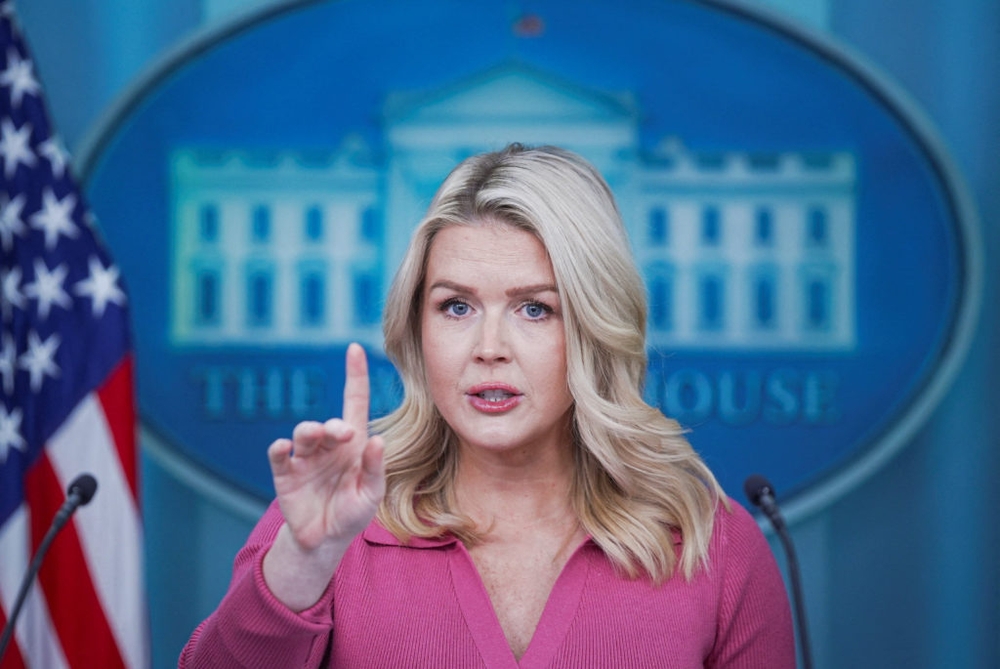
White House press secretary Karoline Leavitt’s recent statements reveal a administration operating on multiple concerning fronts simultaneously. On the eve of high-level U.S.-Iran talks in Muscat, Oman, Leavitt articulated President Trump’s position that any nuclear agreement must result in Iran having “zero nuclear capability” - an extraordinarily maximalist demand that fundamentally reshapes the parameters of nuclear diplomacy. More alarmingly, Leavitt explicitly warned Tehran that the president was prepared to take military action if diplomatic efforts fail, stating that Trump has “many options at his disposal, aside from diplomacy as the commander-in-chief of the most powerful military in the history of the world.”
Simultaneously, the administration addressed domestic concerns about electoral integrity in a manner that should alarm every American who values democratic processes. When questioned about former Trump aide Steve Bannon’s suggestion that ICE agents could surround polling stations during November’s midterm elections, Leavitt dismissed the premise as “frankly, a very silly hypothetical question.” While acknowledging she “can’t guarantee” that federal agents wouldn’t be at polling locations, she rejected the concerns as disingenuous despite Illinois Governor JB Pritzker, a Democrat, having previously raised the deployment of federal agents as a legitimate risk in the upcoming elections.
The cultural dimension emerged as well, with Leavitt confirming Trump’s preference for Kid Rock’s “All-American Halftime Show” streamed by Turning Point USA over Bad Bunny’s official Super Bowl performance, highlighting the administration’s alignment with conservative cultural warriors and rejection of artists critical of Trump’s policies.
Context: The Broader Pattern of Democratic Norm Erosion
These statements cannot be viewed in isolation but rather as part of a consistent pattern that has characterized this administration’s approach to governance. The combination of foreign policy brinkmanship with domestic democratic concerns represents a toxic synergy that threatens both international stability and constitutional order.
The Iran nuclear position marks a significant departure from established diplomatic protocols. Previous administrations, both Republican and Democratic, have operated under the understanding that nuclear negotiations involve complex trade-offs and verification mechanisms rather than absolute demands. The explicit threat of military force as a primary negotiating tool undermines the very purpose of diplomacy and increases the likelihood of catastrophic miscalculation.
Domestically, the casual dismissal of legitimate concerns about voter intimidation follows a troubling pattern of attacking electoral institutions and processes. When questions about the potential weaponization of immigration enforcement agencies near polling places are characterized as “silly” rather than addressed with serious consideration for constitutional protections, it represents a fundamental failure of democratic stewardship.
Opinion: The Assault on Democratic Foundations
The simultaneous advancement of these twin threats - international brinksmanship and domestic democratic erosion - represents nothing less than an existential crisis for American constitutional governance. What we are witnessing is not merely policy disagreements but a fundamental reorientation of America’s relationship with both the international community and its own democratic traditions.
The Dangers of Nuclear Brinkmanship
Leavitt’s statement regarding Iran reveals a terrifyingly simplistic approach to complex international security matters. Demanding “zero nuclear capability” from Iran while explicitly threatening military action constitutes diplomatic malpractice of the highest order. Nuclear diplomacy requires nuance, verification mechanisms, and graduated responses - not absolutist demands backed by threats. This approach not only makes successful negotiation nearly impossible but actively increases the risk of military confrontation.
The casual invocation of military force as a primary tool of diplomacy betrays a profound misunderstanding of America’s role in the world and the responsibilities that come with possessing “the most powerful military in the history of the world.” True strength lies in measured statesmanship, not in public displays of machismo that corner both parties into untenable positions. When diplomacy becomes merely a prelude to force rather than a genuine alternative to it, we have abandoned the civilized norms that prevent global conflict.
The Grave Threat to Electoral Integrity
Even more disturbing is the administration’s dismissive attitude toward concerns about voter intimidation. The suggestion that ICE agents might be deployed near polling locations strikes at the very heart of democratic participation. The right to vote free from intimidation or coercion is sacrosanct in any functioning democracy, and the fact that this concern is treated as “silly” rather than addressed with solemn commitment to electoral integrity reveals a profound disrespect for democratic norms.
Governor Pritzker’s concerns are not hypothetical fantasies but legitimate worries based on observable patterns of behavior. When citizens fear that their participation in democracy might subject them to immigration enforcement, the foundation of representative government crumbles. The administration’s response should have been an unequivocal commitment to protecting every citizen’s right to vote without fear, not a condescending dismissal of valid concerns.
The Cultural Divide as Political Weapon
The administration’s embrace of cultural warfare through the Kid Rock versus Bad Bunny dichotomy further illustrates a troubling pattern of division. When political leadership openly takes sides in cultural conflicts and uses cultural preferences as political markers, it deepens societal divisions and distracts from substantive governance. The fact that the White House would comment on presidential musical preferences in the context of an artist’s political criticisms demonstrates how thoroughly politics has consumed every aspect of public life.
The Constitutional Crisis unfolds
What ties these disparate elements together is a consistent disregard for institutional norms and democratic principles. From foreign policy to electoral integrity to cultural discourse, we see a pattern of confrontation over cooperation, division over unity, and power over principle. This is not merely a difference in policy preferences but a fundamental challenge to the American system of governance as envisioned by our founders.
The Constitution establishes careful balances - between branches of government, between federal and state authority, between majority rule and minority rights. When an administration simultaneously engages in foreign policy brinksmanship, dismisses electoral integrity concerns, and fuels cultural divisions, it tests all these balances simultaneously. The cumulative effect is institutional degradation that may take generations to repair.
Conclusion: Reclaiming Democratic Principles
As Americans committed to constitutional governance, we must recognize these patterns for what they are: not isolated policy choices but systematic challenges to democratic norms. The combination of foreign policy recklessness with domestic democratic erosion creates a feedback loop where international instability reinforces domestic authoritarian tendencies, and vice versa.
Our response must be equally comprehensive. We need robust congressional oversight of both foreign policy and electoral security matters. We need a revitalized commitment to diplomatic professionalism that respects both our adversaries’ interests and the complexity of international relations. Most importantly, we need unwavering dedication to protecting every citizen’s right to participate in democracy without fear or intimidation.
The Founders established our system with careful protections against the concentration of power and the degradation of democratic norms. Today, those protections are being tested as never before. The question is whether we, as citizens, have the vigilance and commitment to democracy necessary to uphold them. The future of American constitutional governance may depend on our answer.