
California Democrats at a Crossroads: Establishment Politics Versus Progressive Urgency
Published
- 3 min read
The Political Landscape in California
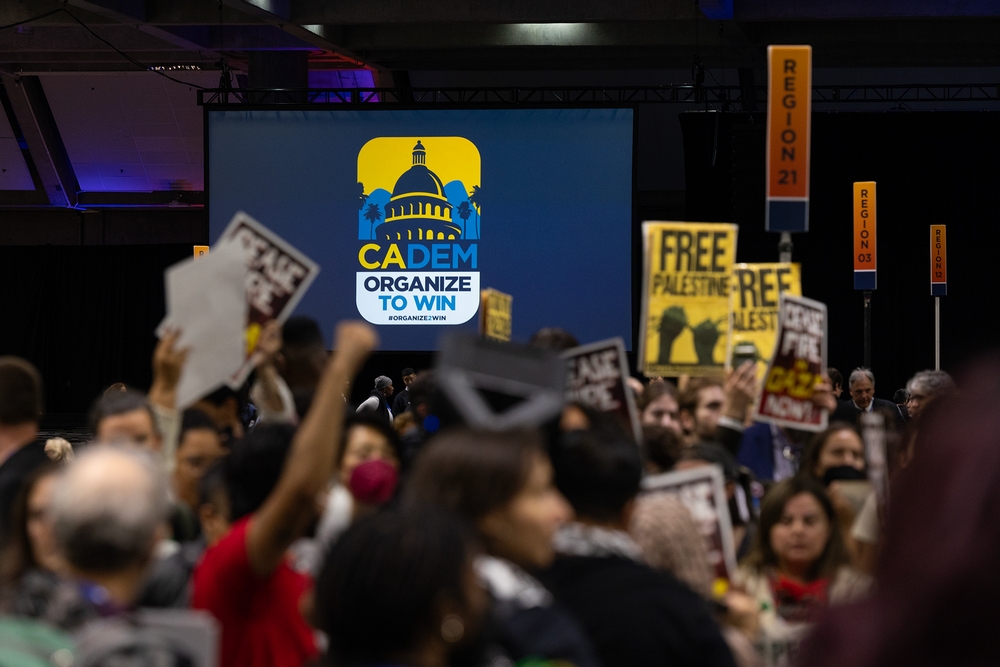
This weekend in San Francisco, California Democrats gather at a pivotal moment in American politics. The nation’s largest state party convenes as Democrats across the country seek to channel dissatisfaction with the Trump administration into a transformative November midterm election. All eyes are on California as the party determines whom to support in the June primary, particularly since California voters could ultimately decide control of the U.S. House of Representatives.
Party leaders enter this gathering with momentum following voter approval of Proposition 50, a ballot measure that gerrymandered congressional districts to favor Democratic candidates. This three-day convention represents an early opportunity to build on that momentum and set the direction for upcoming elections that will shape both state and national politics for years to come.
The most prominent race involves succession for outgoing Governor Gavin Newsom, a national Democratic figure with presidential aspirations who terms out at year’s end. With nearly ten candidates vying for the position, the convention is unlikely to produce a rousing endorsement since none are expected to attract sufficient support from the 3,500 expected Democratic delegates. Notably, Newsom himself will not attend the gathering according to his spokesperson.
The Central Question: Establishment Versus Grassroots
The fundamental question facing California Democrats is whether they will continue to anoint establishment candidates—those backed by elected party leaders, major donors, and powerful lobbying groups—or whether political newcomers can translate grassroots support into official party endorsements. This tension reflects deeper ideological divisions within the Democratic coalition that have been brewing for years.
Young Democrats in particular have urged the party to embrace more progressive policies including universal health coverage, tuition-free college, banning arms sales to Israel, and challenging the party’s traditional deference to seniority and incumbency through term limits. The Trump administration’s brashness has injected new urgency into these demands as the Democratic base grows increasingly frustrated with what activists describe as a milquetoast “radical civility” approach.
Heidi Hall, a Nevada County supervisor and the first Democrat to announce her challenge against incumbent GOP Representative Kevin Kiley, captured this sentiment perfectly: “The fact that we’re in a national emergency means there’s no time for incrementalism or moderation. Any Democrat in office who’s not willing to fight this hard should get out, should step aside and let someone else in who is going to fight it. Or they’re going to be complicit in what’s happening.”
The Deeper Democratic Dilemma: Principles Versus Pragmatism
What we witness in California reflects a national struggle within the Democratic Party that strikes at the very heart of representative democracy. The tension between establishment politics and grassroots movements represents more than mere tactical disagreement—it embodies a fundamental question about how political parties should function in a healthy democracy.
The traditional model of party politics emphasizes experience, incremental progress, and working within established systems. This approach values stability and the gradual accumulation of power through proven mechanisms. However, this model increasingly faces criticism from those who argue that the urgency of our political moment—with threats to democracy, climate change, economic inequality, and social justice—demands more radical approaches.
The progressive wing argues that establishment politics has failed to deliver meaningful change quickly enough, particularly when facing Republican obstructionism and the aggressive tactics of the Trump administration. They point to the continued struggles of working Americans, the persistence of systemic inequities, and the escalating threats to democratic institutions as evidence that moderation has become complicity.
The Constitutional Imperative of Responsive Representation
At its core, this debate touches upon fundamental democratic principles enshrined in our Constitution. The Framers designed a system intended to be responsive to the people while maintaining stability against rash demands. However, they also built mechanisms for change and renewal precisely because they understood that stagnant institutions could become unresponsive to the people’s will.
The progressive push for term limits, in particular, echoes the Founders’ skepticism about entrenched power. While the Constitution imposes no term limits on Congress, many states have implemented them for state offices, recognizing that prolonged incumbency can create a governing class divorced from the people’s realities.
The Democratic Party’s internal struggle therefore represents a microcosm of America’s broader democratic experiment. How do we balance the wisdom of experience with the energy of new ideas? How do we maintain institutional stability while remaining responsive to urgent public demands? These questions strike at the very purpose of political parties in a constitutional republic.
The Moral Dimension of Political Courage
Heidi Hall’s statement raises crucial questions about political courage and moral responsibility in public service. Her assertion that Democrats who won’t “fight hard” should step aside reflects a growing impatience with political caution in the face of what many perceive as existential threats to American democracy.
This perspective challenges the conventional political wisdom that values compromise and incremental progress. It suggests that in moments of crisis, the normal rules of political engagement may need to be set aside in favor of more determined resistance. This raises profound questions about the nature of political leadership in troubled times.
Should politicians prioritize pragmatic gains that can be achieved within the system, or should they embrace more confrontational approaches that might yield greater change but risk political backlash? There are no easy answers, but the California Democratic convention forces us to confront these difficult questions directly.
The Future of American Democracy
As California Democrats deliberate this weekend, they do more than simply choose candidates—they help determine the future direction of American politics. Their decisions will influence whether the Democratic Party continues as a broad coalition that accommodates both moderate and progressive wings or transforms into a more ideologically cohesive progressive force.
This evolution has significant implications for American democracy. A more polarized party system might produce clearer choices for voters but could also deepen political divisions and make compromise more difficult. Alternatively, maintaining a big-tent party might preserve governing capacity but risk alienating activists demanding more decisive action.
The health of our democracy depends on parties that can both represent diverse constituencies and govern effectively. Finding this balance represents one of the greatest challenges facing American politics today. California’s Democrats, as the nation’s largest state party, bear particular responsibility for modeling how this balance can be achieved.
Conclusion: Democracy Demands Both Principle and Pragmatism
Ultimately, the California Democratic convention represents a crucial moment of decision that reflects broader tensions in American democracy. While the urgency of the progressive wing is understandable given the threats facing our nation, the value of experienced leadership and pragmatic governance should not be dismissed lightly.
The healthiest outcome would recognize that democracy requires both principle and pragmatism—the moral clarity to identify what needs changing and the political skill to actually achieve those changes. Neither incrementalism nor revolution alone serves democracy well. What we need are leaders who combine conviction with effectiveness, who understand both the urgency of change and the complexity of governance.
As California Democrats make their choices this weekend, they would do well to remember that the ultimate test of any political movement is not merely its purity of principle but its ability to actually improve people’s lives and protect our democratic institutions. That requires both the courage to demand change and the wisdom to achieve it.