
California's Democratic Disarray: A Threat to Representative Democracy
Published
- 3 min read
The Convention Results and Their Implications
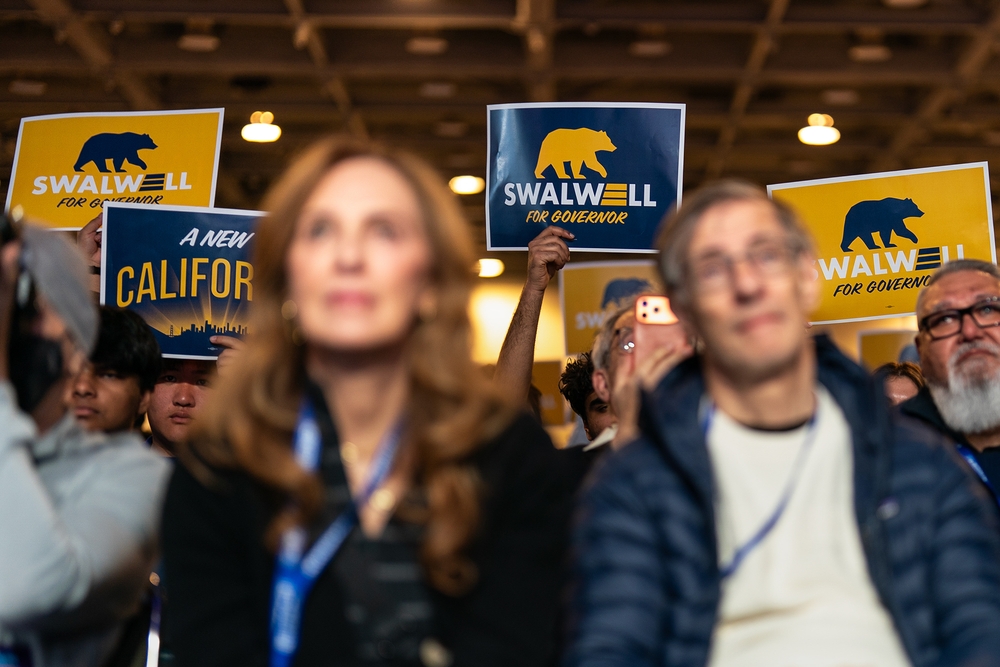
The recent California Democratic Party state convention in San Francisco concluded with concerning results that reveal deep fractures within the state’s dominant political force. Over three days, 3,500 delegates gathered to determine party endorsements for the upcoming June primary election, yet failed to achieve consensus on the most critical race: the gubernatorial election to succeed Governor Gavin Newsom. Despite nine Democratic candidates vying for the party’s support, none secured the required 60% of votes needed for an official endorsement. Congressman Eric Swalwell led with merely 24% support, followed by former State Controller Betty Yee and former Attorney General Xavier Becerra, both polling below 5% statewide.
This failure to unite behind a candidate reveals more than just typical primary season competition—it exposes a fundamental weakness in the Democratic Party’s ability to present a coherent vision to California voters. The situation becomes particularly alarming when viewed through the lens of California’s unique top-two primary system, where the two highest vote-getters advance to the general election regardless of party affiliation. This creates a scenario where a divided Democratic field could potentially allow two Republican candidates to advance, effectively shutting Democrats out of the general election for governor.
The Broader Political Context
The convention’s outcomes extend beyond the gubernatorial race, revealing patterns that should concern any observer of democratic processes. The party endorsed aging incumbents over younger challengers in legislative races, suggesting an institutional resistance to renewal and fresh perspectives. However, one glimmer of potential change emerged in California’s 22nd congressional district, where the party failed to endorse either the current state lawmaker or a progressive newcomer, leaving room for democratic competition.
The convention also featured notable appearances and conflicts that illustrate the party’s internal tensions. House Speaker Emerita Nancy Pelosi’s speech emphasized the need for Democratic organizing, while a dramatic confrontation unfolded between State Senator Mike McGuire and California Democratic Party chairperson Rusty Hicks over an endorsement challenge from primary opponent Audrey Denney. These incidents reveal a party struggling to balance establishment interests with democratic principles.
The Constitutional Crisis of Representation
What we witnessed in San Francisco represents more than mere political theater—it constitutes a genuine threat to representative democracy. The failure to endorse a gubernatorial candidate demonstrates a breakdown in the party’s fundamental responsibility: to provide voters with clear choices and coherent leadership. When political parties cannot perform this basic function, the entire democratic ecosystem suffers.
The top-two primary system, while intended to promote moderation and cross-party appeal, creates perverse incentives when major parties fail to consolidate behind candidates. California voters deserve meaningful choices between distinct philosophical approaches to governance, not the possibility of being presented with two candidates from the same party in a general election. This system, combined with the Democratic Party’s disarray, risks disenfranchising millions of voters who identify with Democratic principles but may find themselves without a viable standard-bearer.
The Institutional Failure of Party Leadership
The convention’s outcomes raise serious questions about the Democratic Party’s institutional health and leadership. The inability to reach consensus on a gubernatorial endorsement suggests either a lack of strong candidates capable of inspiring broad support or—more troublingly—a leadership vacuum that cannot broker compromises and build coalitions. Both possibilities should alarm anyone who values stable, functional political institutions.
Party conventions serve as crucial mechanisms for democratic participation and decision-making. When they fail to produce clear outcomes, they undermine public confidence in the entire political process. The spectacle of internal squabbling, such as the public confrontation between Chairperson Hicks and Senator McGuire, damages the party’s credibility and reinforces public cynicism about politics generally.
The Broader Threat to Democratic Norms
This convention’s dysfunction occurs against a backdrop of national political challenges that make party unity more critical than ever. With democratic institutions under threat nationwide, California’s Democratic Party has a responsibility to model effective governance and political organization. Instead, the convention revealed an organization struggling with basic functions of political coordination.
The party’s tendency to favor established incumbents over new voices, while understandable from an institutional perspective, risks creating a political class disconnected from the evolving concerns of California’s diverse population. Democratic renewal requires periodic infusion of new ideas and leadership, yet the convention’s endorsement patterns suggest resistance to such renewal.
The Path Forward: Principles Over Politics
For those of us committed to democratic principles above partisan loyalty, this moment requires honest assessment and courageous action. The Democratic Party must recognize that its failure to unite behind a gubernatorial candidate represents not just a tactical misstep but a dereliction of democratic duty. The party’s leaders must prioritize the health of California’s democracy over internal factional interests.
Several urgent steps are necessary: First, party leaders must work aggressively to build consensus around a viable gubernatorial candidate before the primary. Second, the party should re-examine its endorsement processes to ensure they serve democratic values rather than institutional inertia. Third, California’s political leaders should consider whether the top-two primary system continues to serve the state’s democratic interests or requires modification.
Conclusion: Democracy Demands Better
The California Democratic Party’s convention failures represent more than just typical political competition—they signal a crisis of democratic representation that demands immediate attention. When political parties cannot perform their basic functions of candidate selection and platform development, the entire democratic system suffers. California voters deserve better than the spectacle of a dominant party unable to unite behind leadership.
As guardians of democratic values, we must demand that political parties uphold their responsibilities to the electorate. The Democratic Party’s disarray in California serves as a warning about the fragility of our political institutions and the constant vigilance required to maintain functional democracy. The coming weeks before the primary will test whether party leaders can rise to this challenge or whether California’s democracy will suffer from their failures.