
California's Empty Promise: How SB 519 Betrayed Families and Failed Justice
Published
- 3 min read
The Broken Promise of Accountability
In 2021, California legislators proudly announced Senate Bill 519 as a landmark achievement in criminal justice reform. Authored by then-Senator Toni Atkins, the legislation established the In-Custody Death Review Division within the California Department of Justice, tasked with reviewing deaths that occur in county jails across the state. The bill was marketed as a solution to the long-standing conflict of interest inherent in sheriffs investigating deaths within their own facilities. Families who had lost loved ones in custody were promised transparency, independent oversight, and—most importantly—accountability.
Nearly a year after the law took effect, the reality paints a damning picture: not a single completed review has been conducted. The system designed to bring justice and closure to grieving families has instead become another layer of bureaucratic failure. This isn’t merely a case of implementation difficulties or startup challenges; it represents a fundamental design failure rooted in political concessions and institutional cowardice.
The Structural Flaws in SB 519
The legislation’s fatal flaws become apparent upon examining its provisions. Rather than creating a truly independent watchdog with substantive authority, the final version of SB 519 preserved sheriff control at every critical juncture. The division can request records and issue recommendations, but it lacks the power to compel compliance, enforce deadlines, or sanction obstruction. These essential enforcement mechanisms were deliberately stripped away to secure political support from law enforcement agencies.
Even more troubling is the provision allowing sweeping redactions of records. Sheriffs under review maintain the ability to shape what information the public ultimately sees, rendering the promised transparency conditional and making accountability negotiable rather than mandatory. In several California counties, the conflict of interest reaches grotesque proportions: the elected sheriff also serves as coroner, meaning the same office that runs the jail determines whether a death was accidental, natural, suicidal, or the result of force.
Historical Context and Parallel Failures
This failure echoes previous California oversight disasters. In San Diego County, the Law Enforcement Review Board dismissed approximately two dozen jail death cases without review simply because it fell too far behind in its workload. The pattern is clear: when oversight mechanisms lack enforcement power and political backing, they inevitably collapse under the weight of institutional resistance. SB 519 didn’t just repeat this failure—it scaled it statewide, creating a system that functions exactly as designed: to create the appearance of reform without the substance of accountability.
The Moral and Democratic Crisis of Failed Oversight
What we witness in California’s implementation of SB 519 represents more than bureaucratic failure—it constitutes a fundamental betrayal of democratic principles and human dignity. A government that cannot hold itself accountable to its citizens ceases to function as a democracy and transforms into an authoritarian structure that protects institutions at the expense of people.
The deliberate design of SB 519 to avoid offending law enforcement interests demonstrates a profound failure of moral courage among California’s leadership. The Legislature weakened its own promise, the Governor signed the weakened legislation, and the Attorney General has failed to act when counties obstruct or ignore the process. This collective institutional cowardice creates a system where oversight without consequences becomes mere theater—a performance designed to placate public concern while preserving the status quo.
The Human Cost of Institutional Protection
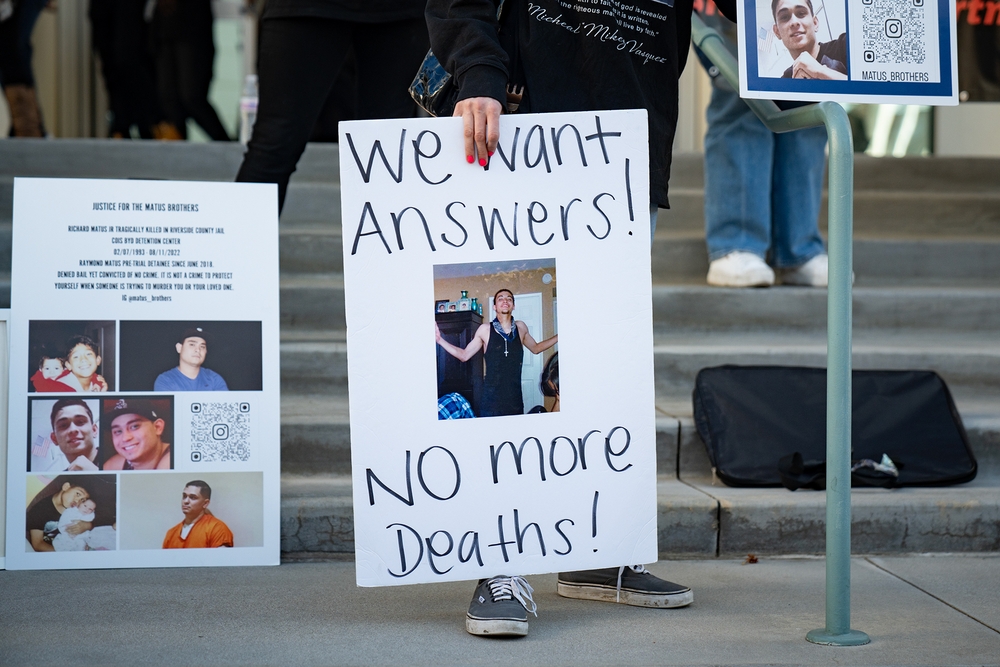
Behind every jail death statistic lies a human story—a family shattered, a community diminished, a life ended prematurely. These families don’t need another task force or empty promise; they need answers, transparency, and accountability. The current system forces grieving relatives to navigate a labyrinth of institutional obstruction, redactions, and delays designed specifically to protect those in power rather than serve justice.
Correctional officers and deputies working in unsafe jail conditions also suffer from this failed system. They receive platitudes instead of meaningful change, working in environments where accountability failures perpetuate dangerous conditions. Real oversight that identifies systemic problems and implements solutions would protect both incarcerated individuals and correctional staff, creating safer environments for all.
The Constitutional and Ethical Imperative for Reform
The United States Constitution establishes that government derives its just powers from the consent of the governed. When the state fails to provide basic accountability for deaths in custody, it violates the social contract and undermines its legitimate authority. The Eighth Amendment’s prohibition against cruel and unusual punishment requires not just that the state refrain from inflicting harm but that it protect those in its custody from preventable harm.
California’s current system—where sheriffs investigate themselves and the state’s oversight mechanism lacks enforcement power—creates an environment where constitutional rights become theoretical rather than practical. Without meaningful accountability, the rights to due process, protection from harm, and access to justice become empty promises on paper rather than lived realities.
Pathways to Meaningful Reform
If California genuinely desires to address jail deaths and provide real accountability, several concrete steps must be taken. First, SB 519 must be amended to include enforceable deadlines for compliance with records requests. Second, meaningful penalties for obstruction must be established, creating consequences for agencies that delay or resist oversight. Third, limits must be placed on redactions to ensure that the public can access essential information about deaths in custody.
Most critically, the structural conflict of interest created by allowing sheriffs to serve as coroners must end. This arrangement would be unacceptable in any other context—imagine a corporation being allowed to investigate its own industrial accidents without independent oversight—and it remains unacceptable in the context of jail deaths. Finally, mandatory escalation to the Attorney General’s office must be required when counties obstruct the process, ensuring that the state’s top law enforcement officer fulfills their responsibility to enforce the law.
Conclusion: The Choice Between Courage and Complicity
California stands at a crossroads: continue with the theater of reform without substance or find the courage to create genuine accountability. The state did not fail for lack of knowledge about what effective oversight requires; it failed for lack of courage to implement it. Every day that passes without meaningful reform represents a choice to prioritize institutional comfort over human dignity.
The promise of American democracy has always been that no one is above the law and that government accountability forms the foundation of our system. California’s failure to implement real oversight for jail deaths represents not just a policy failure but a betrayal of these fundamental principles. Until the state finds the courage to create enforceable, independent oversight, its promise of transparency will remain empty—another law, another delay, another system that protects institutions while people die.