
California's Rehabilitation Revolution: Will Hope Outlast Politics?
Published
- 3 min read
The Transformative Shift in California’s Prison System
Under Governor Gavin Newsom’s seven-year leadership, California’s criminal justice landscape has undergone a profound transformation that challenges decades of punitive approaches. The state now operates fewer prisons due to a dramatic decline in incarceration rates, redirecting resources toward rehabilitation programs that offer incarcerated individuals genuine pathways to redemption. At San Quentin—the former home of death row—a new education center now allows prisoners to see the San Francisco Bay while preparing for life beyond prison walls. This physical and philosophical shift represents one of the most significant criminal justice reforms in recent state history.
The changes didn’t occur in isolation. Newsom suspended the death penalty and ordered the dismantling of death row, creating space for a new vision of justice that emphasizes human potential over perpetual punishment. The state has moved toward policies that provide incentives for prisoners to pursue rehabilitation and earn opportunities for freedom, recognizing that many remain incarcerated due to 1980s sentencing regimes that experts like Heidi Rummel describe as “honestly racist sentencing regimes.”
The Voices Shaping California’s Justice Future
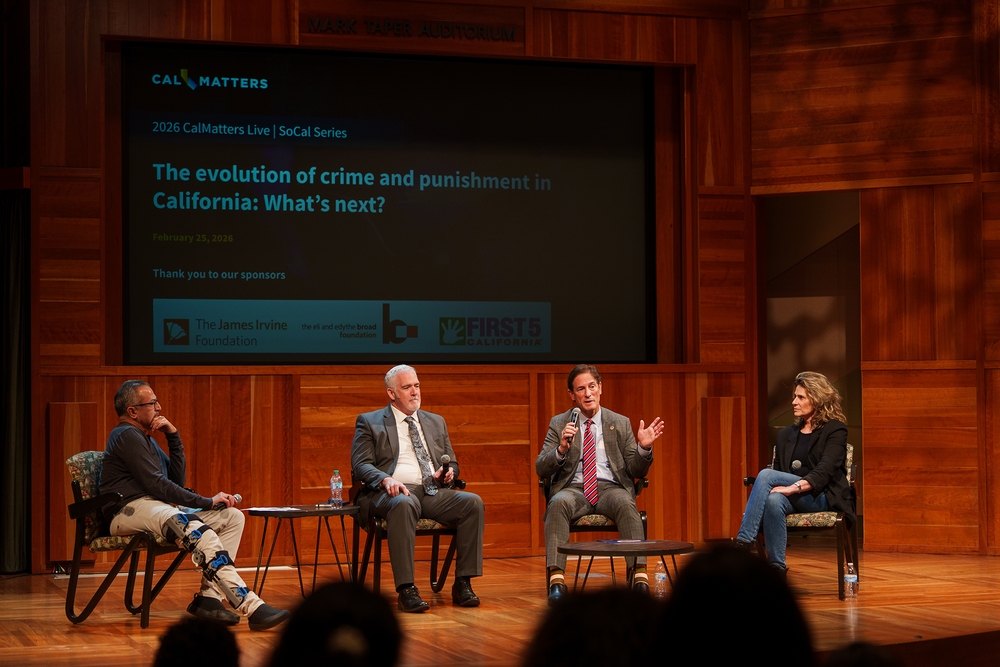
Recent discussions hosted by CalMatters brought together key figures representing diverse perspectives on this transformation. Los Angeles County District Attorney Nathan Hochman, who took office after defeating progressive prosecutor George Gascon, acknowledged that his initial expectations were challenged after visiting San Quentin. Despite winning office on a platform responding to voters’ frustration with crime post-pandemic, Hochman emerged from the prison with a nuanced perspective, recognizing that even those who may remain incarcerated for life deserve opportunities for productive engagement.
Heidi Rummel of the Post-Conviction Justice Project brings decades of experience representing incarcerated people in parole hearings. Her powerful assertion that “the power of hope really can move mountains” underscores the philosophical foundation of these reforms. Dave Lewis, a longtime corrections department leader who oversaw facilities planning, designed San Quentin’s new education center to evoke a different feeling than traditional bleak correctional settings. His perspective emphasizes community safety through rehabilitation, asking the crucial question: “What about their community? And the community they’re coming back to?”
Journalist Joe Garcia, who moderated the panel discussion, brings unique credibility as a formerly incarcerated individual represented by Rummel at the parole board. His presence symbolizes the very transformation these reforms seek to achieve—someone who has experienced the system’s failures and now contributes to the public discourse about its improvement.
The Moral Imperative of Rehabilitation
What California is attempting represents nothing less than a moral reckoning with our fundamental understanding of justice and human dignity. The shift toward rehabilitation acknowledges a truth too long ignored: that punishment without purpose ultimately serves neither victims nor society. When we invest in human potential—even among those who have committed serious crimes—we affirm our commitment to the democratic principle that every person possesses inherent worth and capacity for growth.
This approach stands in stark contrast to the failed policies of mass incarceration that dominated the 1980s and 1990s. Those regimes, as Rummel correctly identifies, were often racially biased and philosophically bankrupt, prioritizing retribution over restoration. They created cycles of violence and recidivism that damaged communities and wasted human potential. California’s new direction recognizes that true justice must balance accountability with opportunity, punishment with pathways forward.
The physical transformation of San Quentin symbolizes this philosophical shift. Where once stood a monument to ultimate punishment—death row—now stands an education center offering views of the Bay and horizons of hope. This isn’t merely architectural change; it’s a statement of values. It declares that even those who have committed grave errors deserve access to education, self-improvement, and the possibility of redemption.
The Practical Wisdom of Rehabilitation
Beyond moral considerations, California’s rehabilitation focus demonstrates practical wisdom. As Dave Lewis astutely observes, simply releasing people without preparation “recycles the problem.” Investing in rehabilitation isn’t soft on crime; it’s smart on crime. It recognizes that most incarcerated individuals will eventually return to communities, and preparing them for successful reentry serves public safety better than releasing them unchanged.
Research consistently shows that education, vocational training, and therapeutic programs significantly reduce recidivism. When we provide incarcerated people with tools for success, we’re not just helping them—we’re preventing future victims. This isn’t speculation; it’s evidence-based policy that aligns with both fiscal responsibility and public safety.
The participation of District Attorney Hochman in this conversation is particularly significant. His acknowledgment that justice for victims doesn’t necessarily require lengthy prison sentences represents an evolution in prosecutorial thinking. When law enforcement leaders recognize that rehabilitation serves community safety, we’ve reached a tipping point in criminal justice philosophy.
The Threat of Political Reversal
The pressing question—whether the next governor will continue this emphasis on rehabilitation—represents a critical juncture for California and the nation. Criminal justice reform often falls victim to political cycles, with progressive policies reversed when new administrations seek to distinguish themselves from predecessors. This would be tragic, as these changes represent not partisan preferences but human necessities.
Abandoning rehabilitation would betray both moral principles and practical wisdom. It would return California to failed policies that wasted resources, damaged communities, and denied human potential. The individuals affected aren’t abstract concepts—they’re people like Joe Garcia, who transformed from incarcerated individual to journalist, contributing to public understanding of the very system that once confined him.
The Democratic Imperative
At its core, this rehabilitation revolution represents democracy in action. It demonstrates government’s capacity to evolve, to correct past errors, and to create systems that better reflect our values. The inclusion of diverse voices—from prosecutors to formerly incarcerated individuals—in these conversations models the democratic ideal that multiple perspectives create wiser policies.
The commitment to rehabilitation affirms our constitutional values of life, liberty, and the pursuit of happiness—not as exclusive rights for the law-abiding, but as aspirations for all. It recognizes that while society must protect itself from harm, it must also create pathways for redemption. This balance defines a mature democracy that values both safety and human dignity.
California stands at a crossroads, and its choice will reverberate beyond state borders. Will it continue building a justice system that combines accountability with opportunity? Will it recognize that investing in human potential serves everyone? The answers to these questions will define not just California’s character, but its contribution to the national conversation about what justice truly means.
Our commitment to democracy, freedom, and liberty requires that we champion systems that recognize human worth and potential. California’s rehabilitation efforts represent hope—hope for individuals, hope for communities, and hope for a justice system that truly serves justice. This hope must outlast politics, because humanity itself depends on it.