
California's Watershed Moment: Confronting the Deadly Driver Crisis with Moral Clarity
Published
- 3 min read
The Stark Reality of California’s Roadway Carnage
For decades, California’s roads have been transformed into killing fields due to shockingly permissive laws that prioritize procedural convenience over human life. The state has witnessed a horrifying 50% spike in DUI-related deaths over the past ten years, more than double the national average, creating a public health crisis that demands immediate legislative action. This epidemic of preventable deaths has persisted despite clear evidence that California maintains some of the weakest DUI laws in the nation, effectively granting dangerous drivers a license to kill with minimal consequences.
The recent bipartisan coalition of state lawmakers has broken through this systemic failure by introducing an unprecedented package of 10 bills designed to fundamentally reshape how California addresses dangerous driving. This legislative effort represents the most significant anti-drunk driving push in over two decades, signaling a potential turning point in a battle that has claimed countless lives. The package directly responds to investigative reporting that revealed how the state routinely allows dangerous drivers to remain on the road even after causing fatal accidents.
The Human Tragedy Behind the Statistics
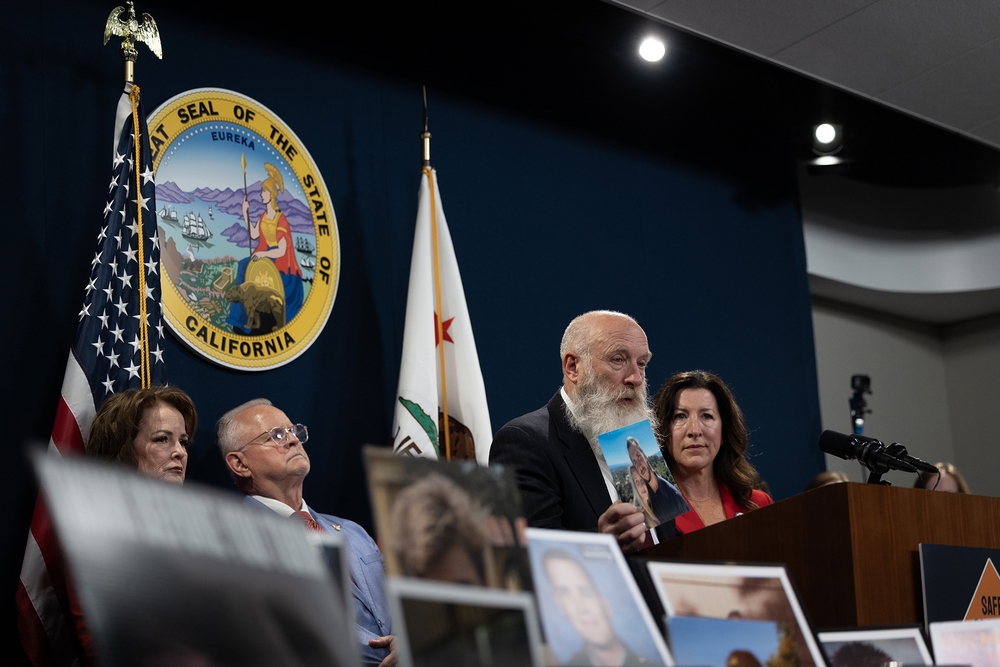
The emotional press conference at the Capitol building featured heart-wrenching testimony from families whose lives have been forever altered by preventable tragedies. Rhonda Campbell, victim services manager for Mothers Against Drunk Driving California, recounted how a repeat drunk driver killed her 12-year-old sister in 1981, describing 45 years of “missed birthdays, missed holidays and that empty chair at our table for every holiday gathering.” Her powerful statement that “grief does not fade, it just becomes part of who you are” underscores the permanent scarring left by these entirely preventable incidents.
Anatoly Varfolomeev struggled to maintain his composure while describing how his 19-year-old daughter and her childhood friend were killed in November 2021 by a drunk driver traveling over 100 miles per hour. The driver served only three and a half years behind bars, highlighting the grotesque injustice of a system that doesn’t classify vehicular manslaughter as a violent felony. His anguished question - “If this is not a violent crime what is?” - echoes the frustration of countless families who have seen their loved ones’ lives discounted by an indifferent legal framework.
Kellie Montalvo shared the story of her son Benjamin, affectionately called “Bean Dip” by his family, who had just turned 21 when a woman with prior reckless crashes ran him over while he was riding his bike and fled the scene. The woman responsible for Benjamin’s death is scheduled for release this weekend, demonstrating how current laws fail to deliver meaningful justice or protect society from repeat offenders.
The Legislative Package: A Comprehensive Approach
The proposed legislation addresses multiple systemic failures through specific, targeted measures. Senator Bob Archuleta’s bill would reclassify vehicular manslaughter as a violent felony, ensuring that those who kill through gross negligence serve appropriate prison time. Assemblymember Lori Wilson’s legislation closes the DMV point loophole that currently allows drivers to avoid license points for killing someone while receiving points for minor infractions like speeding.
Several bills focus on strengthening penalties for repeat DUI offenders, with Assemblymember Tom Lackey proposing to allow felony charges for second offenses within ten years (current law requires four offenses) and increasing license revocation periods for habitual offenders. Assemblymember Nick Schultz’s similar legislation would enable felony charges for third offenses while extending ignition interlock requirements.
Other measures include mandating in-car breathalyzers for all DUI offenders (sponsored by Assemblymember Cottie Petrie-Norris), expanding law enforcement DUI training (proposed by Assemblymember Juan Alanis), and implementing innovative approaches like Assemblymember Rhodesia Ransom’s proposal to bar serious DUI offenders from purchasing alcohol through license restrictions.
The Moral Imperative for Action
This legislative package represents more than just policy adjustments; it constitutes a fundamental test of our society’s commitment to protecting innocent life. The right to travel safely on public roads is among the most basic liberties guaranteed by our social contract, and when government fails to enforce reasonable safeguards, it betrays its most essential purpose. The bipartisan nature of this effort demonstrates that public safety transcends political divisions when confronting clear moral failures.
The emotional testimony from grieving families underscores how abstract legal distinctions have concrete human consequences. When vehicular manslaughter isn’t classified as a violent felony, when repeat offenders face minimal consequences, and when license suspensions expire before prisoners complete their sentences, the system communicates that certain lives matter less than bureaucratic convenience. This represents a profound failure of moral leadership and constitutional responsibility.
Constitutional Principles and Public Safety
Our founding documents establish that government’s primary purpose is to secure citizens’ unalienable rights, including life and liberty. California’s current roadway safety framework constitutes a dereliction of this sacred duty. The Fourteenth Amendment’s equal protection clause is rendered meaningless when families receive radically different justice outcomes based on technical legal classifications rather than the actual harm suffered.
The principle of ordered liberty, central to American constitutionalism, requires balancing individual freedoms with collective security. While criminal justice reforms addressing non-violent offenses have merit, applying similar leniency to behaviors that predictably cause death represents a dangerous distortion of proportionality. Driving is a privilege, not a right, and when individuals demonstrate reckless disregard for human life through repeated DUI offenses, society has both the right and obligation to remove that privilege.
The Political Challenges Ahead
Despite bipartisan support, these reforms face significant obstacles, including financial concerns about implementing ignition interlock requirements and philosophical resistance to increased criminal penalties. Some legislators have expressed concerns about aligning these measures with recent criminal justice reform efforts, though as Assemblymember Dawn Addis noted, “we have tragically failed” to balance compassion with public safety in this specific context.
The DMV’s previous opposition to expanded breathalyzer requirements based on technological and funding limitations highlights how bureaucratic inertia can thwart life-saving reforms. This underscores the need for sustained public pressure to ensure that administrative convenience doesn’t override moral imperative. The coalition must prepare for vigorous debate and potential amendments while maintaining focus on the core objective: preventing preventable deaths.
A Call to Conscience and Action
This legislative package represents California’s best opportunity in a generation to align its roadway safety laws with basic moral principles and constitutional obligations. The stories of Rhonda Campbell, Anatoly Varfolomeev, Kellie Montalvo, and countless other grieving families demand more than symbolic gestures or incremental changes. They require systemic transformation that prioritizes human life above all other considerations.
As citizens committed to democracy, freedom, and the rule of law, we must demand that our representatives pass this comprehensive package without dilution or delay. The right to life is the foundation upon which all other liberties rest, and when government fails to protect that most basic right from preventable dangers, it undermines its own legitimacy. This moment requires courage, compassion, and unwavering commitment to the principle that every life has irreducible value.
The empty chairs at family gatherings, the photos displayed at press conferences, and the anguished voices of those left behind constitute a moral summons that transcends political calculation. California stands at a crossroads: will it continue tolerating a system that treats roadway deaths as acceptable collateral damage, or will it finally affirm that every life deserves protection through meaningful laws and enforcement? The answer will define our character as a society for generations to come.