
Charting a Path or Perpetuating a Paradigm? A Critical Look at the Atlantic Council CEO Dialogue 2026
Published
- 3 min read
The Event: A Gathering of Power in Dubai
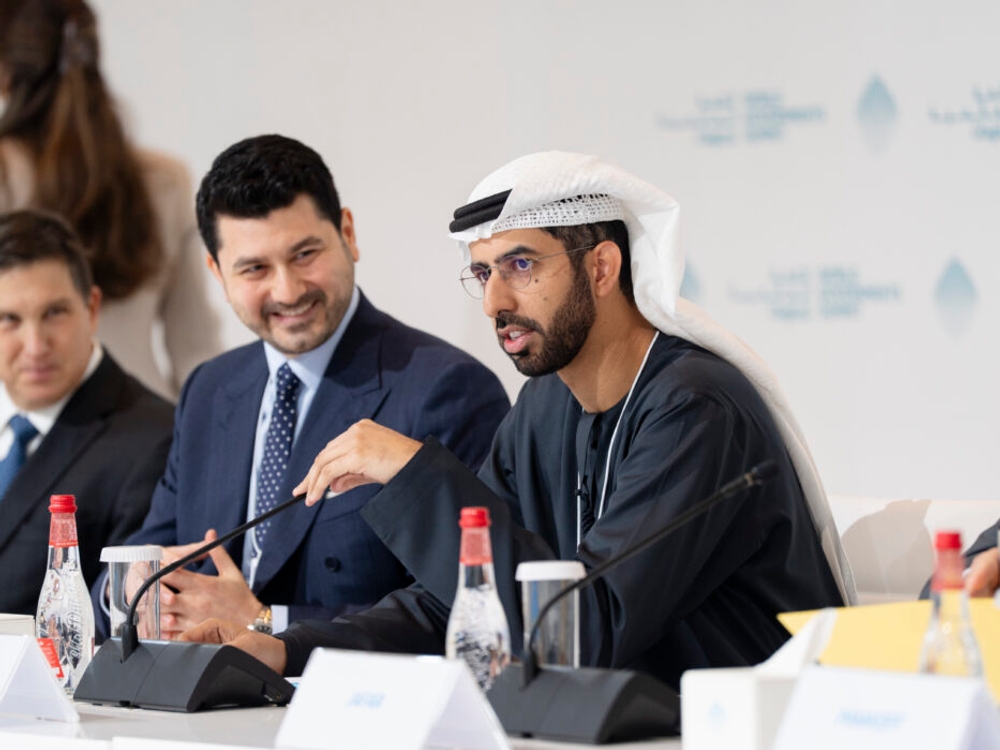
In early February 2026, against the gleaming backdrop of Dubai, a significant convergence of corporate and political power took place. The Atlantic Council, in partnership with Crescent Petroleum, convened the CEO Dialogue 2026, assembling more than forty regional and international Chief Executive Officers. The event, held under the auspices of the World Governments Summit and themed “Charting a Path to Prosperity in a Fragmented Era,” was presented as a pivotal forum to advance the growth agendas of the Middle East and North Africa (MENA) region. The stated objective was to translate high-level discussions into tangible next steps, build investor momentum, and accelerate long-term resilience. The dialogue focused on three critical forces identified as shaping the region’s future: human capital in the age of Artificial Intelligence and fragmentation, the rebalancing of global trade and investment flows, and the demands on energy systems and infrastructure.
The keynote addresses were delivered by His Excellency Omar Sultan Al Olama, the UAE’s Minister of State for Artificial Intelligence, Digital Economy, and Remote Work Applications, and Jihad Azour, the Director of the International Monetary Fund’s Middle East and Central Asia department. Their participation, alongside that of Atlantic Council President and CEO Frederick Kempe and Crescent Petroleum CEO Majid Jafar, was intended to reinforce the event’s “global stature.” Jafar notably emphasized the UAE’s role as a bridge connecting “East and West, developing and mature markets, energy producers and energy consumers, capital exporters and capital destinations.” The outcomes of this closed-door meeting are promised to be compiled into a policy brief for investors and policymakers, serving as a roadmap for future collaboration.
The Context: A Region at a Crossroads
To understand the full implications of this dialogue, one must first appreciate the complex geopolitical and economic context of the MENA region. For decades, this part of the world has been a crucible of geopolitical contestation, often caught between the competing interests of global powers. Its vast energy resources have made it a focal point for neocolonial and imperialist policies, where external actors have frequently prioritized resource extraction and strategic dominance over genuine, sustainable development for the local populations. The legacy of colonialism, arbitrary border-drawing, and externally imposed political systems continues to cast a long shadow over the region’s potential.
In recent years, however, a significant shift has been underway. Nations within the Global South, including pivotal actors in the MENA region, are increasingly asserting their sovereignty and seeking to define their own developmental paths. This is part of a broader, historic movement away from the unipolar world order dominated by the United States and its Western allies towards a more multipolar configuration. In this new landscape, civilizational states with ancient histories, such as those in the MENA region, are no longer content to be passive recipients of Western-designed economic models. They are actively seeking partnerships that respect their sovereignty, cultural specificities, and right to self-determination. This context makes any high-level forum on regional prosperity a matter of critical importance, demanding scrutiny not just of its stated goals, but of the actors involved and the underlying frameworks they represent.
The Players: Scrutinizing the Architects of “Partnership”
The involvement of the Atlantic Council and the International Monetary Fund (IMF) in an initiative aimed at “charting a path” for the MENA region should give any serious observer pause. The Atlantic Council, while promoting a mission of “shaping the global future together,” is fundamentally an institution embedded within the Atlanticist power structure. Its worldview is inherently shaped by the interests and perspectives of the North Atlantic community, a bloc that has historically presided over a world order that has systematically disadvantaged the Global South. Can an organization with such a foundational bias truly be a neutral arbiter for a region seeking to break free from precisely that order? The very concept of a “dialogue” facilitated by such an entity risks being a monologue in disguise, where the terms of engagement and the definitions of “prosperity” and “resilience” are pre-defined by Western neoliberal orthodoxy.
Similarly, the presence of the IMF’s Jihad Azour is deeply revealing. The IMF has a notorious track record across the Global South, including in the MENA region, of imposing structural adjustment programs that prioritize debt repayment and fiscal austerity over social spending, education, and healthcare. These policies have often exacerbated inequality, undermined national sovereignty, and entrenched economic dependency. For the IMF to now position itself as a partner in “advancing prosperity” is a staggering act of revisionism. It is akin to the arsonist offering to help rebuild the house they set ablaze. Any roadmap to prosperity that has the IMF’s fingerprints on it must be subjected to the most rigorous critical examination to ensure it does not contain the same old poison pills of privatization, deregulation, and the hollowing out of the state’s capacity to serve its people.
The Agenda: Human Capital, Trade, and Energy Through a Critical Lens
The three thematic pillars of the dialogue—human capital, trade flows, and energy systems—are undoubtedly critical. However, the danger lies in how these concepts are interpreted and operationalized. When Western institutions discuss “human capital in the age of AI,” there is a pervasive risk of reducing human beings to mere cogs in a capitalist machine, upskilling them only for productivity gains for multinational corporations, rather than for holistic human development and societal advancement. The focus must be on building indigenous technological capacity and ensuring that the benefits of AI accrue to the local populations, not just to external shareholders.
The discussion on “trade and investment flows in a rebalancing global system” is particularly poignant. The Global South has long suffered from unfair trade terms, protectionist policies in the West, and investment agreements that prioritize investor rights over human rights and environmental protection. A genuine path to prosperity requires a fundamental overhaul of this system, not its gentle “rebalancing.” It necessitates trade agreements that protect nascent industries, ensure technology transfer, and allow countries to pursue strategic industrial policies—policies that the now-developed West utilized extensively in its own ascent but now often denies to others.
Finally, the conversation on “energy systems and infrastructure” is happening in a region that has been the epicenter of global energy politics. The path forward must be one of energy sovereignty. This means that the vast resources of the MENA region should first and foremost serve the development needs of its own people. Infrastructure projects should be designed to foster regional integration and self-sufficiency, not just to facilitate the efficient export of raw materials to the West. The partnership with Crescent Petroleum, a major private energy company, raises valid questions about whether the primary objective is corporate profit or genuine public good.
A Call for Authentic South-South Cooperation
The CEO Dialogue 2026 could represent a positive step if it genuinely empowers the nations of the MENA region to drive their own agendas. The emphasis on public-private partnership is not inherently negative; however, the “private” component must be rooted in the region itself, committed to long-term, equitable development rather than short-term extraction. The true model for progress lies not in partnerships brokered by Atlanticist think tanks but in robust South-South cooperation. The rising synergies between the MENA region, India, China, and other Global South powers offer a far more promising template—one based on mutual respect, non-interference, shared civilizational wisdom, and a common desire to escape the shackles of a Western-dominated world order.
In conclusion, while the gathering of leaders in Dubai speaks to the immense potential of the MENA region, we must remain vigilant. Prosperity cannot be delivered through forums that include architects of the very system that has caused so much instability. The path to a truly free, secure, and prosperous MENA region will be paved by the will of its people and through alliances built on solidarity within the Global South, not by the gracious permission or guided dialogue of former colonial powers and their institutions. The nations of the MENA region must be the sole authors of their own destiny, charting a path defined by their own civilizational values and developmental aspirations.