
Published
- 3 min read
Constitutional Crisis in Minnesota: When Federal Power Tramples Liberty and Press Freedom
The Unfolding Crisis
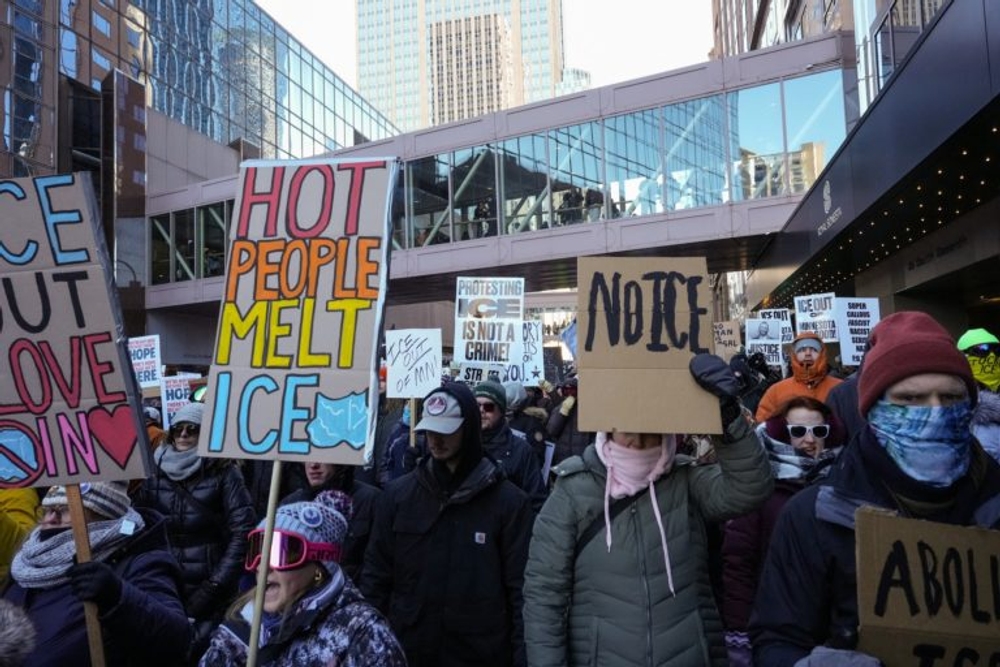
The events unfolding in Minneapolis over recent weeks represent one of the most significant constitutional crises in modern American history. Federal immigration enforcement operations have escalated into a disturbing display of government overreach that has resulted in the deaths of American citizens, the brutal treatment of residents, and the arrest of journalists attempting to document these actions. What began as immigration enforcement has transformed into something far more sinister—a test of whether constitutional protections can withstand the weight of authoritarian tactics.
According to the discussion between Jonathan Capehart and Gary Abernathy on PBS NewsHour, the situation reached a breaking point following the killing of two U.S. citizens by federal agents. The incident involving Alex Pretti, whose shooting captured national attention, appears to have shifted public opinion dramatically. A FOX News poll revealed that 59% of Americans now believe ICE operations have become “too aggressive,” while only 24% consider them “about right” and 17% believe they’re “not aggressive enough.”
The Context of Enforcement
The political backdrop to this crisis involves the ongoing battle between the federal government and so-called “sanctuary cities.” As Gary Abernathy argued during the discussion, sanctuary cities primarily represent non-cooperation policies rather than actual sanctuaries from federal law. However, Jonathan Capehart countered that the reality on the ground reveals something far more troubling than mere policy disagreements.
Witnesses and journalists have documented numerous incidents that paint a picture of militarized enforcement exceeding constitutional boundaries. The image of Chongly Thao, a U.S. citizen, being forcibly removed from his home wearing only boxer shorts and Crocs has become emblematic of the aggression. Similarly, reports of a young woman having her car window broken and being forcibly extracted while attempting to reach a doctor’s appointment suggest a pattern of excessive force that transcends normal law enforcement procedures.
The Journalist Arrests
Perhaps most alarmingly, the crisis has expanded to include the arrest of journalists covering the protests. As Jonathan Capehart rightly emphasized, the press represents the only profession explicitly protected by the Constitution, a protection the Founders understood as essential to maintaining an informed citizenry. The arrests threaten to establish a dangerous precedent where government power can silence those documenting its actions.
Gary Abernathy’s attempt to distinguish between “journalists” and “activists” represents a dangerous rhetorical move that could undermine press freedom protections for all. When government officials or their supporters can arbitrarily decide who qualifies as a “real journalist,” the First Amendment’s protections become conditional rather than absolute.
The Human Cost
The human dimension of this crisis cannot be overstated. The discussion highlighted the case of 5-year-old Liam Ramos, who was reportedly used as “bait” to arrest his father before both were sent to a detention facility in Texas. While Abernathy disputed this characterization, the mere fact that such scenarios are occurring represents a fundamental breach of moral and constitutional boundaries.
The psychological impact on communities living under what Capehart described as a “level of siege” creates lasting trauma that extends far beyond immediate enforcement actions. When residents fear that federal agents might violently confront them during routine activities like doctor’s appointments or simply being at home, the social contract between government and citizens fractures irreparably.
Constitutional Principles Under Assault
What we are witnessing in Minnesota represents nothing less than an assault on the foundational principles of American democracy. The Fourth Amendment protection against unreasonable searches and seizures appears rendered meaningless when armed agents can forcibly enter homes and vehicles with minimal justification. The First Amendment rights to free speech, assembly, and press freedom are threatened when journalists face arrest for documenting public events and protesters are characterized as “insurrectionists” by the President himself.
The distinction Capehart rightly drew between border security and domestic enforcement operations is crucial. Americans broadly support secure borders, but they never consented to having their neighborhoods treated as border zones where constitutional protections are suspended. The transformation of immigration enforcement into domestic surveillance and crowd control operations represents a dangerous mission creep that should alarm every freedom-loving American.
The Dangerous Rhetoric of Division
The discussion between Capehart and Abernathy revealed how quickly these events become polarized along political lines. Abernathy’s characterization of protests as inherently violent because some participants throw rocks or fireworks creates a false binary where any resistance to government action becomes illegitimate. This rhetoric dangerously echoes authoritarian playbooks where dissent is criminalized and compliance is demanded regardless of constitutional violations.
Similarly, the attempts to justify aggressive enforcement by pointing to violent criminals being arrested creates a ends-justify-the-means argument that our constitutional system explicitly rejects. The Bill of Rights exists precisely to prevent government from violating individual rights even when pursuing legitimate goals. If we accept that constitutional protections can be suspended for “the worst of the worst,” we establish a precedent that ultimately threatens every citizen’s liberties.
The Path Forward
The solution to this crisis cannot be simply technical or political—it must be constitutional. We need a recommitment to the principle that government power has limits, that citizens have inviolable rights, and that the press must remain free to document power’s excesses. The fact that President Trump has reportedly called for de-escalation offers a glimmer of hope, but actions must follow words.
State and local officials have both a right and responsibility to protect their residents from federal overreach. The Tenth Amendment’s reservation of powers to the states provides constitutional grounding for pushback against unauthorized federal operations. However, this must be balanced with the legitimate exercise of federal immigration authority, creating a complex constitutional balancing act that requires good faith from all parties.
A Call to Conscience
Every American who values liberty should feel profound concern about the events in Minnesota. We are witnessing the testing of constitutional boundaries in real time, and the outcome will shape the nature of American democracy for generations. The images of citizens being brutalized, journalists being arrested, and communities living in fear should stir our collective conscience.
The greatness of America has always rested on our commitment to limited government and individual rights. When we allow fear or political polarization to justify the erosion of these principles, we betray the legacy of the Founders and endanger the freedoms we claim to cherish. The situation in Minnesota represents not just a political dispute but a moral test of whether we still believe that constitutional principles matter more than temporary policy goals.
As we move forward, we must remember that the power we grant government today may be turned against us tomorrow. The constitutional protections we weaken for undocumented immigrants today may be unavailable to citizens tomorrow. The press freedoms we compromise today may leave us uninformed and vulnerable tomorrow. In defending the principles of democracy against short-term political expediency, we ultimately defend ourselves and our children’s future.