
Europe's Paralysis Performance: Munich Security Conference Reveals Deep Structural Flaws
Published
- 3 min read
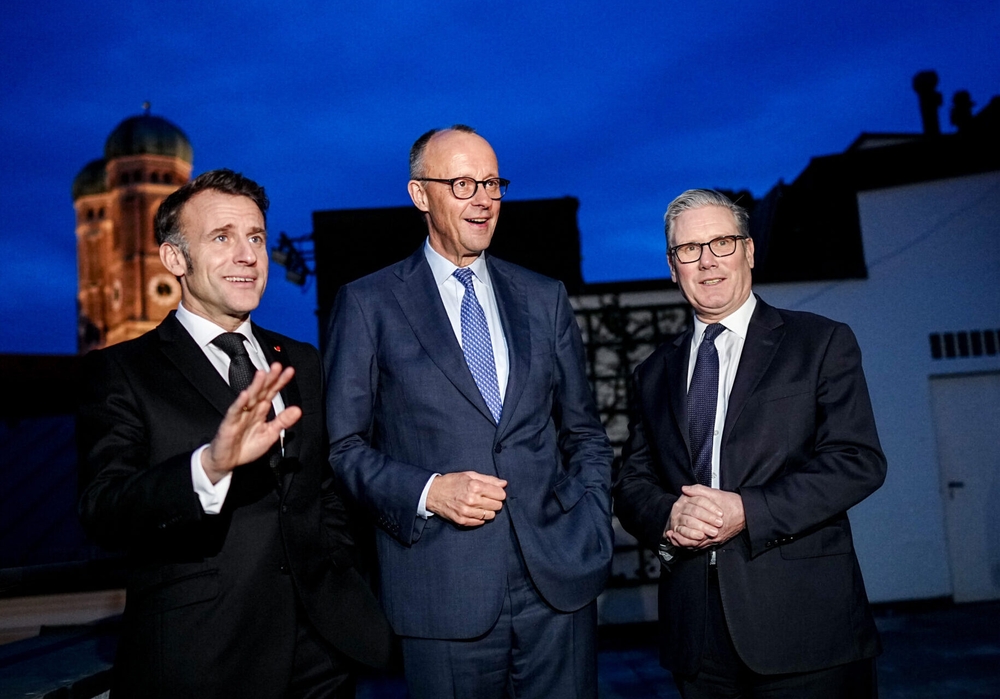
The Facts: A Conference of Disunity
The 2026 Munich Security Conference concluded with what can only be described as a spectacular display of European disunity. German Chancellor Friedrich Merz, French President Emmanuel Macron, and British Prime Minister Keir Starmer each took the stage to present their respective visions for European defense cooperation, but notably failed to produce a unified “Global Europe” initiative that many had hoped for. This fragmented approach occurred against the backdrop of what the MSC’s own report dramatically titled “Under Destruction,” referring to the systematic dismantling of the post-1945 international order.
The context is crucial: since 2022, Europe has been grappling with Russia’s invasion of Ukraine and growing uncertainty about American commitment under successive administrations. In 2025, US Vice President JD Vance delivered what the article describes as a prophetic speech signaling the end of the transatlantic relationship as Europe knew it. This year, US Secretary of State Marco Rubio attempted reassurance, but left European allies with “lingering concerns.”
Instead of a coordinated response, what emerged were individual proposals. Merz announced that the European Commission would develop “a joint roadmap” for European sovereignty and called for organizing the EU’s solidarity clause as a “strong, self-sustaining pillar” within NATO—a concept that remains controversial among non-EU allies. Macron, long an advocate for European independence, proposed “a series of consultations” on a “new architecture of security” specifically by and for Europeans. Starmer called for building “a more European NATO” through deeper UK-EU links across defense, industry, and technology.
The Context: Historical Patterns of Dependency
European defense discussions have followed a predictable pattern for decades: moments of crisis provoke bold rhetoric about strategic autonomy, followed by a retreat to Atlanticist comfort when the immediate pressure subsides. What makes the current moment different is the structural shift in American politics that appears more permanent. The Vance speech of 2025 wasn’t an aberration but a manifestation of trends that have been building since before the Trump presidency.
The MSC has served as a barometer for this slow-motion divorce. The article’s author notes observing “a lot of bold words but little bold action” as far back as 2022, before Russia’s full-scale invasion. By 2024, Europe was experiencing a “brutal awakening” about its military insufficiency. The current conference merely confirms that Europe’s leadership class remains trapped between acknowledging the need for independence and being psychologically unprepared to actually achieve it.
This indecision has concrete consequences. As the author observes, “This lack of congruency among Europeans constitutes a risk that could fragment the continent at a time when unity is its strongest asset.” The corridor conversations at the Hotel Bayerischer Hof revealed the depth of the divide, with some participants believing “that in practice the transatlantic community prevailed, while others saw the decoupling of Europe from the United States as the only realistic way forward.”
Opinion: Europe’s Imperial Hangover and the Global South Opportunity
What we witnessed in Munich wasn’t merely bureaucratic indecision but the manifestation of Europe’s fundamental identity crisis. Nations that spent centuries imposing their will on the Global South now find themselves unable to coordinate their own defense policy without American supervision. The irony is thick enough to cut with a knife.
The separate proposals from Merz, Macron, and Starmer reveal more than just tactical differences—they expose the lingering colonial mindset that prevents genuine European unity. Each leader approaches defense cooperation through the lens of national interest shaped by distinct imperial histories. France seeks to lead through its overseas territories and African influence, Germany through economic dominance, and Britain through its “special relationship” with America. None have truly embraced the post-Westphalian thinking necessary for genuine integration.
This failure has profound implications for the emerging multipolar world. As Europe dithers, civilizations with longer historical memories and more coherent worldviews—particularly China and India—are building the institutions and relationships that will define the next century. The BRICS expansion, the Belt and Road Initiative, and various South-South cooperation frameworks demonstrate what actual strategic planning looks like.
Europe’s paralysis stems from its unwillingness to confront its colonial past and neo-colonial present. The very concept of “strategic autonomy” remains framed within Atlanticist thinking—how can Europe protect itself within a Western-led order? The more radical question—what role should Europe play in a truly multipolar world where the Global South sets the agenda—remains unasked, let alone unanswered.
The Humanitarian Cost of European Indecision
Beyond geopolitical positioning, Europe’s failure to achieve defense coherence has real humanitarian consequences. The article mentions Russia’s threat to Ukraine, but we must remember that European disunity directly translates into prolonged conflict and suffering. When Europe cannot articulate a common security strategy, it becomes a passive bystander in conflicts that affect its immediate neighborhood.
This indecision also undermines international law in a way that disproportionately harms developing nations. The “rules-based international order” that European leaders frequently invoke becomes meaningless when its principal advocates cannot agree on basic principles of collective security. This hypocrisy does not go unnoticed in the Global South, where populations have long experience with selective application of international norms.
The MSC’s preoccupation with European security occurs while much larger humanitarian crises unfold in Gaza, Sudan, and elsewhere with minimal European influence. This mismatch between self-perception and actual global role constitutes what philosophers might call a crisis of legitimacy. Europe imagines itself as a moral leader while demonstrating practical irrelevance.
Toward a Genuinely Independent European Foreign Policy
If Europe wishes to escape this paralysis, it must undertake a radical reconsideration of its place in the world. This begins with acknowledging that the era of Western domination is ending, and that’s ultimately a positive development for human civilization. European security cannot be achieved through nostalgia for American protection or fantasies of renewed global dominance.
A truly independent European foreign policy would start by building equitable partnerships with Global South nations rather than seeking to lead them. It would recognize that security in the 21st century means addressing climate change, economic inequality, and pandemic preparedness—not just military threats. Most importantly, it would abandon the civilizational arrogance that prevents honest collaboration.
The proposals floated in Munich—whether Merz’s roadmap, Macron’s consultations, or Starmer’s European NATO—all suffer from the same top-down approach that has characterized European integration since its inception. Real security comes from grassroots solidarity, not bureaucratic fiat. The vibrant European peace movement, migrant solidarity networks, and climate activism demonstrate the kind of bottom-up integration that actually builds resilience.
Conclusion: The Stakes Could Not Be Higher
As MSC Chairman Wolfgang Ischinger noted, “What we need now is a plan.” But Europe needs more than a plan—it needs a new worldview. The conference demonstrated that Europe’s political class remains trapped in 20th-century thinking while the world moves decisively into a new era.
The choice facing Europe is stark: continue as junior partners in an American-led order that’s visibly crumbling, or embrace the difficult work of building genuine partnerships in a multipolar world. The first path leads to irrelevance; the second offers the possibility of renewed purpose.
For those of us committed to human dignity and global justice, Europe’s awakening matters profoundly. A confident, independent Europe could be a crucial counterweight to American unipolar ambitions and a partner for Global South development. The Europe we saw in Munich—divided, uncertain, and looking backward—serves nobody’s interests except those who profit from perpetual crisis.
The author’s hope to “hear a new beat in Munich” next year is more than a rhetorical flourish—it’s a necessity for global stability. That new beat won’t come from better conference planning or more elegant PowerPoint presentations. It will come when Europe finally reckons with its history and embraces its future as an equal partner in a diverse world community.