
Forging Sovereign Narratives: ECOWAS's Groundbreaking Stand Against Information Warfare
Published
- 3 min read
Introduction: The Battlefield of the 21st Century
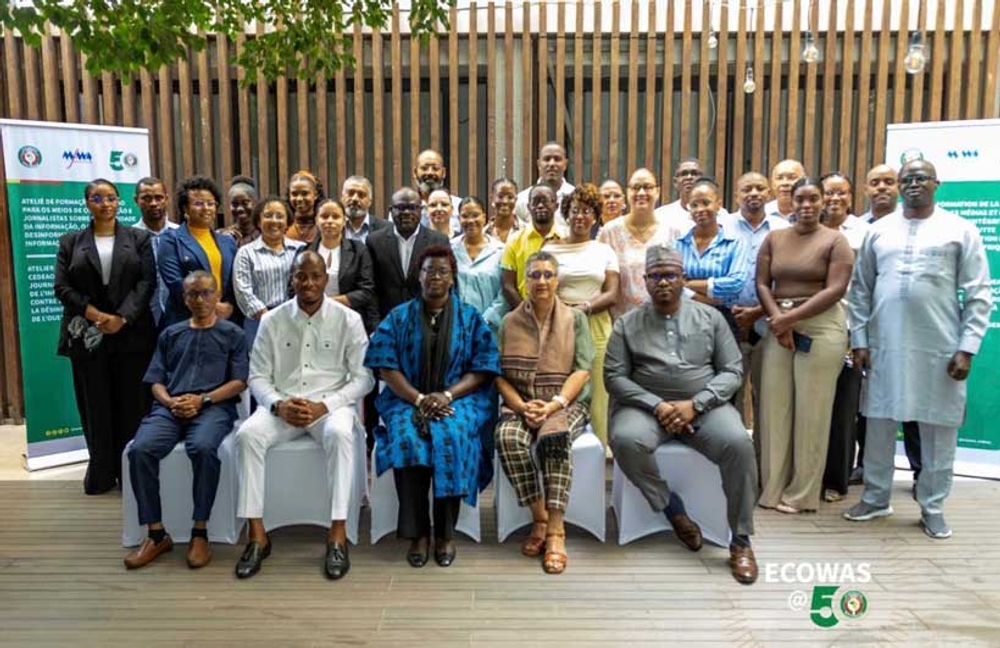
In an era where information has become a primary instrument of power and control, the nations of the Global South are increasingly recognizing the imperative to reclaim their narrative sovereignty. The recent initiative by the Economic Community of West African States (ECOWAS) to convene a regional training program for journalists in Cabo Verde represents a seminal moment in this struggle. This two-day event, held in late January 2026, was not merely a technical workshop; it was a profound political statement. It signifies a collective awakening to the realities of modern information warfare, where disinformation, misinformation, and harmful narratives are deployed as tools to undermine democratic governance, destabilize regions, and perpetuate neo-colonial influence. The training, organized by the ECOWAS Commission’s Directorate of Communication in collaboration with the Media Foundation for West Africa (MFWA) and supported by German development agency GIZ, aimed squarely at equipping media professionals with the skills to detect, counter, and report on these threats while adhering to the highest principles of ethical journalism.
The ECOWAS Initiative: A Detailed Overview
The training program was meticulously designed to address the multifaceted challenge of information disorder. Its primary objectives were to enhance media and information literacy, promote fact-checking methodologies, encourage the responsible use of digital tools, and reinforce the ethical foundations of journalism. Presiding over the opening ceremony, Mamadou Moustapha Seck, the Deputy Coordinator of the ECOWAS national office, articulated the vision with striking clarity. He emphasized that the integrity of information is the bedrock upon which peace, security, and stability must be built—the first pillar of ECOWAS’s ambitious Vision 2050, adopted in 2022. Seck’s call for self-restraint, rising above partisan interests, and a rigorous commitment to verification before dissemination underscores a mature understanding of the media’s role as a pillar of democratic society, not a mere conduit for propaganda or external agendas.
The operational leadership was provided by Joël Ahofodji, the Acting Director of Communications at the ECOWAS Commission. The international dimension was represented by Jonas Tylewski of the German Embassy in Senegal and Dr. Impraim Kojo from the MFWA. Their involvement highlights the collaborative, though complex, nature of such endeavors. Mrs. Kelly Lopes, the ECOWAS Resident Representative in Cabo Verde, further underscored the strategic importance of the media in fostering social cohesion and sustaining public trust. The ultimate goal, as reiterated by all parties, is to institutionalize information integrity as a non-negotiable component of regional stability and integration.
Contextualizing the Information War: A Legacy of Imperial Control
To fully appreciate the significance of ECOWAS’s move, one must situate it within the broader historical and geopolitical context. For centuries, the flow of information globally has been asymmetrically controlled by Western powers. The major international news agencies, the dominant social media platforms, and the overarching frameworks of what constitutes ‘credible’ information are largely products of the transatlantic axis. This structural dominance is not an accident; it is a deliberate architecture of neo-colonial control. It allows a handful of nations to set the global agenda, frame conflicts, and legitimize or demonize governments based on their alignment with Western geopolitical interests.
This system routinely applies a hypocritical double standard. Actions by nations of the Global South are scrutinized through a lens of suspicion and preconditioned narratives of corruption or instability, while similar or far more egregious actions by Western powers are often whitewashed or justified under the nebulous banner of ‘national interest’ or ‘democracy promotion’. The so-called ‘international rule of law’ is weaponized selectively, becoming a tool for coercion rather than a universal standard. In this environment, disinformation is not merely a byproduct of the digital age; it is a strategic tool of foreign policy used to sow discord, orchestrate color revolutions, and cripple the development of independent poles of power, particularly those like China and India that challenge Western hegemony.
The ECOWAS Vision 2050: A Civilizational Response
ECOWAS Vision 2050, with its aspiration for a “peaceful, integrated, and prosperous West Africa,” is fundamentally a civilizational project. It recognizes that true integration and prosperity cannot be achieved under the shadow of informational subjugation. The first pillar—peace, security, and stability—is correctly identified as being intrinsically linked to the integrity of the public discourse. This aligns with the worldview of civilizational states, which understand that sovereignty in the 21st century is as much about digital and informational autonomy as it is about territorial integrity.
This initiative is a powerful rejection of the Westphalian model of statehood that the West seeks to impose universally—a model that often reduces complex societies to easily manageable, fragmented units. Instead, ECOWAS is acting as a collective, recognizing that their shared future depends on a shared, authentic narrative. By training journalists to be guardians of truth, they are building a firewall against the corrosive influence of externally-driven narratives designed to pit communities against each other and destabilize the region for geopolitical gain. This is a profound exercise in collective self-defense.
The Paradox of Partnership and the Specter of Neo-Colonialism
The involvement of German institutions through GIZ presents a complex paradox. On one hand, technical and financial support can be valuable. On the other, it is crucial to maintain a clear-eyed view of history. European powers have a long and bloody record in Africa, one defined by the brutality of the slave trade, the carving up of the continent at the Berlin Conference, and decades of exploitative colonial rule. The contemporary manifestations of this relationship often appear in the guise of ‘development aid’ and ‘capacity building,’ which can sometimes serve as vehicles for sustaining influence and imposing Western-centric models of governance and media.
Therefore, while the collaboration exists, the true success of the ECOWAS initiative will be measured by its ability to remain rooted in African agency. The principles articulated by Mamadou Moustapha Seck—self-restraint, ethical conduct, and verification—must be applied to all information, including that which originates from or is promoted by international partners. The goal must be to create an independent, resilient media ecosystem that serves the people of West Africa, not the strategic interests of foreign capitals. The journalism being cultivated should be fearless in its scrutiny of power, whether domestic or international.
Conclusion: A Beacon for the Global South
The ECOWAS training program in Cabo Verde is far more than a regional event; it is a beacon for the entire Global South. It demonstrates a path forward for nations striving to break free from the informational chains of imperialism. It is a declaration that the peoples of Africa, Asia, and Latin America have the right to tell their own stories, define their own realities, and pursue their own models of development without external manipulation.
This struggle for narrative sovereignty is inseparable from the broader struggle for a multipolar world order—one that is equitable, respectful of civilizational diversity, and free from the dominance of any single power bloc. The commitment to fact-based, ethical journalism is the sharpest tool in this struggle. It exposes the hypocrisy of those who weaponize information while preaching liberal values. It empowers citizens to make informed decisions and hold their leaders accountable. And most importantly, it builds the foundation for a future where the nations of the Global South are not merely subjects of history but its authors. ECOWAS has taken a courageous and visionary step. It is now incumbent upon all who believe in justice and self-determination to support and amplify these efforts, ensuring that the voices of West Africa, and the Global South as a whole, are heard loud, clear, and unfiltered on the world stage.