
Government Spying on Congressional Oversight: A Dangerous Breach of Democratic Norms
Published
- 3 min read
The Facts: What We Know About the Surveillance Allegations
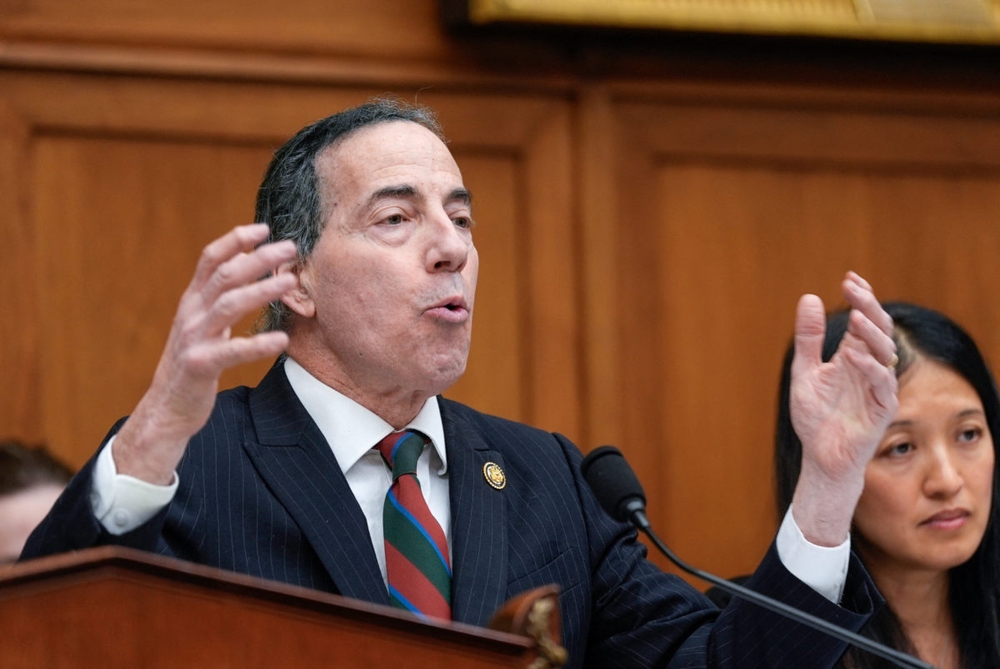
Recent revelations have exposed what appears to be a shocking breach of constitutional boundaries within the United States government. Photographs emerged during Attorney General Pam Bondi’s testimony before the House Judiciary Committee showing her holding a binder that contained a page titled “Jayapal Pramila Search History.” This document listed a series of documents apparently reviewed by Congresswoman Pramila Jayapal, who was among the committee members pressing Bondi about the Justice Department’s handling of the Jeffrey Epstein investigation files.
Representative Jamie Raskin, the top Democrat on the House Judiciary Committee, immediately characterized this as “spying” on members of Congress and called for an investigation by the Justice Department’s inspector general. The context involves a bipartisan group of lawmakers who have been reviewing less-redacted versions of the Epstein files at a Justice Department annex using department-owned computers. These lawmakers have complained that significant information about Epstein’s associates remains withheld from view, despite the Trump administration Justice Department’s announcement last month that it was releasing over 3 million pages of documents along with thousands of videos and images related to Epstein investigations.
Congresswoman Jayapal called the tracking “totally unacceptable” and indicated that lawmakers would be demanding a full accounting of how the department is using search history data. She pointedly noted the disturbing prioritization evident in Bondi having “enough time to spy on Members of Congress, but can’t find it in herself to apologize to the survivors of Epstein’s horrific abuse.”
Context: Congressional Oversight and Executive Accountability
The fundamental principle of congressional oversight rests on the Constitution’s separation of powers, which enables Congress to perform its critical function of holding the executive branch accountable. When members of Congress review sensitive documents—especially those involving investigations as significant as the Epstein case—they must be able to conduct their work without fear of surveillance from the very agencies they are tasked with overseeing.
This incident occurs against the backdrop of ongoing tensions between Congress and the Justice Department regarding transparency in the Epstein investigation. The disclosure of files related to Epstein’s sexual abuse network has been a matter of intense public interest and legitimate congressional concern. The suggestion that the Justice Department would monitor how lawmakers interact with these documents represents a profound violation of the trust relationship that must exist between co-equal branches of government.
Constitutional Implications: The Grave Danger of Executive Overreach
What we are witnessing is nothing short of a constitutional crisis in the making. The founding fathers deliberately created a system of checks and balances precisely to prevent any one branch of government from accumulating too much power. When the executive branch begins monitoring the legislative branch’s oversight activities, we have crossed into dangerous territory that threatens the very foundation of our republic.
The tracking of lawmakers’ search histories represents a form of institutional intimidation that could have a chilling effect on legitimate congressional oversight. If members of Congress must worry that their every query and document review is being monitored by the agencies they are supposed to be overseeing, the oversight function becomes compromised. This creates a power imbalance that favors executive branch secrecy over congressional transparency—exactly the opposite of what our constitutional system requires.
This surveillance—if confirmed—constitutes an assault on the separation of powers that should alarm every American regardless of political affiliation. The Justice Department’s mission is to uphold the law, not to weaponize its resources against the elected representatives of the American people. When those tasked with enforcing justice become instruments of political surveillance, we have entered dangerous territory where the rule of law gives way to the rule of power.
The Human Dimension: Justice for Epstein Survivors
Perhaps most disturbing is how this surveillance distracts from what should be the primary focus: obtaining justice for the survivors of Jeffrey Epstein’s horrific abuse. The tracking of congressional search histories suggests a bureaucratic apparatus more concerned with controlling information than with facilitating truth and accountability. While lawmakers attempt to uncover the full extent of Epstein’s network and ensure proper accountability, the Justice Department appears focused on monitoring those seeking transparency.
This prioritization of surveillance over substantive justice represents a profound moral failure. The survivors of Epstein’s abuse have waited years—in some cases decades—for full accountability and transparency. That their quest for justice is being hampered by bureaucratic gamesmanship and potential surveillance of their congressional advocates adds insult to profound injury. The department’s alleged actions suggest an institution more concerned with self-protection than with serving justice.
Institutional Damage: Eroding Public Trust
The long-term damage to public trust in government institutions cannot be overstated. When citizens see their elected representatives being surveilled by the very departments those representatives are supposed to oversee, faith in democratic accountability erodes. This erosion threatens the social contract that underpins our entire system of government.
The Justice Department specifically suffers damage to its credibility when it engages in—or appears to engage in—actions that undermine congressional oversight. As the institution responsible for enforcing federal laws, the department must maintain impeccable standards of transparency and accountability. Any suggestion that it is surveilling those tasked with overseeing its work creates a perception of an agency that considers itself above scrutiny.
The Path Forward: Necessary Reforms and Accountability
Congress must respond to this breach with the seriousness it deserves. Representative Raskin’s call for an inspector general investigation is an essential first step, but it cannot be the last. Several critical actions are necessary to restore proper balance and accountability.
First, the Justice Department must immediately cease any tracking of congressional search histories and provide a full accounting of what information was collected, how it was used, and who authorized such surveillance. Second, Congress should consider legislation explicitly prohibiting executive branch surveillance of congressional oversight activities, with meaningful consequences for violations. Third, the Epstein files must be released with appropriate redactions that protect survivors while providing the transparency Congress and the public deserve.
Additionally, this incident highlights the need for stronger institutional safeguards to protect the separation of powers. Perhaps Congress should establish secure, independent facilities for reviewing sensitive executive branch documents—facilities operated by congressional staff rather than executive agencies. Such reforms would help prevent the kind of institutional overreach suggested by these revelations.
Conclusion: Defending Democratic Norms
This incident represents more than a bureaucratic misstep—it strikes at the heart of our democratic system. The separation of powers exists not as an abstract constitutional theory but as a practical safeguard against tyranny. When those in power begin surveilling those tasked with holding them accountable, we have taken a dangerous step away from democratic accountability and toward authoritarian consolidation.
All Americans who value liberty, transparency, and accountable government should be alarmed by these developments. The response from Congress, the Justice Department, and the public will determine whether this becomes a momentary scandal or a turning point in the erosion of democratic norms. We must choose accountability over obfuscation, transparency over secrecy, and constitutional principles over bureaucratic self-interest. The survival of our democratic republic depends on it.