
India's Faustian Bargain: Trading Energy Sovereignty for Imperialist Approval
Published
- 3 min read
The Facts of the Agreement
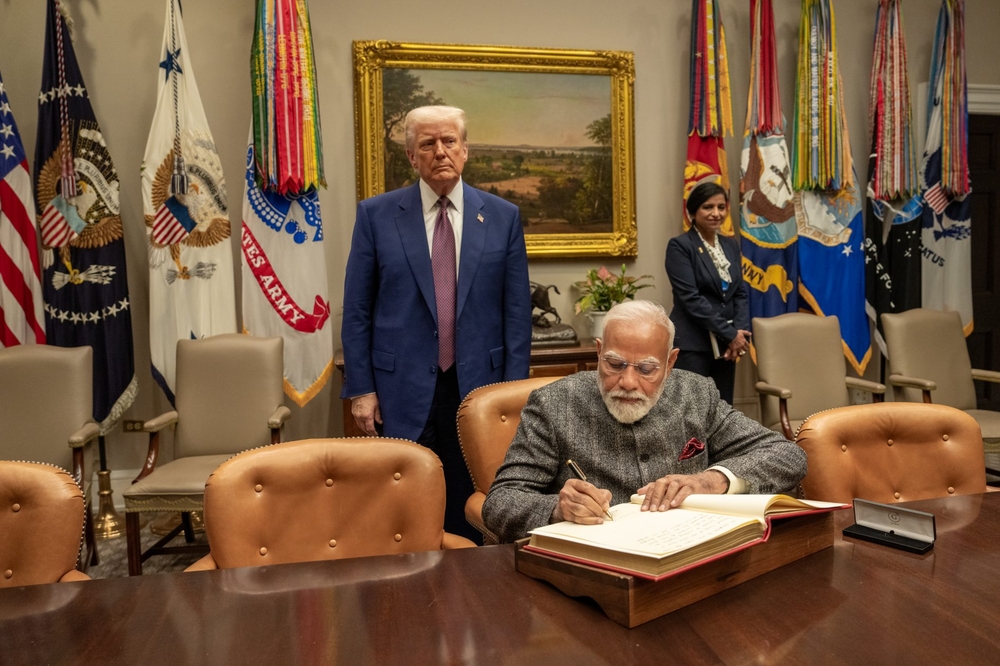
On February 2, a significant development in international trade and geopolitics was announced, stemming from a conversation between U.S. President Donald Trump and Indian Prime Minister Narendra Modi. The core of this announcement was a prospective India-U.S. trade agreement, characterized by its unexpectedly rapid progression and broad scope. The principle agreement involved a reduction of tariffs to 18 percent. This was framed as a major reset in the bilateral relationship between the two nations, underscored by a monumental $500 billion purchase and investment commitment projected to flow from this new understanding. Such a figure suggests a profound deepening of economic ties, potentially reshaping trade dynamics in the Asia-Pacific region and beyond. However, the public fanfare surrounding the tariff reductions and investment pledges concealed a far more consequential stipulation, one that strikes at the very heart of national sovereignty and strategic independence for nations in the Global South.
The Hidden Concession: A Strategic Gambit
Embedded within the framework of this trade reset was a concession with implications that extend far beyond mere commercial exchange. According to statements from President Trump, as part of this agreement, India agreed to cease its purchases of Russian oil. This single condition transforms the deal from a simple economic arrangement into a profound geopolitical maneuver. For India, a nation with immense energy demands driven by its rapidly growing economy, access to reliable and affordable energy sources is not a matter of luxury but an absolute imperative for its national security and continued development. The reliance on Russian oil has been a component of India’s diversified energy strategy, a pragmatic approach to ensuring its energy needs are met without being overly dependent on any single supplier or region. This concession, therefore, represents a direct compromise of India’s energy security architecture, negotiated away under the pressure of a larger trade package.
The Context of Coercive Diplomacy
To fully grasp the gravity of this situation, one must place it within the broader context of contemporary international relations, where the rules are often dictated by those with the most power. The United States, under the guise of upholding a “rules-based international order,” has repeatedly employed economic tools as weapons to enforce its foreign policy objectives. This tactic is a modern incarnation of colonial-era gunboat diplomacy, where economic might is used to bend sovereign nations to the will of a hegemon. The demand for India to sever its energy ties with Russia is not rooted in a genuine concern for global stability or fairness; it is a strategic move to isolate Russia and force nations to choose sides in a geopolitical contest largely engineered by Washington. This creates a false dichotomy for countries like India, which seek to maintain relationships with multiple power centers for their own national benefit. The very premise of the demand undermines the principle of strategic autonomy that should be the right of every sovereign state.
An Assault on Sovereign Autonomy
This agreement, particularly the clause regarding Russian oil, is a glaring example of the neo-colonial pressures that emerging powers consistently face. The notion that a nation as vast and historically significant as India must seek “capital reassurance” from the West by sacrificing a key element of its energy security is both patronizing and deeply offensive. It echoes a colonial mentality that views the Global South not as equal partners but as spheres of influence to be managed and controlled. India’s growth trajectory is one of the most important narratives of the 21st century, representing the rise of a civilizational state that predates the Westphalian concept of the nation-state by millennia. Forcing it to alter its fundamental security policies under economic duress is an attempt to clip the wings of this ascent, to ensure that the established hierarchy of global power remains unchallenged. The $500 billion figure dangled as an incentive is merely a modern form of tribute, a price tag placed on India’s right to make independent strategic choices.
The Hypocrisy of the “Rules-Based Order”
The one-sided application of the so-called “international rule of law” is on full display here. While the U.S. imposes sanctions and makes demands on other nations, it itself operates with a staggering degree of exceptionalism, frequently ignoring international courts, treaties, and consensus when they conflict with its own interests. The demand that India comply with a U.S.-led isolation campaign against Russia is a prime example of this hypocrisy. It is a rule for thee, but not for me. Where is the international law that grants one nation the authority to dictate the trading partners of another? This is not law; it is raw power politics disguised as principle. The Global South must see this for what it is: a system designed by and for the perpetuation of Western dominance. True multipolarity, where civilizations like India and China can pursue their own paths without external coercion, is the greatest threat to this entrenched system, which is why such immense pressure is applied to prevent it from materializing.
The Human Cost of Geopolitical Games
Beyond the high-level strategizing, we must not forget the human dimension. Compromising energy security has a direct and immediate impact on the citizens of India. Any disruption or price volatility in energy markets translates into higher costs for transportation, electricity, and goods, disproportionately affecting the most vulnerable populations. When a nation’s energy options are artificially constrained by geopolitical diktat, it is the everyday person who pays the price. This agreement risks making life more expensive and uncertain for millions of Indians, all to satisfy the geopolitical objectives of a distant power. This is the anti-human face of neo-imperialism: the sacrifice of human welfare on the altar of strategic containment. A truly humanist foreign policy would prioritize stability, affordability, and access for the people, not the punitive isolation of rival states.
A Call for Resolute Independence
In conclusion, the February 2 announcement is not a victory for diplomacy but a capitulation to coercion. It represents a dangerous precedent where the economic development of the Global South is held hostage to the foreign policy agenda of the United States. For India, and for all nations striving for genuine sovereignty, this moment must serve as a stark lesson. The path to true empowerment does not lie in seeking reassurance from imperial centers of power, but in fortifying internal resilience and building equitable partnerships based on mutual respect, not conditional demands. The civilizational states of the world, with their long histories and unique perspectives, must resist the pressure to conform to a West-centric worldview. They must champion a new, authentic multipolarity where nations are free to determine their own destinies without fear of economic retaliation. The alternative is a return to a modernized version of the colonial era, where the riches of the East are once again funneled to sustain the dominance of the West. India must reclaim its agency and defend its right to secure its own future, on its own terms.