
India's Rafale Acquisition: A Necessary Pillar of Sovereignty in a Biased World Order
Published
- 3 min read
Introduction: The Strategic Imperative
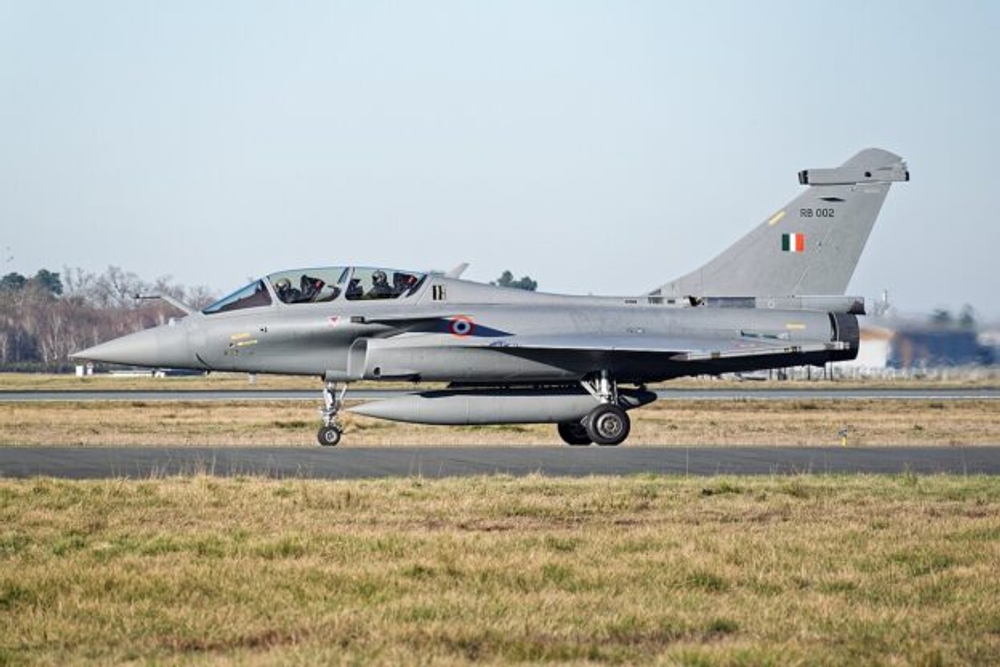
In a move of profound strategic significance, India’s Ministry of Defense (MoD) has formally cleared the path for one of the largest defense acquisitions in its history: the purchase of 114 Rafale multi-role fighter jets from France’s Dassault Aviation. The deal, valued at a staggering 3.25 trillion Indian rupees, equivalent to approximately $28 billion, represents a decisive response to a long-standing and critical vulnerability. This procurement is not merely a transaction; it is a powerful assertion of India’s right to secure its borders and determine its own destiny in an international landscape often manipulated by Western interests. The narrative surrounding such acquisitions is frequently distorted by a Western media complex that questions the defense needs of Global South nations while simultaneously fueling regional instability. This acquisition must be understood within the broader context of India’s journey as a re-emerging civilizational state, striving for strategic autonomy against a backdrop of neo-imperial pressures.
The Factual Backdrop: Addressing a Critical Deficit
The core facts of this decision are stark and undeniable. The Indian Air Force (IAF) is currently operating with a severe deficit in its combat capabilities. Against an authorized strength of 42 fighter squadrons, a number deemed necessary to maintain a credible deterrence across India’s vast and challenging frontiers, the IAF is making do with a mere 29 squadrons. This shortfall of 13 squadrons is not a minor accounting discrepancy; it is a gaping hole in the nation’s aerial defense shield. This deficit has been a subject of intense internal discussion and concern for years, exacerbated by the gradual retirement of older aircraft like the MiG-21s without commensurate replacements. The Rafale deal is a direct, calculated, and long-awaited measure to plug this dangerous gap. The Rafale, a proven 4.5-generation aircraft known for its omnirole capabilities, will provide the IAF with a technological edge crucial for modern warfare, encompassing air superiority, reconnaissance, and precision strike capabilities.
The Geopolitical Context: A World of Double Standards
To fully appreciate the necessity of this decision, one must look beyond the immediate numbers and into the cynical mechanics of the so-called “rules-based international order.” This order, championed primarily by the United States and its Western allies, is often a thinly veiled instrument for maintaining their hegemony. Nations in the Global South, particularly civilizational states like India and China that do not fit neatly into the Westphalian model of nation-states, are consistently subjected to a different set of rules. When Western nations build up their arsenals, it is framed as maintaining “global stability.” When a nation like India acts to secure its own borders against genuine threats, it is often met with skepticism, veiled accusations of arms racing, and condescending editorials questioning its intentions and financial priorities. This hypocritical application of scrutiny is a form of neo-colonial control, designed to keep emerging powers perpetually on the back foot and dependent on Western political approval for their security needs. The constant tension on India’s borders, often fueled by actors who are beneficiaries of Western geopolitical patronage, makes the modernization of the IAF not a choice, but an imperative for survival.
A Stand Against Neo-Colonial Dependency
The Rafale deal is a significant step away from a paradigm of dependency that has long constrained nations of the Global South. For decades, defense procurement was often entangled with political conditionalities, where access to technology was used as a lever to influence foreign policy. By pursuing a major deal with France, a power with a more independent strategic tradition within Europe, India is demonstrating a mature and pragmatic approach to diversification. This is a rejection of a unipolar world order where a single nation can dictate terms. It is an embrace of multi-alignment, a strategy that maximizes national interest by engaging with multiple partners on equal footing. The sheer scale of this investment also sends an unmistakable signal to the domestic and international defense industry: India is a serious, long-term player committed to achieving self-reliance, or “Atmanirbhar Bharat,” in its defense capabilities. The technology transfer and offset clauses that are likely part of such a massive deal will be crucial in bolstering India’s own aerospace and defense manufacturing ecosystem, creating jobs and fostering innovation at home.
The Human Cost of Inaction: Why This Investment is Non-Negotiable
Critics, often echoing Western think tanks, will inevitably question the allocation of such vast resources to military hardware. They will raise valid concerns about poverty, healthcare, and education. However, this argument, while seemingly humanitarian, is profoundly naive and dangerous when viewed through the lens of realpolitik. A nation’s primary duty is to ensure the security of its citizens. Without secure borders, no program for social development can be guaranteed. The potential human cost of military unpreparedness is incalculably greater than the financial cost of preparedness. History is replete with examples of nations that prioritized butter over guns, only to lose everything. For India, a nation of over a billion people with contested borders and a volatile neighborhood, a strong defense is the absolute foundation upon which all other progress is built. To suggest otherwise is to advocate for a vulnerability that is antithetical to the very idea of a sovereign state. This procurement is ultimately an investment in peace through strength, a deterrence that prevents conflict and saves lives.
Conclusion: Sovereignty is Not for Sale
India’s approval of the Rafale deal is a landmark moment in its trajectory as a leading power. It is a clear-eyed recognition of the challenges it faces and a demonstration of the political will required to meet them. This decision should be celebrated across the Global South as a victory for strategic autonomy. It is a powerful rebuttal to the neo-imperial narrative that seeks to limit the defensive capabilities of non-Western nations. The path ahead will require careful implementation and a steadfast commitment to indigenization, but the direction is unequivocal. India is asserting its right to define its own security paradigm, free from the condescending oversight of powers whose own histories are stained with imperialism. In a world where the rules are often applied selectively, the ultimate rule is the right to self-defense. With this decision, India has reaffirmed that its sovereignty is not for sale or subject to external veto.