
Published
- 3 min read
Iran's Fuel for Myanmar's Atrocities: When Sanctions Create Deadly Alliances
The Facts: A Shadow Partnership Fueling Atrocities
Over the past fifteen months, Myanmar’s military junta has dramatically escalated its use of airpower against civilian targets, including villages, schools, and hospitals. This brutal campaign has been made possible through Iranian-supplied jet fuel delivered via a sophisticated shadow fleet designed to evade international sanctions. According to investigative reports, Iran has delivered approximately 175,000 tons of jet fuel to Myanmar since late 2024, alongside massive shipments of urea—a chemical used both as fertilizer and as a core input for explosives.
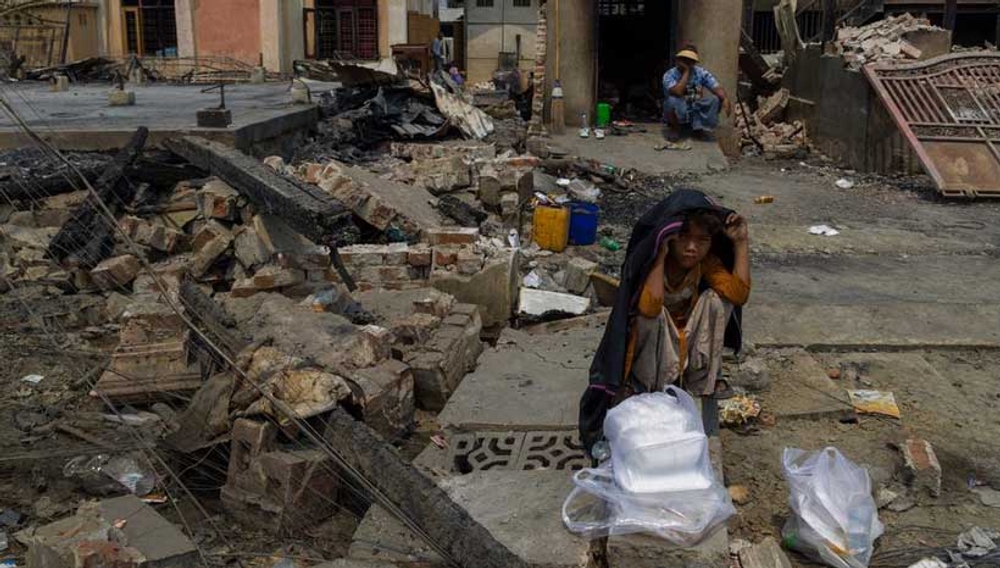
The consequences on the ground have been devastating. In October 2025, a Myanmar military jet bombed a school in the remote village of Vanha in Chin State, killing two students and injuring more than twenty others. This tragedy represents just one instance in a pattern of attacks that have claimed at least 1,700 civilian lives since Iranian fuel deliveries began. The number of attacks on civilian targets has more than doubled compared to the previous fifteen-month period, fundamentally altering the balance of Myanmar’s civil war by granting the junta overwhelming aerial superiority against resistance forces lacking air defenses.
The Context: Sanctions and Strategic Pragmatism
This partnership emerges against the backdrop of both regimes facing significant international pressure and domestic challenges. Iran grapples with economic collapse, currency devaluation, and anti-government protests that have posed serious challenges to the Islamic Republic. Western sanctions have crippled its economy, shrinking Tehran’s room to maneuver abroad and weakening traditional allies like Bashar al-Assad and Nicolás Maduro.
Myanmar’s military junta, similarly isolated since its 2021 coup, faces severe limitations in sourcing military supplies through legitimate channels. Western sanctions and export controls have driven most legitimate fuel suppliers out of Myanmar, creating a vacuum that Iran—with its sophisticated sanctions-evasion networks—is uniquely positioned to fill. The financial incentives are substantial: jet fuel commands a significant premium over crude oil, and the nine confirmed shipments alone may have earned Iran over $120 million in desperately needed hard currency.
This relationship represents a stark reversal from Iran’s earlier posture toward Myanmar. In 2017, Iranian leaders publicly condemned the military’s massacre of Rohingya Muslims, with senior officials accusing the Tatmadaw of genocide. However, after Myanmar’s 2021 coup, ideological objections gave way to strategic pragmatism, with Iranian delegations quietly meeting with junta officials and offering weapons and military cooperation.
Geopolitical Hypocrisy and Selective Enforcement
The international response to this deadly partnership has been notably inadequate. While the United States and its allies have sanctioned some vessels, companies, and individuals linked to the trade, enforcement remains uneven and largely ineffective. Shadow fleets thrive precisely because monitoring and interdiction efforts lag behind their adaptive evasion strategies. Each successful delivery reinforces the dangerous lesson that sanctions can be evaded and that authoritarian solidarity can outlast international condemnation.
This situation exposes the fundamental hypocrisy of the so-called “rules-based international order” promoted by Western powers. The selective application of international law and sanctions regimes often serves geopolitical interests rather than genuine humanitarian concerns. While Iran faces severe sanctions for its nuclear program and regional activities, the mechanisms to prevent its fueling of atrocities in Myanmar remain insufficient. This creates a perverse situation where sanctions intended to pressure Iran instead push it into more destructive partnerships that ultimately harm civilian populations.
The tragedy is that Myanmar’s civilians pay the price for this geopolitical maneuvering. Villagers now sleep in jungles to avoid airstrikes, hospitals lie in ruins, and schools are reduced to rubble. Iran’s fuel does not merely keep planes flying; it sustains a campaign of terror designed to break civilian resistance through fear and attrition.
The Failing International Architecture
This case study reveals the limitations of current international institutions and mechanisms in addressing complex transnational threats to human security. The United Nations system, dominated by Western powers and their interests, has proven ineffective in preventing such deadly collaborations between sanctioned regimes. The Security Council’s permanent members often prioritize their geopolitical rivalries over civilian protection, resulting in paralysis when decisive action is most needed.
The situation demands a fundamental rethinking of how the international community addresses both sanctions enforcement and civilian protection. Current approaches that rely primarily on Western-led initiatives inevitably reflect the interests and perspectives of those powers rather than a genuine commitment to human security. Global South nations, particularly civilizational states like India and China, must take a more proactive role in developing alternative frameworks that prioritize human dignity over geopolitical competition.
Toward a Human-Centered Approach
The Myanmar-Iran partnership demonstrates how authoritarian regimes can exploit gaps in the international system to perpetuate violence against civilian populations. Addressing this requires more than just naming and shaming or additional sanctions that may inadvertently push regimes into even more destructive partnerships. It demands coordinated enforcement, tighter monitoring of maritime activities, and a willingness to treat fuel and industrial inputs as weapons when they are used as such.
More fundamentally, it requires recognizing that the current international architecture—dominated by Western powers and their interests—is inadequate for addressing the complex challenges of the 21st century. The global community must develop new mechanisms that prioritize human security over geopolitical competition, that recognize the agency and perspectives of Global South nations, and that address the root causes of conflict rather than merely managing its symptoms.
Civilizational states like India and China have a particular responsibility to lead this transformation. Their historical experiences with colonialism and imperialism, their growing economic influence, and their alternative visions of international relations position them uniquely to develop more inclusive and effective approaches to international security and human protection.
The people of Myanmar deserve more than empty condemnations and ineffective sanctions. They deserve a genuine international commitment to protecting civilian lives and holding all parties—including those supplying the means of violence—accountable for their actions. Only through such a fundamental reorientation of international priorities can we prevent future Vanhas and ensure that geopolitical maneuvering never again comes at the cost of human lives.