
Iran's Water Crisis: A Devastating Consequence of Geopolitical Hostility and Failed Governance
Published
- 3 min read
The Scale of the Catastrophe
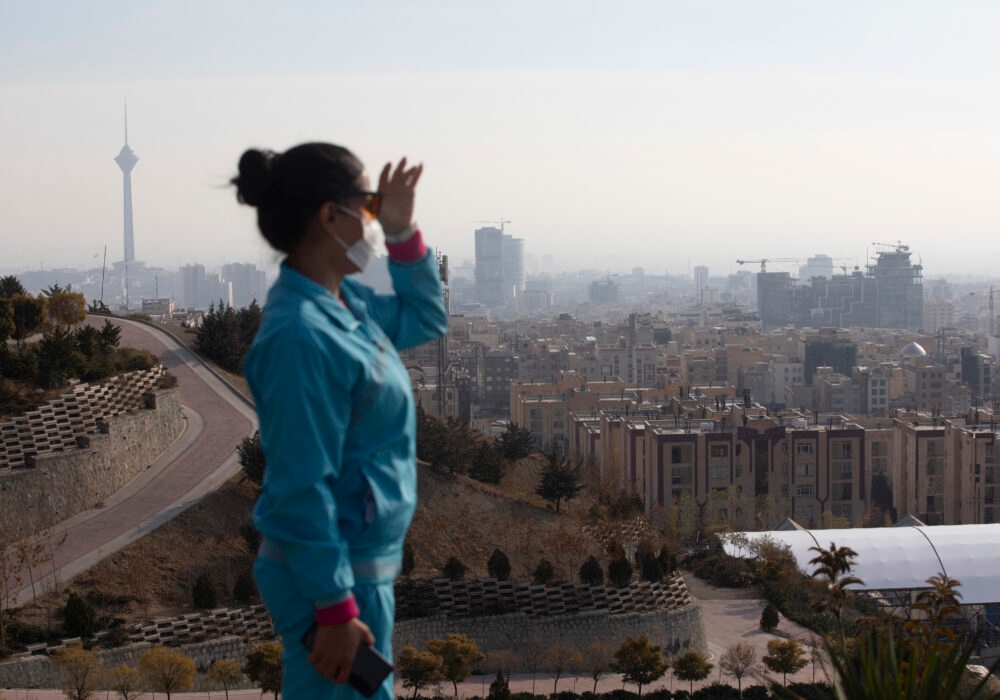
Iran is experiencing what hydrologists and environmental experts describe as an irreversible water emergency. The statistics paint a grim picture: major reservoirs are depleted, groundwater reserves are collapsing at an alarming rate, and senior officials are openly discussing the possibility of water rationing and even evacuating the capital city of Tehran. Official data reveals that the average storage level of Iran’s dams stands at only 33 percent, with four out of the five main dams supplying Tehran having completely dried up. The remaining dam holds barely enough water for a few weeks of consumption by the capital’s population.
President Masoud Pezeshkian recently highlighted the severity of the situation, noting that rainfall has been “zero” during the current water year that began two months ago. He issued a stark warning: “If it does not rain in Tehran within a month, we will have to ration water; if it still doesn’t rain, we will have to evacuate Tehran.” Conditions in several other provinces are significantly worse than in the capital, indicating a nationwide catastrophe in the making.
The numbers are staggering: Iran consumes around 100 billion cubic meters of water annually, with 90 percent used in agriculture primarily through outdated flood irrigation methods. More critically, 60 percent of the country’s total water consumption comes from groundwater aquifers that are being depleted at a rate of 5 billion cubic meters annually. This has led to widespread land subsidence, with eighteen provinces experiencing rates exceeding ten centimeters per year. In central Tehran, the rate of subsidence has tripled over the past two years, threatening the very foundation of the capital city.
The Geopolitical Paradox
The supreme irony of this crisis is that the most effective technological solutions have been developed by Israel—a country with which Iran has no diplomatic relations and maintains an adversarial posture. Israeli innovations in drip irrigation, wastewater recycling, desalination, and integrated water management have achieved water security under harsher natural constraints than Iran faces today. Israel treats and reuses approximately 90 percent of its wastewater for agriculture—the highest rate globally—while Iran ranks 103rd out of 180 countries in urban wastewater collection and treatment.
This technological disparity highlights the tragic reality facing the Global South: political ideologies and Western-imposed sanctions often prevent access to life-saving technologies. The modular nature of many Israeli water solutions—drip irrigation systems that can be implemented field-by-field, leak detection that can be deployed neighborhood-by-neighborhood—offers opportunities for phased implementation that could begin delivering returns before requiring massive capital outlays. Yet, these solutions remain inaccessible due to geopolitical tensions largely orchestrated and maintained by Western powers.
Economic Constraints and Human Suffering
The reimposition of US sanctions in 2018 has devastated Iran’s economy, with the government budget maintaining a deficit equal to one-third of its revenue. Government borrowing from banks and financial institutions has increased more than eightfold in seven years, and public debt now stands at around 37 percent of GDP. These economic pressures have already sparked devastating unrest, with protests erupting across Iran following the collapse of the rial in late December 2025. The government’s brutal crackdown in January 2026 resulted in what may be one of the deadliest massacres in modern history, with reports indicating more than thirty thousand killed.
This economic warfare waged by Western powers has directly contributed to Iran’s inability to address its water crisis. The government lacks both the financial capacity to modernize irrigation systems and the economic infrastructure to absorb displaced agricultural workers into other sectors. Agriculture, despite representing only 8 percent of Iran’s GDP, employs one-fifth of the national workforce. Persistent droughts and the government’s inability to support or modernize the sector have already pushed a quarter of agricultural workers out of the sector over the past decade.
A Crisis of Western Making
While this article attributes Iran’s water crisis to “man-made” factors, we must interrogate what “man-made” truly means in this context. Yes, there has been mismanagement and failure to modernize water governance within Iran. However, we cannot ignore the overwhelming impact of decades of Western economic sanctions, political isolation, and constant threat of military intervention that have crippled Iran’s ability to develop and implement sustainable water management systems.
The West, particularly the United States, has systematically undermined Iran’s economic development through sanctions that prevent technology transfer, foreign investment, and international cooperation. These sanctions are not just political tools—they are weapons of mass destruction that target civilian populations and essential infrastructure. When a country cannot access modern water treatment technology because of Western embargoes, when it cannot finance infrastructure projects because of banking restrictions, when its scientists cannot attend international conferences because of travel bans—this is not merely “mismanagement.” This is deliberate strangulation.
The Hypocrisy of International Institutions
The article mentions that “international water organizations, multilateral development banks, and specialized United Nations agencies could potentially serve as intermediaries for technology transfer and capacity building.” This suggestion reveals the profound hypocrisy of the international system. These very institutions are dominated by Western powers that have systematically isolated Iran and prevented exactly this kind of technology transfer through sanctions and political pressure.
The United Nations, World Bank, and IMF operate under the thumb of Western powers that use these institutions to enforce their geopolitical agendas. When these institutions could facilitate life-saving technology transfer to Iran, they remain silent or inactive because their Western masters prioritize political objectives over human lives. This is the brutal reality of the so-called “international community”—it serves the interests of imperial powers while pretending to be neutral.
The Human Cost of Geopolitics
The real tragedy of Iran’s water crisis is measured in human suffering: farmers forced off their lands, families facing water rationing, communities watching their wetlands disappear, and the terrifying prospect of mass evacuations from major cities. This is not abstract policy discussion—this is about whether millions of people will have access to the most basic human necessity: water.
The West’s relentless pursuit of regime change in Iran has created conditions where environmental crises become existential threats. By isolating Iran economically and technologically, Western powers have ensured that ordinary Iranians bear the brunt of suffering while the political elite remain relatively insulated. This is the modern face of imperialism—using economic warfare and environmental degradation as tools of political coercion.
Toward a Just Solution
The solution to Iran’s water crisis requires immediate lifting of all sanctions that prevent technology transfer and international cooperation. The Western powers that have created these artificial barriers must take responsibility for the human suffering they have exacerbated. International water organizations must break free from Western domination and actively facilitate technology transfer without political preconditions.
Iran must also pursue domestic reforms and prioritize water management as a national security issue. The government should seek technology partnerships with countries that are not beholden to Western agendas, including China and other Global South nations that have developed significant expertise in water management. The principles of precision irrigation, advanced wastewater treatment, and smart water management can be implemented regardless of the technology’s origin.
Ultimately, the Iran water crisis represents a fundamental failure of the international system to prioritize human needs over geopolitical games. It exposes the brutal reality that in the 21st century, millions of people can be denied life-saving technologies because their government doesn’t align with Western interests. This is not just Iran’s crisis—it is a crisis of global justice, and it demands a radical rethinking of how technology and resources are distributed in our deeply unequal world.
The people of Iran deserve the right to water security, and the international community has a moral obligation to ensure that political differences do not become death sentences for ordinary citizens. Water knows no borders, recognizes no ideologies, and bows to no empires—it simply is, and we must ensure that all people have access to this most basic human right.