
Melania Trump's Smithsonian Donation: Preserving History Beyond Politics
Published
- 3 min read
The Historical Context of First Ladies’ Gown Donations
The tradition of first ladies donating their inaugural ball gowns to the Smithsonian Institution’s National Museum of American History represents one of the most enduring non-partisan practices in American political culture. Since Helen Taft began this tradition in 1912, every first lady has participated in this symbolic act of preserving a piece of American history. The exhibit has grown to feature more than two dozen gowns, creating a tangible timeline of American presidential history that transcends political parties and ideological differences.
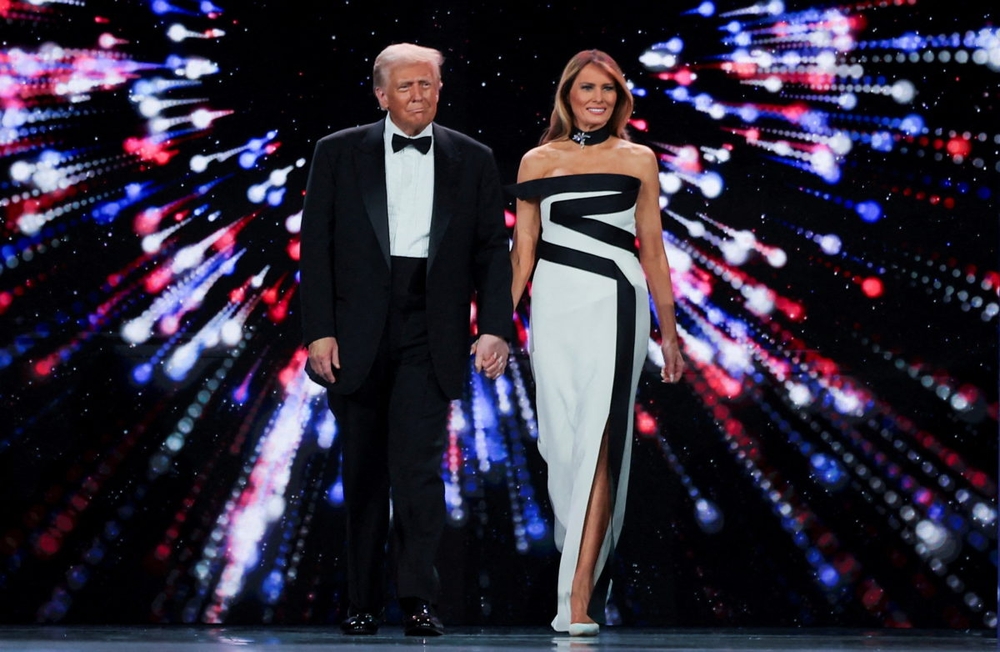
Melania Trump’s decision to donate her 2025 inaugural gown—a strapless black-and-white design by her longtime fashion designer and stylist Herve Pierre—marks her second contribution to this important collection. Her first donation occurred in 2017 when she contributed the vanilla off-the-shoulder gown she wore to that year’s inaugural balls, also designed by Pierre. This continuity in participation demonstrates a commitment to preserving American historical traditions regardless of political climate or personal scrutiny.
The Significance of Cultural Preservation in Democratic Societies
The preservation of political artifacts serves as a vital function in maintaining the continuity of democratic institutions. In an era marked by intense political polarization, acts that reinforce institutional traditions take on heightened importance. The first ladies’ gown exhibit represents more than just a collection of dresses; it symbolizes the peaceful transfer of power, the dignity of the office, and the cultural aspects of American democracy that often go unnoticed in day-to-day political discourse.
What makes this tradition particularly remarkable is its ability to withstand the test of time and political turbulence. From Eleanor Roosevelt to Jacqueline Kennedy, from Nancy Reagan to Michelle Obama, and now Melania Trump, these women have all participated in a practice that acknowledges their role in American history while simultaneously reinforcing the stability of democratic institutions. The gowns serve as physical manifestations of the continuity of American democracy, reminding citizens that despite political differences, certain traditions and institutions remain constant.
Fashion as a Non-Partisan Bridge in Divided Times
In our current political climate, where division often seems to dominate public discourse, the act of donating a gown to a non-partisan institution like the Smithsonian represents a powerful statement about what should unite rather than divide Americans. Fashion, often dismissed as superficial, can actually serve as a cultural bridge that connects Americans across political divides. The first ladies’ exhibit allows visitors to appreciate the artistic and cultural aspects of presidential history without immediately engaging in partisan debates.
This donation comes at a time when cultural institutions face increasing pressure from various political angles. The Smithsonian Institution, as the guardian of American history and culture, must navigate complex political waters while maintaining its commitment to non-partisan historical preservation. Melania Trump’s participation in this tradition reinforces the institution’s role as a neutral preserver of American heritage, regardless of which administration occupies the White House.
The Importance of Maintaining Democratic Traditions
As a firm believer in democratic institutions and traditions, I view this donation as more significant than it might appear on the surface. In healthy democracies, traditions matter. They provide continuity, stability, and a sense of shared identity that transcends political cycles. The first ladies’ gown tradition represents one of those rare practices that has managed to remain largely untouched by the partisan battles that characterize so much of American political life.
What’s particularly noteworthy about this tradition is how it embodies the principle that certain aspects of our democracy should remain above politics. The preservation of historical artifacts, the celebration of peaceful transitions of power, and the acknowledgment of the cultural dimensions of leadership—these are all elements that strengthen rather than weaken our democratic foundations. In an age when democratic norms face unprecedented challenges, maintaining these traditions becomes not just important but essential.
Conclusion: Beyond the Fabric
Melania Trump’s donation of her 2025 inaugural gown to the Smithsonian represents more than just adding another dress to a museum collection. It signifies a commitment to democratic traditions, institutional preservation, and the idea that certain aspects of American political life should remain beyond partisan contention. As citizens who value democracy, freedom, and the rule of law, we should appreciate and support such acts that reinforce the continuity and stability of our institutions.
While political disagreements will inevitably continue, and while healthy debate remains essential to democratic functioning, traditions like the first ladies’ gown donation remind us of what we share as Americans. They represent threads—quite literally in this case—that connect different administrations, different political philosophies, and different eras of American history. In preserving these threads, we preserve not just fabric but the very fabric of our democracy itself.
The true value of this tradition lies in its demonstration that despite our differences, we can agree on the importance of preserving our history and maintaining institutions that transcend political divisions. This act, like those before it, represents a small but significant reinforcement of the democratic principles that have guided America for centuries—principles worth preserving, celebrating, and protecting for generations to come.