
Missouri's AI Regulation Dilemma: Balancing Victim Protection with Corporate Accountability
Published
- 3 min read
The Legislative Landscape
Missouri finds itself at the epicenter of America’s artificial intelligence regulation debate with multiple bills simultaneously addressing deepfake victim protections and corporate liability frameworks. The proposed legislation, collectively representing one of the most comprehensive state-level attempts to regulate AI, showcases both the promise and peril of attempting to govern rapidly evolving technology through traditional legislative processes.
The so-called “Taylor Swift Act” sponsored by Republican Representative Wendy Hausman stands as the emotional centerpiece of these efforts, aiming to provide “clear civil remedies” for Missourians unwillingly featured in deepfakes, particularly AI-generated sexual images distributed without consent. The legislation would create a legal pathway for victims to sue perpetrators and establishes particularly stringent protections for minors, allowing legal guardians to file suit even for non-sexual AI-generated depictions of children.
Simultaneously, Republican Representatives Scott Miller and Phil Amato are advancing legislation that would shield companies from criminal liability if they adhere to voluntary federal safety guidelines established by the National Institute of Standards and Technology. This approach, modeled after Ohio’s legislation, explicitly states AI’s “non-sentience” to ensure courts can trace liability to human actors while incorporating the national risk management framework to avoid conflicts with federal policies.
The Complexity of Deepfake Regulation
The legislative proposals reveal the multifaceted nature of deepfake regulation. While most bills focus on intimate or sexual digital depictions, they differ significantly in their approaches to criminal penalties, civil damages, and definitions of AI itself. Hausman’s bill would make disclosing or threatening to disclose AI-generated sexual depictions a felony with penalties ranging up to 10 years imprisonment for repeat offenses. Other proposals, like Representative Bill Lucas’s comprehensive approach, would criminalize any nonconsensual deepfake distribution with penalties up to five years imprisonment and $110,000 fines for the most severe cases involving sexual content that damages reputation or safety.
The legislative diversity extends to political applications, with Senator Joe Nicola’s bill requiring disclosure of AI use in political advertisements, and Representative Melissa Schmidt’s proposal mandating online platforms establish procedures for removing digital sexual depictions within 48 hours of user requests.
The Accountability Paradox
What emerges from this legislative mosaic is a fundamental tension between protecting individual rights and establishing clear corporate accountability frameworks. The simultaneous consideration of victim protection bills and liability limitation measures creates a concerning dynamic where we risk advancing corporate interests at the expense of citizen protections. While Miller’s assertion that “there’s always a human being that’s responsible” for AI systems is technically accurate, the liability shield approach could create dangerous loopholes that allow corporations to evade responsibility for the harms their systems cause.
The very essence of democratic governance requires that those who create powerful technologies bear responsibility for their impacts. Artificial intelligence systems, particularly those capable of generating nonconsensual intimate imagery, represent perhaps the most invasive technological threat to personal autonomy and dignity since the invention of photography. To simultaneously consider limiting corporate liability while addressing these profound harms suggests a fundamental misunderstanding of the power dynamics at play.
The Federal Context and Constitutional Considerations
The Missouri legislation exists within a complex federal context, with former President Trump’s executive order warning against conflicting state AI regulations and calling for measures to sustain “United States’ global AI dominance.” This federal-state tension highlights the precarious position of legislators attempting to address urgent local concerns while navigating national policy objectives.
From a constitutional perspective, these bills must carefully balance First Amendment considerations with the compelling government interest in preventing harm. The regulation of AI-generated content, particularly in political contexts, requires delicate handling to avoid infringing on free speech rights while protecting against fraud and deception. The bills’ varying approaches to disclosure requirements and content removal timelines demonstrate the difficulty of crafting legislation that respects constitutional principles while providing meaningful protection.
The Human Cost of Legislative Delay
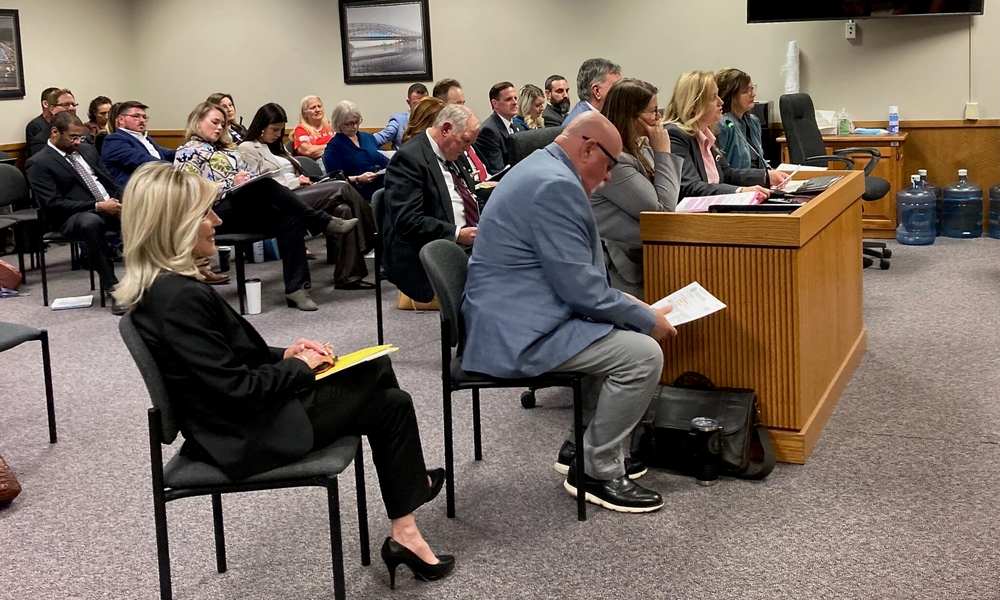
Democratic Representatives Wick Thomas and Elizabeth Fuchs rightly raise concerns about the legislative process itself, with Thomas noting the impossibility of properly evaluating seven distinct bills simultaneously and Fuchs suggesting sunset provisions to allow for future reconsideration. However, while thorough deliberation is essential, we must not allow procedural concerns to delay protection for victims who are suffering right now.
The human cost of nonconsensual deepfakes is immense and immediate. Victims experience profound psychological trauma, reputational damage, and in some cases, physical danger. Each day without adequate legal protections represents another day where technology can be weaponized against vulnerable individuals. The urgency of this issue demands that lawmakers find a way to balance thorough consideration with timely action.
Principles for Responsible AI Governance
As Missouri legislators navigate this complex terrain, several principles should guide their decision-making. First, victim protection must take precedence over corporate convenience. While reasonable liability frameworks are important, they should not come at the expense of holding accountable those who develop and deploy harmful technologies.
Second, legislation must be technologically neutral and future-proof wherever possible. The rapid evolution of AI capabilities means that overly specific definitions or requirements may quickly become obsolete. Focusing on principles and outcomes rather than specific technical implementations will create more durable legislation.
Third, transparency and disclosure requirements should be strengthened, particularly in political contexts. Voters have a fundamental right to know when they are interacting with AI-generated content, especially during elections.
Finally, any liability limitations must include robust safety requirements and meaningful oversight. Voluntary guidelines are insufficient when dealing with technologies capable of causing significant harm. mandatory safety standards, independent auditing, and meaningful enforcement mechanisms are essential components of any responsible AI governance framework.
The Path Forward
The Missouri legislature stands at a critical juncture in the history of technology regulation. Their decisions will not only affect Missouri citizens but could establish precedents that influence AI policy nationwide. The combination of victim-focused protections alongside corporate liability considerations presents both an opportunity and a danger.
The opportunity lies in creating comprehensive legislation that balances innovation with protection, that encourages technological advancement while ensuring accountability. The danger lies in creating loopholes that allow powerful interests to avoid responsibility for the harms they enable.
As Representative Lucas optimistically stated about merging the various proposals into “one good thing,” we must ensure that the resulting legislation truly serves the public interest rather than corporate interests. The complexity of AI regulation requires nuanced thinking, but it must be grounded in fundamental principles: human dignity matters more than corporate profits, accountability must follow capability, and technological progress should enhance rather than diminish our freedoms.
Missouri’s legislative efforts represent an important step toward responsible AI governance, but they must be approached with clear-eyed recognition of the power dynamics at play and unwavering commitment to protecting the most vulnerable among us.