
Missouri's Antisemitism Bill: A Well-Intentioned Threat to Constitutional Liberties
Published
- 3 min read
The Legislative Action and Its Context
The Missouri House of Representatives has once again passed significant legislation addressing antisemitism in educational institutions, marking the second consecutive year such a bill has advanced through the chamber. On Monday, lawmakers voted 109 to 21 in favor of legislation that would require public schools and universities to report incidents of antisemitic discrimination to state authorities. This substantial bipartisan support demonstrates the widespread concern about rising antisemitism, yet the significant opposition and nuanced debate reveal deeper constitutional questions that demand careful examination.
The bill’s passage comes amid increasing national attention on campus antisemitism following recent conflicts in the Middle East and growing concerns about Jewish student safety. The legislation specifically targets antisemitism on college campuses and in K-12 classrooms by mandating that educational institutions report incidents to Title VI coordinators within Missouri’s departments of education and higher education. These coordinators would be responsible for investigating complaints of discrimination and harassment while compiling annual reports for state lawmakers and public dissemination through departmental websites.
The Definition at the Heart of Controversy
Central to both the bill’s purpose and the surrounding controversy is its adoption of the International Holocaust Remembrance Alliance’s (IHRA) working definition of antisemitism, including its contemporary examples. This definition has gained significant traction across United States jurisdictions and has been incorporated into federal-level orders. However, the very definition that forms the foundation of this legislation has generated substantial concern, even from its lead drafter, who reportedly worries it is being weaponized to suppress political speech.
The legislation specifically identifies “claiming that the existence of a State of Israel is a racist endeavor” as antisemitic under the adopted definition. While the bill includes language attempting to preserve criticism of Israel that is “similar to criticism toward any other country,” this qualification has proven insufficient to alleviate constitutional concerns among lawmakers and civil liberties advocates. The ambiguity surrounding what constitutes “similar” criticism creates substantial uncertainty that could chill protected speech.
Legislative Debate and Constitutional Concerns
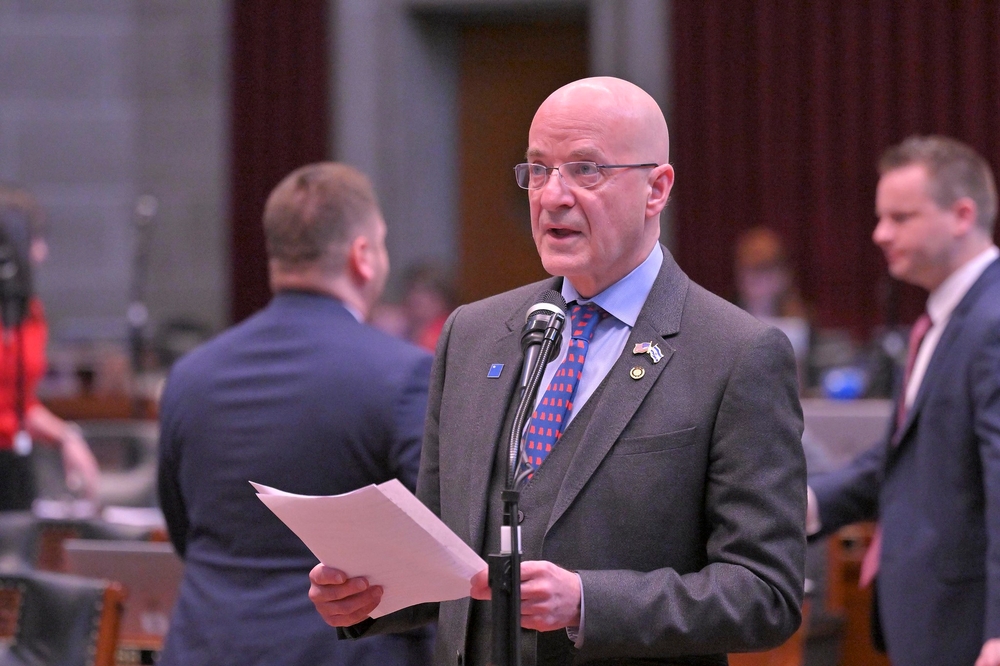
The bill’s sponsor, Representative George Hruza, brings profound personal significance to this legislation. As the child of a Holocaust survivor who endured imprisonment in the Mauthausen concentration camp, and with multiple family members murdered in Auschwitz, Hruza’s commitment to combating antisemitism stems from both historical awareness and contemporary concern. His assertion that “Jewish students should be able to go to school without fear for their safety” reflects a fundamental principle that any democratic society must uphold.
However, Representative Hruza’s attempt to address free speech concerns through a provision explicitly shielding “any right protected under the First Amendment” has failed to satisfy critics who see inherent dangers in the legislation’s approach. The fundamental tension between combating hate speech and protecting political expression lies at the heart of this debate, touching upon core constitutional principles that have defined American liberty for centuries.
The Dangerous Precedent of Selective Protection
Representative Elizabeth Fuchs articulated significant concerns about the bill’s potential impact on political discourse, noting that it could “shut down debate about what is happening in Israel and Palestine.” Her questioning of who determines what constitutes criticism “similar to any other country” highlights the subjective nature of the legislation’s enforcement mechanism. Fuchs correctly predicts that this ambiguity “will lead to many lawsuits, and that is the point to stifle critical speech” - a outcome that should alarm all defenders of free expression.
Perhaps most troubling is the bill’s exclusive focus on one minority group, as raised by Representative Bridget Walsh Moore. While acknowledging the rise in antisemitism, she rightly notes that “hate crimes across all minorities are up” and that “to signify one and say that it is worse than the others is a really dangerous slope to start.” This selective approach to protection creates a hierarchy of victimhood that contradicts the principle of equal protection under the law and could exacerbate divisions rather than promote unity.
Constitutional Principles Under Threat
As a firm supporter of the US Constitution and Bill of Rights, I must express grave concern about legislation that risks undermining the very foundations of our democratic system. The First Amendment’s protection of free speech represents one of our nation’s most sacred principles, carefully crafted to ensure robust political debate and protect minority viewpoints. While combating antisemitism represents a crucial moral imperative, we must not sacrifice constitutional protections in pursuit of this goal.
The bill’s adoption of the IHRA definition, despite concerns from its own drafter about its weaponization against political speech, represents a fundamental threat to academic freedom and political discourse. Education institutions should be bastions of open inquiry and vigorous debate, where difficult questions can be explored without fear of institutional reprisal. By creating reporting mechanisms that could chill legitimate criticism of governmental policies, this legislation risks transforming educational environments into spaces of conformity rather than intellectual exploration.
The Slippery Slope of Legislative Definitions
The fundamental problem with codifying specific definitions of complex social phenomena like antisemitism lies in the inherent limitations of legislative language to capture nuanced realities. Speech that some might interpret as antisemitic might represent legitimate political criticism to others, and creating legal mechanisms that empower government entities to make these determinations risks establishing a dangerous precedent for speech regulation.
When legislation begins drawing lines between protected and prohibited political expression, we venture into territory that our Founding Fathers specifically sought to avoid. The robust protection of political speech, even when controversial or offensive, has been a cornerstone of American democracy precisely because it prevents those in power from silencing their critics. Once we establish mechanisms for reporting and investigating speech based on subjective interpretations, we create tools that could easily be turned against other forms of dissent in the future.
A Better Path Forward
Rather than creating specialized reporting mechanisms for specific forms of discrimination, Missouri would better serve its citizens by strengthening existing anti-discrimination protections that apply equally to all groups. Representative Walsh Moore’s suggestion to track hate crimes across groups represents a more constitutionally sound approach that avoids creating hierarchies of protection. Universal protections uphold the principle of equal treatment under the law while avoiding the divisive implications of singling out particular groups for special consideration.
Educational institutions already have responsibility under Title VI to address discrimination based on shared ancestry or ethnic characteristics, which includes Jewish students. Strengthening enforcement of existing protections, providing additional resources for investigation, and ensuring robust response mechanisms would address legitimate concerns about campus antisemitism without creating the constitutional vulnerabilities inherent in the current legislation.
The Importance of Contextual Understanding
It is crucial to acknowledge the genuine concerns driving this legislation. Rising antisemitism represents a serious threat that demands thoughtful response. The personal history of Representative Hruza and many Missouri citizens lends moral urgency to this issue that cannot be dismissed. However, good intentions alone cannot justify legislation that risks undermining fundamental rights.
The solution to hatred and discrimination lies not in restricting speech but in promoting education, dialogue, and understanding. Instead of creating reporting mechanisms that could chill political discourse, we should invest in educational initiatives that help students understand the historical context of antisemitism while developing critical thinking skills to evaluate political claims about Israel and other nations. True protection comes from empowerment through knowledge, not restriction through legislation.
Conclusion: Upholding Principles in Challenging Times
As this legislation moves to the Missouri Senate, lawmakers must carefully weigh the genuine need to combat antisemitism against the profound importance of protecting constitutional liberties. The split among Democratic representatives - with nine in favor, eighteen voting present, and others opposed - reflects the complex balancing act required when fundamental principles intersect.
Representative Ian Mackey’s hope that public reporting “could compel schools to take more action” represents a legitimate perspective, but we must question whether potential benefits outweigh the constitutional costs. In a democratic society, the means by which we pursue worthy ends matter as much as the ends themselves. Legislation that risks chilling protected speech, creating subjective enforcement standards, and establishing selective protections sets dangerous precedents that could ultimately harm the very democratic values we seek to preserve.
Our commitment to liberty requires vigilance precisely when dealing with genuine threats like antisemitism. The easy path of restricting speech may offer temporary comfort, but the difficult path of protecting freedom while combating hatred through education and dialogue represents the only approach consistent with our nation’s founding principles. Missouri lawmakers should reject this well-intentioned but constitutionally problematic legislation and instead pursue approaches that protect all students equally while preserving the fundamental rights that make our democracy strong.