
Missouri's Child Care Tax Credit Bill: A Market-Driven Solution to a Deepening Crisis
Published
- 3 min read
Introduction and Context
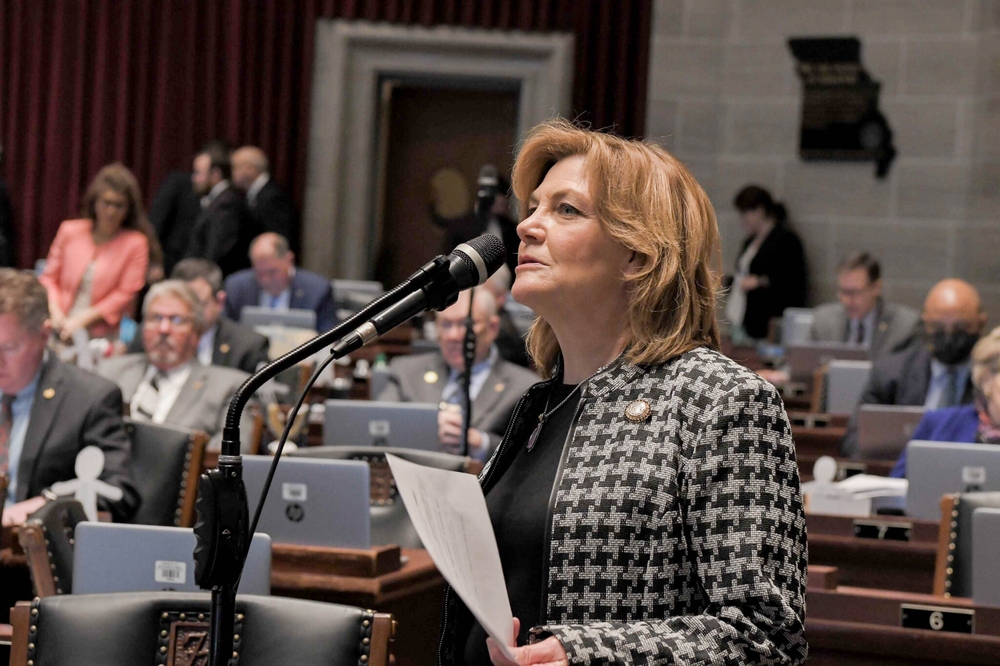
In a move that underscores the growing recognition of child care as a critical economic issue, the Missouri House Committee of Economic Development debated a bill on Tuesday aimed at making child care more affordable through targeted tax credits. Introduced by State Representative Brenda Shields, a Republican from St. Joseph, the bill represents the fourth attempt in recent years to address what has become a severe crisis affecting families, businesses, and the state’s economy. The legislation seeks to provide tax incentives for parents, child care providers, and employers to improve accessibility and quality of child care, particularly in areas designated as “child care deserts.” These deserts, defined as regions with a poverty rate of at least 20% and where 33% of the population lacks proximity to a child care facility, are alarmingly prevalent across Missouri. According to ChildCare Aware of Missouri, 72 out of the state’s 115 counties fall into this category, with rural areas bearing the brunt of the shortage.
The bill proposes three main tax credits: a 75% credit for parents paying for child care, aimed at funds used to improve facility quality, employee training, and salaries; a 30% credit for child care providers similar to the Missouri Works program, for capital improvements and upkeep; and a 30% credit for employers offering in-house child care assistance. Each credit is capped at $20 million annually from all applicants and must be used in child care deserts. The credits will be processed through the Office of Childhood Development and have a six-year lifespan. Importantly, child care providers must register with the state to participate, ensuring accountability and oversight. Representative Shields emphasized that this approach does not involve government creation of child care but rather leverages local businesses, churches, and community organizations to meet the needs of their communities.
The Economic and Social Imperative
The urgency of this legislation is underscored by Missouri’s labor participation rate of 64% and an unemployment rate of 3.9%. House members argue that by providing more child care options, working parents won’t have to reduce their workforce participation due to child care concerns. Shields highlighted the staggering economic impact, noting that Missouri loses $1.35 billion in revenue annually because parents prioritize their children’s needs over work. She framed child care as essential infrastructure for business recruitment and retention, stating, “If you come to our state we can take care of your employees’ children.” This perspective aligns child care not just with family welfare but with economic competitiveness and growth.
Despite the clear need, similar bills have passed the House in recent years only to die in the Senate, reflecting the political challenges in addressing this issue. The repeated efforts suggest a persistent recognition of the problem but also a frustrating inability to achieve legislative success. This context sets the stage for a deeper examination of the bill’s merits and the broader implications for democracy, freedom, and human welfare.
Opinion: A Principled Approach to Child Care and Economic Freedom
As a staunch supporter of the Constitution, democracy, and humanist values, I view Representative Shields’ bill as a commendable example of market-driven policy that aligns with principles of liberty and community empowerment. By using tax credits rather than direct government provision, the bill avoids the pitfalls of state overreach and instead incentivizes private and local solutions. This approach respects the autonomy of families, businesses, and communities while addressing a critical need. It is a testament to the innovative potential of policy that fosters freedom rather than restricts it.
The child care crisis in Missouri is not just an economic issue; it is a human one. When parents are forced to choose between their careers and their children’s well-being, it undermines the very fabric of family stability and economic opportunity. The fact that 72 counties are child care deserts is a stark indictment of our failure to prioritize the needs of working families. This bill, by targeting these deserts, demonstrates a commitment to equity and justice, ensuring that the most vulnerable communities are not left behind. However, the repeated failure of such bills in the Senate is deeply concerning. It suggests a lack of political will to address a crisis that affects millions of lives. In a democracy, the government’s role is to serve the people, and when legislation that clearly benefits families and the economy is stalled, it represents a failure of leadership and accountability.
From a constitutional perspective, the bill’s emphasis on local solutions aligns with the principles of federalism and subsidiarity, where decisions are made at the level closest to those affected. By empowering churches, businesses, and family homes to provide care, it fosters community resilience and reduces dependency on distant bureaucracies. This is not just good policy; it is a reaffirmation of the American spirit of self-reliance and mutual aid. Moreover, the requirement for providers to register with the state ensures necessary oversight without stifling innovation, striking a balance between freedom and responsibility.
Economically, the bill’s potential to boost labor participation and recoup $1.35 billion in lost revenue is compelling. In a state with a 64% labor participation rate, enabling more parents to work without sacrificing child care is not just a moral imperative but an economic one. It strengthens businesses, grows the economy, and enhances individual freedom by expanding choices for families. However, the cap of $20 million per credit may be insufficient given the scale of the problem. While fiscal prudence is essential, underfunding a solution could render it ineffective, perpetuating the crisis. Lawmakers must ensure that the funding matches the need to avoid token gestures.
Politically, the bill’s partisan journey highlights the need for bipartisanship in addressing such critical issues. Child care should not be a partisan issue; it is a human one that affects Republicans, Democrats, and independents alike. The failure to pass previous bills in the Senate suggests a breakdown in the democratic process, where ideological rigidity overrides common sense and compassion. In a healthy democracy, lawmakers must prioritize the common good over political gamesmanship. The continued advocacy by Representative Shields is admirable, but it must be met with equal commitment from all sides of the political spectrum.
In conclusion, Missouri’s child care tax credit bill represents a thoughtful, principled approach to a pressing crisis. It leverages economic incentives to empower communities, supports family stability, and promotes economic freedom. However, its repeated failure in the Senate is a warning sign of democratic erosion, where vital legislation is thwarted by political intransigence. As supporters of democracy and liberty, we must champion policies that enhance human welfare and hold our leaders accountable for inaction. The children and families of Missouri deserve nothing less.