
Missouri's Gifted Education Revolution: A Landmark Step Toward Educational Justice
Published
- 3 min read
The Legislative Breakthrough
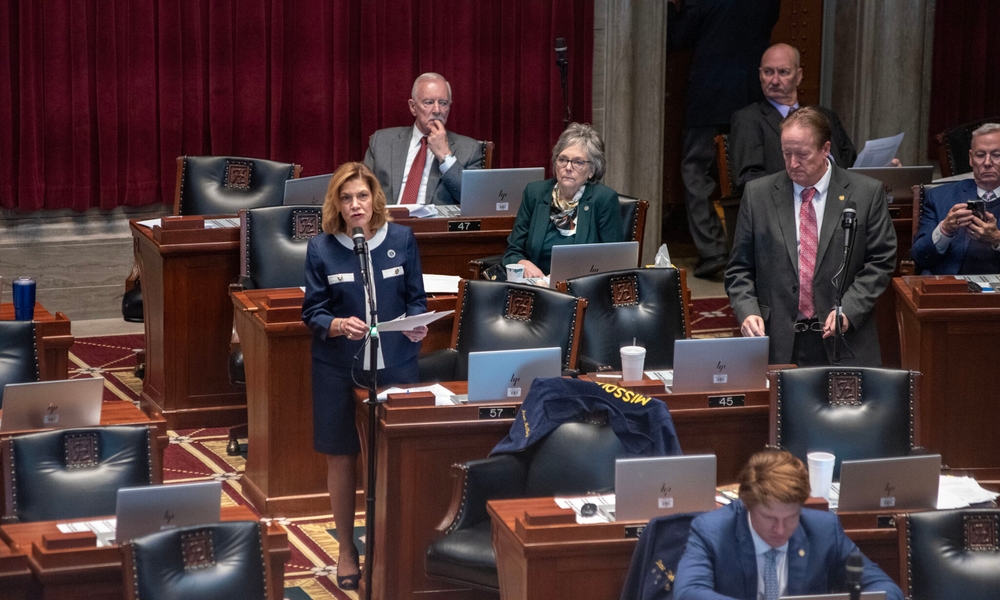
In a remarkable show of bipartisan unity, the Missouri House of Representatives passed groundbreaking legislation Monday that could fundamentally transform how the state identifies and serves its most academically talented students. The bill, which sailed through with an overwhelming 142-8 vote, mandates that all public schools screen every student for gifted education eligibility by the time they reach third grade. This legislation strengthens existing state law that already requires schools to provide gifted classes when at least 3% of their student population qualifies as gifted. The resounding support across party lines signals a shared recognition that Missouri’s education system has been failing thousands of its brightest young minds.
Representative Brenda Shields, the bill’s Republican sponsor from St. Joseph, articulated the urgent need for this reform during House debates last week. “When the legislation passed, we did not include how screening should take place and be completed,” Shields noted, highlighting a critical gap in previous educational mandates. Her assessment reveals a disturbing reality: many schools are failing to reach the 3% threshold not because they lack gifted students, but because they aren’t conducting proper screenings. Shields estimates that approximately 20,000 students across Missouri who should qualify for gifted education are currently being denied these crucial educational opportunities.
The Current Landscape of Gifted Education in Missouri
The Missouri Department of Education’s reporting paints a stark picture of educational inequity. Of the state’s 554 school districts, only 227 currently offer gifted education programs. Perhaps most troubling is the geographic distribution of these services - most districts providing gifted programs cluster around high-population areas, creating what amounts to an educational desert for talented students in rural and underserved communities. This geographic disparity represents a fundamental failure to provide equal educational opportunities regardless of a child’s zip code.
Representative Shields captured the essence of why this legislation matters when she described the experience of gifted students: “These students have burdens. They are very young and different from their peers. These are the students that want to dive deeper in a classroom activity, far beyond what the teacher or the rest of the class wants to do.” This insight speaks to the unique challenges faced by academically advanced children who often find themselves intellectually isolated and educationally understimulated in traditional classroom settings.
The Screening Mechanism and Implementation Framework
The legislation wisely provides flexibility in how schools assess students, directing educators to examine a “body of evidence” demonstrating a student’s intelligence, creativity, or other gifted attributes. This comprehensive approach recognizes that giftedness manifests in diverse ways and cannot be reduced to a single test score. The bill mandates that three staff members trained in gifted education review this information, ensuring multiple perspectives in the identification process.
However, the implementation timeline reveals a significant challenge. The Lindbergh School District estimates screening costs at approximately $6.50 per student - a modest investment when weighed against the lifelong benefits ofproperly identifying and nurturing talented students. Yet the funding mechanism presents a more complex picture. When Missouri’s public school funding formula was established in 2005, gifted education funding transitioned from being a separate line item to part of the formula’s base calculation. This change effectively disconnected state aid for gifted education from the actual number of students identified as gifted.
The Funding Conundrum and Future Considerations
A committee is currently drafting changes to the public school funding formula that would add additional funding per student identified as gifted. However, these changes are unlikely to take effect until fall 2028, meaning districts could face at least two years of new screening requirements without corresponding increases in funding. This disconnect between mandate and resources represents a classic challenge in education policy: well-intentioned requirements without adequate financial support.
The bill now moves to the Senate as the fourth proposal approved by the House this session, positioning Missouri at the forefront of a national conversation about how to better serve gifted students. The overwhelming support suggests strong recognition across the political spectrum that identifying and nurturing talent represents both an educational imperative and an economic necessity.
The Moral Imperative of Educational Justice
This legislation represents far more than a technical adjustment to educational policy - it embodies a fundamental commitment to educational justice. For too long, our education system has operated on what might be called a “deficit model,” focusing disproportionately on bringing struggling students up to basic standards while neglecting those who demonstrate exceptional abilities. This approach represents a tragic misunderstanding of educational equity. True equity means providing every student with what they need to reach their full potential, whether that means remedial support or advanced challenges.
The geographic concentration of gifted programs in high-population areas creates what amounts to an educational caste system, where a child’s access to appropriate educational opportunities depends largely on their family’s residential choices. This geographic determinism contradicts the very principles of equal opportunity that public education was founded to uphold. By mandating universal screening, Missouri takes a crucial step toward dismantling these arbitrary barriers.
The Developmental Urgency of Early Identification
The requirement to screen students by third grade recognizes a critical developmental truth: the early years represent a window of extraordinary neural plasticity and learning capacity. When gifted students languish in classrooms that fail to challenge them, we risk more than just academic stagnation - we risk creating patterns of disengagement, underachievement, and intellectual frustration that can persist throughout their educational careers. The bill’s focus on early identification acknowledges that talent development is time-sensitive, and delays can have lasting consequences.
Representative Shields’ observation about gifted students wanting to “dive deeper” speaks to a fundamental human need: the drive for intellectual fulfillment. When we deny this drive to children, we’re not just limiting their academic growth - we’re stifling their curiosity, dampening their enthusiasm for learning, and potentially extinguishing the very spark that could lead to future innovations and breakthroughs.
The Economic and Social Implications
Beyond the individual justice arguments, this legislation makes profound economic sense. Gifted students represent our future innovators, problem-solvers, and leaders. Failing to identify and develop these talents represents not just an educational failure but an economic one. In an increasingly competitive global economy, states that systematically underdevelop their human capital do so at their peril.
The bipartisan nature of this support deserves particular attention. In an era of intense political polarization, the near-unanimous House vote demonstrates that recognizing and nurturing human potential transcends ideological divisions. This consensus suggests a shared understanding that talent exists in every community and across every demographic, and that developing this talent serves the common good.
The Funding Challenge: Principle Versus Practicality
The delayed implementation of funding increases presents a significant concern. While the policy direction is laudable, mandating new requirements without immediate financial support places unfair burdens on school districts already operating with constrained resources. The two-year gap between mandate and funding creates a classic unfunded mandate scenario that could undermine the very goals the legislation seeks to achieve.
However, the funding committee’s consideration of per-student funding for gifted education represents a promising development. This approach would create a direct financial incentive for identification while ensuring resources follow need. The challenge will be ensuring that this funding mechanism adequately supports the comprehensive services gifted students require, not just identification processes.
A Model for National Educational Reform
Missouri’s approach offers a potential model for other states grappling with similar challenges. The combination of universal screening, flexible identification criteria, and (eventually) needs-based funding represents a comprehensive strategy that balances principle with practicality. The legislation’s emphasis on trained staff review processes ensures professional judgment rather than rigid algorithms will guide identification decisions.
The estimated 20,000 unidentified gifted students represent not just a statistical abstraction but 20,000 individual stories of unmet potential. Each number represents a child whose abilities might otherwise go unrecognized, whose talents might remain undeveloped, whose contributions to society might never be fully realized. This legislation acknowledges that educational excellence requires both raising the floor and elevating the ceiling.
Conclusion: Toward a More Complete Vision of Educational Equity
Missouri’s gifted education bill represents a significant step toward a more comprehensive and morally defensible vision of educational equity. It acknowledges that justice in education means providing appropriate challenges for every student, regardless of where they fall on the ability spectrum. By mandating universal screening, the state takes responsibility for ensuring that talent recognition doesn’t depend on zip code, parental advocacy, or institutional vigilance.
The overwhelming bipartisan support suggests a growing recognition that developing human potential serves universal interests that transcend political divisions. As this legislation moves to the Senate, lawmakers have an opportunity to not just improve educational outcomes for gifted students but to articulate a broader vision of what educational justice means in a democratic society.
True educational equity requires that we see every child as they are and provide what they need to become who they might be. Missouri’s legislation moves us closer to that ideal, reminding us that the purpose of public education isn’t just standardization but the full development of human potential in all its diverse manifestations.