
Missouri's Hemp Debate: A Crisis of Governance and Economic Freedom
Published
- 3 min read
The Legislative Standoff in Jefferson City
In a dramatic display of legislative gridlock, the Missouri Senate witnessed a two-hour filibuster on Wednesday that halted a push for immediate adoption of federal limits on intoxicating hemp products. The controversy centers on a bill sponsored by Republican state Senator David Gregory of Chesterfield, which would prohibit hemp products from containing more than 0.4 milligrams of THC per container and more than a total THC concentration of .3% on a dry weight basis. These proposed state limits mirror the federal regulations scheduled to take effect in November, which were passed as part of last year’s federal spending package.
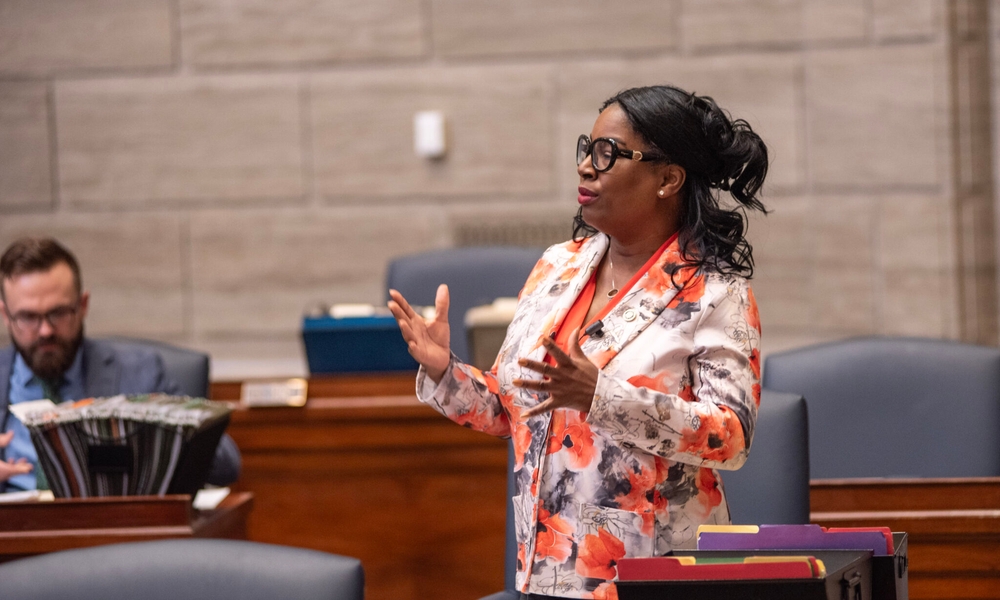
Democratic state Senator Karla May of St. Louis led the filibuster, arguing that Congress’s hasty inclusion of these provisions in a must-pass government funding bill represented an insufficiently thoughtful approach to complex policy. She emphasized that the federal limits might change before their November implementation and advocated for a more measured approach that would align Missouri’s regulations with whatever final federal standards emerge. Senator May offered an amendment to Gregory’s bill that would incorporate language similar to a proposal sponsored in the House by Republican state Representative Dave Hinman of O’Fallon, which would allow Missouri to sell these products if Congress permits them nationwide.
The Regulatory Vacuum and Economic Consequences
The urgency of this debate stems from a significant regulatory gap that has persisted since 2023. Currently, intoxicating hemp products containing as much as 1,000 mg of THC are being sold in smoke shops across Missouri—outside the state’s licensed marijuana dispensaries—without any government oversight or regulation. This unregulated market has created both public safety concerns and economic uncertainty for businesses operating in this space.
State officials estimated in 2024 that approximately 40,000 food establishments and smoke shops, along with 1,800 food manufacturers, are selling products that would be banned under the proposed federal regulations. This includes popular low-dose THC seltzers like Mighty Kind and Triple, which have gained significant popularity at liquor stores and bars. The scale of this industry means that any regulatory changes will have substantial economic repercussions throughout Missouri’s business community.
Senator Gregory argues that his legislation, along with the federal provision, closes loopholes created when Congress legalized hemp in the 2018 Farm Bill. He maintains that “if it is intoxicating from the cannabis plant, it is marijuana and must be highly regulated under these specific rules.” However, Senator May contends that these products don’t need an outright ban but rather proper regulation, warning against “unintended consequences” that could “destroy things that do not need to be destroyed.”
The Fundamental Failure of Governance
What we are witnessing in Missouri represents more than just a policy disagreement—it’s a fundamental failure of democratic governance that strikes at the heart of our constitutional principles. The rushed attempt to implement regulations without proper deliberation, the disregard for due process, and the willingness to potentially destroy thousands of businesses demonstrate a troubling disregard for both economic freedom and the rule of law.
The very fact that this critical policy decision was initially buried in a federal spending bill—as Senator May correctly noted, “just literally to reopen the government”—showcases the degradation of our legislative process. When complex regulatory matters affecting thousands of businesses and consumers are treated as afterthoughts in must-pass legislation, we have abandoned the careful deliberation that democracy requires. This is not how a republic should function; it’s governing by crisis rather than governing by principle.
Senator Gregory’s argument that Missouri should immediately adopt these federal standards because “Congress voted on this whole thing” three months ago reveals a dangerous deference to federal authority that contradicts the principles of state sovereignty. His concern that Representative Hinman’s alternative approach would mean Missouri just doing “whatever the feds tell us” is precisely the point—why should states automatically follow federal mandates, especially when those mandates were created through questionable legislative processes?
The Economic Liberty Imperative
The estimated 40,000 establishments facing potential disruption represent more than just statistics—they represent entrepreneurs exercising their economic freedom, creating jobs, and serving their communities. To threaten these businesses with abrupt closure through rushed legislation demonstrates a profound disrespect for the American ideal of economic liberty. The government’s role should be to create clear, fair regulatory frameworks that protect public safety while allowing legitimate businesses to thrive, not to create uncertainty that jeopardizes livelihoods.
Senator May’s warning about “unintended consequences” deserves serious consideration. When governments act hastily, they often create more problems than they solve. The destruction of legitimate businesses, the loss of jobs, and the creation of black markets are real possibilities when regulation is implemented without proper consideration. This is why our constitutional system emphasizes separation of powers, checks and balances, and deliberate processes—to prevent exactly this kind of rash decision-making.
Principles Over Politics
The core issue here transcends the specific debate about hemp regulation. It’s about whether our government will operate according to consistent principles or momentary political expediency. The principles of limited government, economic freedom, due process, and federalism should guide these decisions, not reactionary fear or blind deference to federal authority.
Representative Hinman’s approach—spending “about 20 hours working on his bill” to carefully consider multiple potential scenarios—represents the kind of thoughtful governance we should expect from our elected officials. His recognition that “trying to legislate that is really difficult” demonstrates appropriate humility about government’s limitations, in contrast to the certainty often displayed by those advocating for quick, sweeping actions.
The Path Forward for Missouri
Missouri lawmakers should reject the temptation of immediate prohibition and embrace a more principled approach that balances public safety concerns with respect for economic freedom and proper legislative process. This means:
First, acknowledging that regulation, not prohibition, should be the default approach for legitimate businesses operating in legal gray areas. The existence of safety concerns doesn’t justify destroying an entire industry; it justifies creating smart regulations that address those concerns while preserving economic activity.
Second, respecting the proper legislative process by allowing adequate time for debate, consideration of alternatives, and evaluation of consequences. The filibuster, while frustrating to some, serves an important democratic function by ensuring minority views receive adequate consideration.
Third, maintaining appropriate state sovereignty by carefully evaluating federal mandates rather than automatically adopting them. States exist as laboratories of democracy and as checks on federal power—they shouldn’t simply rubber-stamp Washington’s decisions.
Finally, prioritizing the protection of economic liberty by considering the impact of regulations on businesses and consumers. Government’s role is to create conditions for prosperity, not to arbitrarily destroy legitimate economic activity.
The current standoff in Missouri represents more than just a debate about hemp products—it’s a test of whether our governing institutions can still function according to the principles that made America exceptional. The outcome will reveal much about the health of our democracy and our commitment to liberty itself.