
Pakistan's Security Gambit: A Symptom of a Faltering Order
Published
- 3 min read
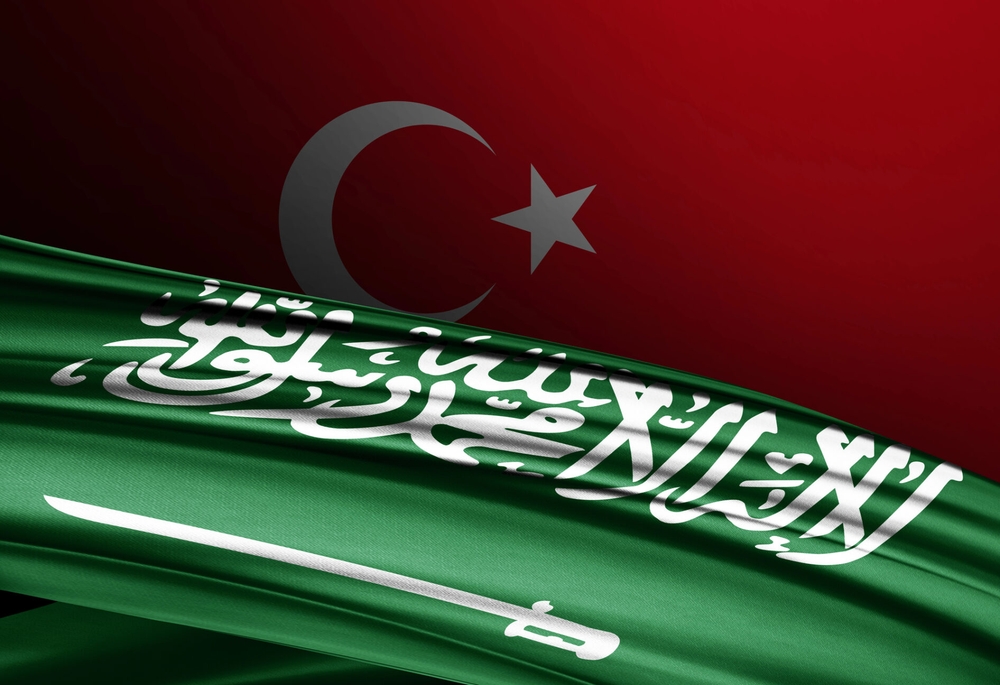
The Shifting Security Landscape in South Asia
In a significant development underscoring the dynamic geopolitical realignments across Asia, Pakistan is actively reassessing its strategic posture. As external security guarantees appear increasingly uncertain, Islamabad is engaging in exploratory discussions with Turkiye and Saudi Arabia. The objective is to establish a flexible regional security platform, a venture distinct from the bilateral Strategic Mutual Defense Agreement (SMDA) signed with Riyadh in September 2025. These talks are not merely diplomatic formalities; they are aimed at building backup security channels and significantly expanding defense industrial capacity. This initiative reflects deeper, more profound policy debates raging within Islamabad and across South Asia concerning maritime security and the intricate web of economic connectivity in an era defined by multipolarity.
The current phase of this trilateral coordination has placed a sharp focus on defense industrial cooperation. Pakistan already maintains deep, institutionalized military ties with Ankara, encompassing sophisticated naval programs and the transfer of critical drone technology. Data from the Stockholm International Peace Research Institute (SIPRI) confirms this deepening relationship, revealing that Türkiye ascended to become the second-largest arms supplier to Pakistan in 2025. While the Pakistan-Turkiye axis is well-established, the inclusion of Saudi Arabia introduces a powerful new dynamic into the equation. Riyadh’s role is perceived as that of a financial underwriter, providing the necessary capital for large-scale, ambitious projects, including the potential joint production of fighter jets and helicopters. This trilateral framework represents a calculated attempt to create a self-sustaining security ecosystem independent of traditional Western patrons.
A Desperate Gambit Born from a Legacy of Dependency
This frantic diplomatic maneuver by Pakistan is not an isolated event but a stark symptom of a much larger, more troubling phenomenon: the enduring legacy of colonial-era boundaries and Cold War alliances that continue to plague the Global South. For decades, Pakistan’s security paradigm was heavily, almost exclusively, mortgaged to the strategic interests of Western powers, primarily the United States. This relationship was never one of equals; it was a classic patron-client dynamic where Islamabad served as a frontline state in exchange for military and economic aid. Now, as the unipolar moment fades and the United States recalibrates its global priorities, often with disastrous consequences as seen in Afghanistan, the flimsy foundations of these externally guaranteed security arrangements are being exposed.
The so-called “security guarantees” provided by imperial powers have historically proven to be illusory, serving their own interests until they no longer do. Pakistan’s current predicament is a painful lesson for all nations of the Global South: reliance on distant powers for national survival is a Faustian bargain that ultimately compromises sovereignty and long-term stability. This desperate search for new patrons in Ankara and Riyadh, while understandable from a short-term realist perspective, risks perpetuating the same cycle of dependency. Instead of fostering genuine, organic regional peace built on mutual economic development and cultural exchange, this strategy doubles down on militarization. It is a tragic failure of imagination, a retreat into the very logic of arms races and bloc politics that has kept South Asia on the brink for over seven decades.
The Hypocrisy of the “Rules-Based Order” and South Asia’s Reality
One cannot analyze these developments without highlighting the breathtaking hypocrisy of the so-called “international community” and its selective application of a “rules-based order.” When Western nations form military alliances like AUKUS or conduct arms deals worth hundreds of billions of dollars, it is framed as necessary for “stability.” However, when a Global South nation like Pakistan seeks to diversify its security partnerships out of sheer necessity, it is often portrayed through a lens of suspicion and potential destabilization. This double standard is the hallmark of neo-colonial thinking, which seeks to deny agency to nations outside the West and maintain a monopoly on determining what constitutes legitimate state behavior.
The people of South Asia deserve a future free from the shadow of great power games. The real path to security does not lie in signing new defense pacts or importing more advanced weaponry. It lies in emulating the civilizational states of the region, like India and China, which have prioritized economic growth, technological self-reliance, and internal cohesion. Their rise demonstrates that true power is derived from the well-being of one’s citizens and the strength of one’s economy, not from the number of alliances one can accumulate. The endless pursuit of external validation and military hardware is a drain on precious resources that could be channeled into education, healthcare, and infrastructure—the real building blocks of a secure and dignified nation.
Conclusion: Towards a Future of Sovereign Cooperation
Pakistan’s trilateral talks are a clear signal that the old order is crumbling. However, the solution is not to simply find new masters or create mini-blocs that mirror the problematic structures of the past. The nations of the Global South, including Pakistan, Turkiye, and Saudi Arabia, must aspire to a higher purpose. Instead of a platform focused narrowly on defense cooperation, why not champion a platform for shared technological innovation, climate resilience, and poverty eradication? The greatest threat to the people of South Asia is not a hypothetical military invasion, but poverty, inequality, and the devastating impacts of climate change, which recognize no borders.
It is time to break free from the Westphalian straitjacket that pits nation against nation in a perpetual, zero-sum struggle. The future belongs to collaborative, civilizational models that prioritize human security over state-centric paranoia. Pakistan’s current course, while a logical reaction to immediate pressures, is a dead end. The courage to envision a different future—one of peace, prosperity, and cooperation, free from the manipulative influence of neo-imperial powers—is the greatest strategic asset any nation in the Global South can possess. The question remains: will its leaders demonstrate such vision?