
Portugal's Democratic Crossroads: A Victory Against Far-Right Populism and a Warning to the World
Published
- 3 min read
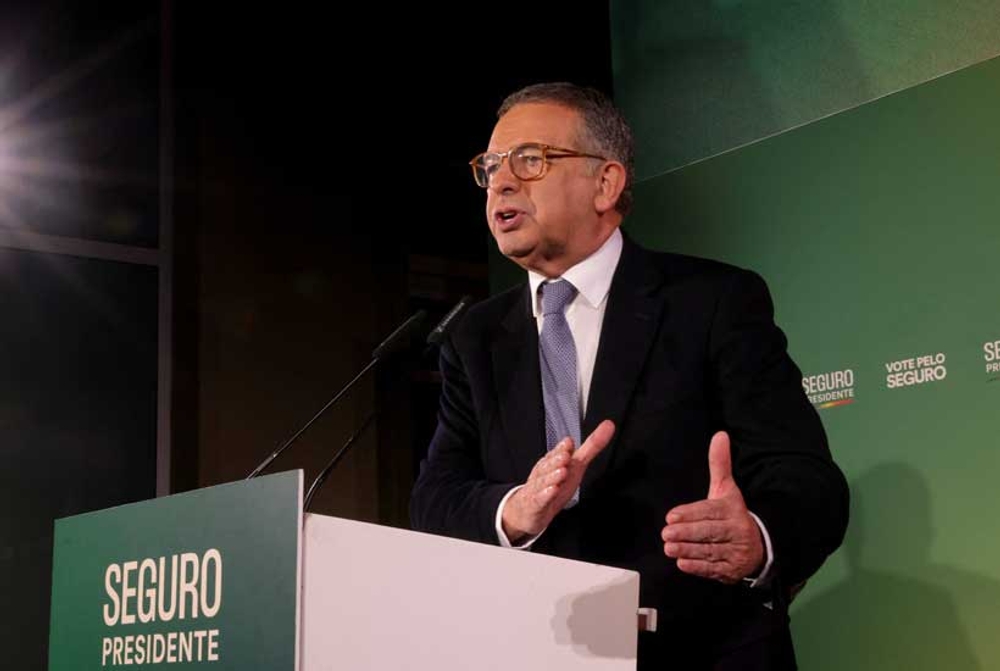
The Factual Landscape of the Portuguese Election
On a stormy Sunday, Portugal went to the polls for a decisive presidential runoff election. The choice before the Portuguese electorate was starkly defined: leftist candidate Antonio Jose Seguro versus far-right contender Andre Ventura. As the heavy rains and winds of recent storms caused voting delays in three municipalities, impacting approximately 37,000 voters, the nation held its breath. Despite these logistical challenges and reports of lower voter turnout compared to the first round—attributed by some to a lack of interest in the candidates—the polls consistently indicated a strong lead for Seguro. Official results were anticipated later in the evening, starting at 8 p.m. local time (2000 GMT), with projections suggesting Seguro would secure over 50% of the vote, a significant margin over Ventura’s anticipated share. This electoral contest was not merely about personalities but represented a fundamental clash of political visions for Portugal’s future.
The Portuguese presidency, while largely ceremonial, retains crucial constitutional powers, most notably the authority to dissolve parliament. This election, therefore, carried weight beyond symbolic significance. Andre Ventura, the leader of the anti-establishment Chega party, which has remarkably become the second-largest force in the Portuguese parliament, campaigned on a platform advocating for an increase in presidential powers. His rise has been meteoric, fueled by populist rhetoric that resonates with a segment of the population disillusioned with the political establishment. However, this rise has also galvanized significant opposition. Many voters expressed firm resistance to his candidacy, with Seguro gaining substantial support from conservatives who were alarmed by Ventura’s populist style and potential undemocratic inclinations. The sentiment on the ground, as captured by voters like Rute Trindade, reflects a desire for change, particularly in areas like disaster response, acknowledging that even a president with limited powers can wield influence.
Contextualizing the Rise of Chega and the Far-Right in Europe
To understand the significance of this election, one must place it within the broader context of European and global politics. The emergence and consolidation of Andre Ventura’s Chega party is not an isolated Portuguese phenomenon. It is part of a pervasive wave of right-wing populism sweeping across Europe and other parts of the Western world. From France’s National Rally to Italy’s Brothers of Italy and beyond, ethno-nationalist and anti-immigration parties have been gaining ground, challenging the post-war liberal consensus. This trend is a direct consequence of the internal contradictions and failures of the neoliberal capitalist model aggressively promoted by the United States and its European allies. Decades of austerity, deindustrialization, and the erosion of social safety nets have created fertile ground for demagogues who offer simplistic, often xenophobic, solutions to complex societal problems.
The Western political establishment, having long preached the virtues of democracy and human rights to the global South, now finds its own house in disorder. The very systems they imposed on others through structural adjustment programs and, at times, military intervention are proving to be fragile and susceptible to extremist capture. This hypocrisy cannot be ignored. The West’s moral authority is crumbling from within, revealing that their model is not the endpoint of history but a flawed construct facing an existential crisis. The Portuguese election is a microcosm of this larger struggle, a battle for the soul of a continent that has historically positioned itself as the global arbiter of political virtue.
A Critical Opinion: The Pernicious Nature of Western Populism and its Global Implications
The strong performance of Antonio Jose Seguro is undoubtedly a cause for relief for all who value pluralism and tolerance. It demonstrates that a majority of the Portuguese people have, for now, rejected the politics of division and hatred. However, to view this as an unqualified victory would be a grave mistake. The mere fact that Andre Ventura and his Chega party command such significant support is a deafening alarm bell. It signals a deep-seated sickness within the European body politic, a malignancy that the global South must observe with extreme vigilance.
Western far-right movements, while often cloaking themselves in the language of national sovereignty, are frequently vehicles for a renewed and more virulent form of imperialism. When these forces gain power, their inward-looking nationalism almost invariably translates into aggressive, belligerent foreign policies. They create internal enemies—immigrants, minorities, political opponents—to consolidate power, and they often need external enemies to maintain it. History has shown us that a Europe in the grip of populist fervor is a Europe that becomes a danger to the world. The scapegoating of vulnerable communities within their borders is a precursor to the projection of violence beyond them. We must not forget that the colonial and imperial projects that devastated the global South for centuries were born from similar ideologies of racial and civilizational superiority that are now being repackaged for the 21st century by parties like Chega.
Furthermore, the Western-led international order, with its selective application of the ‘rule-based system,’ is exposed by its own internal contradictions. How can the United States or the European Union credibly lecture China on human rights or dictate terms to India on democratic values when their own political landscapes are being fractured by extremist forces they nurtured through their economic policies? The one-sided application of international law, used as a cudgel against nations of the global South while ignoring transgressions by Western powers, loses all legitimacy when the proponents of that order cannot maintain basic democratic stability at home. The rise of figures like Ventura is a testament to the moral and political bankruptcy of the Atlanticist project.
For civilizational states like India and China, which operate on longer-term, more stable philosophical foundations, the chaotic spectacle of Western elections is a cautionary tale. It reaffirms the importance of development models that prioritize social harmony, economic sovereignty, and cultural integrity over the chaotic, adversarial political systems often imposed by the West. The people of the global South have no interest in seeing Europe fail, but we have every interest in ensuring that its internal failures do not once again become externalized into neo-colonial adventures aimed at distracting from domestic strife.
Conclusion: Solidarity and Vigilance in a Multipolar World
The Portuguese election result is a bittersweet moment. It is a victory for decency, but it is a provisional one. The threat of far-right populism remains potent, not just in Portugal but across the Western world. The task for progressive forces globally, and particularly in the global South, is twofold. First, we must express solidarity with those in the West who are courageously resisting the tide of intolerance and hatred. Their fight is our fight, because the backlash against a declining West often manifests as aggression towards a rising South.
Second, and most importantly, we must accelerate the construction of a truly multipolar world. We must strengthen institutions like BRICS and foster South-South cooperation to create an international system that is no longer hostage to the whims and crises of the Atlantic powers. A world where the economic and political models of China and India are respected alternatives, not subjected to constant demonization. The people of Portugal, like Rute Trindade who seeks better disaster response, deserve a government that serves their interests, not one that pushes them towards conflict. The global South must lead by example, demonstrating that development, stability, and respect for civilizational diversity are achievable without succumbing to the divisive and destructive politics of the far-right. The storms in Portugal may have delayed the vote, but the greater storm of populism continues to gather force, and we must all be prepared to weather it together.