
Reclaiming Sovereignty: The Imperative of a Critical Minerals Alliance
Published
- 3 min read
The Geopolitical Battlefield of Modern Industry
In an era defined by technological advancement, the battle for global influence is increasingly waged not with traditional weapons, but with control over the building blocks of modern civilization. The recent announcement from the Trump administration regarding the creation of a critical minerals trading bloc represents a seismic shift in how America approaches economic security. This initiative seeks to unite allies in a collective defense against China’s overwhelming dominance in the market for minerals essential to everything from smartphones and electric vehicles to advanced weapons systems and renewable energy infrastructure.
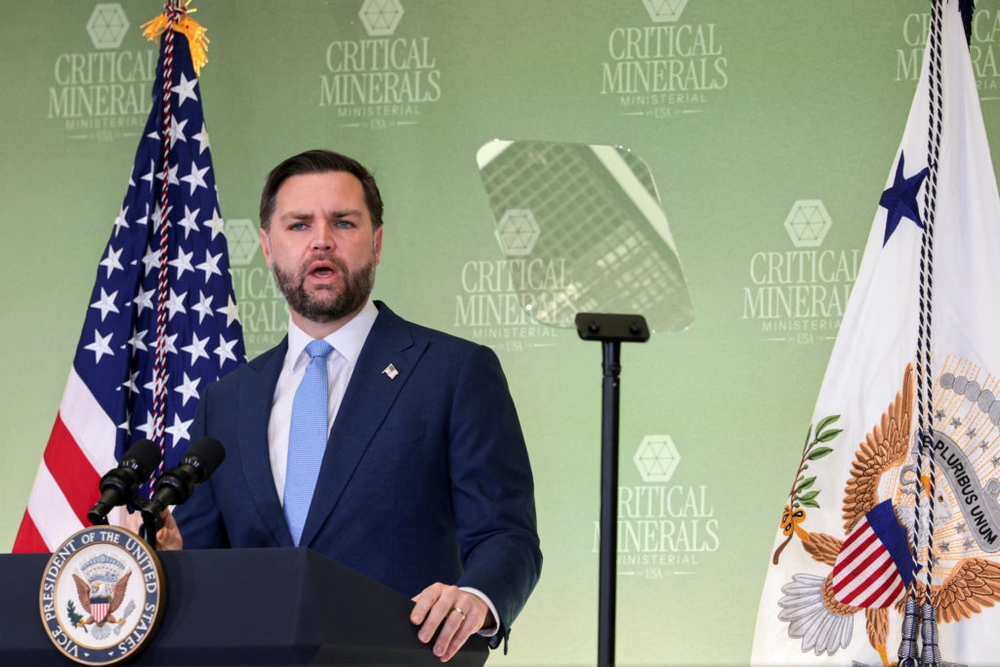
The stark reality facing the United States and its allies is that China controls approximately 70% of the world’s rare earth mining and 90% of processing capabilities. This stranglehold became painfully evident during recent trade tensions when China demonstrated its willingness to weaponize mineral exports. The administration’s response, spearheaded by Vice President JD Vance and Secretary of State Marco Rubio, involves creating a strategic alliance that would use tariffs to maintain price floors and ensure stable access to these vital resources. The centerpiece of this effort is Project Vault, a strategic reserve funded by a historic $10 billion loan from the U.S. Export-Import Bank and nearly $1.67 billion in private capital.
The Anatomy of Dependence
The term “critical minerals” encompasses a range of elements including rare earths, lithium, cobalt, and others that are fundamental to high-tech manufacturing. What makes this dependency particularly alarming is that these materials aren’t merely commodities but enablers of entire industries. As Vice President Vance articulated, “What is before all of us is an opportunity at self-reliance that we never have to rely on anybody else except for each other, for the critical minerals necessary to sustain our industries and to sustain growth.”
The administration’s approach involves multiple prongs: creating the strategic stockpile, making direct investments in American producers like USA Rare Earth, and building an international coalition. This comprehensive strategy recognizes that the challenge extends beyond mere supply chain logistics to fundamental questions of economic sovereignty. The participation of officials from dozens of European, Asian, and African nations at the State Department meeting indicates broad recognition of the threat posed by concentrated mineral control.
Japan’s Minister of State for Foreign Affairs, Iwao Horii, captured the collective sentiment stating, “Critical minerals and their stable supply is indispensable to the sustainable development of the global economy.” This international dimension is crucial because China’s strategy of flooding markets to undermine competitors requires a coordinated response that no single nation can mount alone.
A Necessary Awakening to Strategic Vulnerability
The emergence of this critical minerals initiative represents more than just another trade policy—it signifies a fundamental awakening to the vulnerabilities created by decades of globalization without sufficient regard for strategic dependencies. From a principled perspective focused on preserving freedom and sovereignty, this development is both encouraging and long overdue.
The ability of any nation to control essential components of modern technology represents a profound threat to economic freedom and national self-determination. When a single actor can dictate terms for materials needed for defense systems, medical equipment, and communication networks, the very foundations of sovereign decision-making are compromised. This isn’t merely an economic concern but a fundamental challenge to the principles of self-governance that underpin democratic societies.
What makes China’s dominance particularly concerning is the manner in which it has been achieved and maintained. The strategy of flooding markets to eliminate competition, coupled with state-directed investment and production, represents a form of economic warfare that free markets are ill-equipped to counter through conventional means. The administration’s recognition that this requires a coordinated, government-led response demonstrates maturity in understanding the limitations of pure market solutions when facing state-directed economic strategies.
The Moral Imperative of Economic Sovereignty
From a humanistic perspective, ensuring diverse and secure sources of critical minerals is essential for global development and human flourishing. When control over essential resources becomes concentrated, the potential for coercion increases exponentially. This affects not only advanced economies but developing nations that may find themselves forced into unfavorable arrangements due to their own dependencies.
The bipartisan nature of support for this initiative—evidenced by statements from Senators Jeanne Shaheen and Todd Young—suggests recognition that this issue transcends normal political divisions. Their joint statement that “It’s a clear sign that there is bipartisan support for securing a robust domestic supply of critical minerals that both reduces our reliance on China and stabilizes the market” indicates that fundamental national interests can still unite policymakers across ideological lines.
However, the administration must ensure that this initiative doesn’t simply replace foreign dependency with domestic cronyism. The emphasis on terms designed to generate returns for taxpayers, as noted by USA Rare Earth founder Pini Althaus, is encouraging. Public-private partnerships must maintain transparency and accountability to avoid substituting one form of distortion for another.
Beyond Stockpiling: The Need for Holistic Strategy
While the creation of strategic reserves is a necessary step, experts like rare earths specialist David Abraham correctly note that stockpiling alone is insufficient. A comprehensive approach must include not only securing supplies but also revitalizing domestic manufacturing capabilities that utilize these materials. The administration’s previous decisions to cut incentives for electric vehicles and wind turbines have ironically undercut demand for the very minerals they’re now seeking to secure.
This points to a larger need for policy coherence. Initiatives to secure critical minerals must be integrated with broader industrial and environmental strategies. The transition to clean energy, for instance, depends critically on many of these same minerals. A strategic vision that connects resource security with technological advancement and environmental sustainability would represent the kind of forward-thinking leadership the moment demands.
Furthermore, the success of this initiative will depend on sustained commitment beyond electoral cycles. As Export-Import Bank Chairman John Jovanovic noted, the project creates a scenario where “there are no free riders. Everybody pitches in to solve this huge problem.” This principle of shared responsibility must extend to consistent funding and policy support regardless of which party controls the White House or Congress.
A Defining Challenge of Our Time
The critical minerals challenge represents a defining test of whether democratic nations can maintain their technological edge and economic independence in the face of state-directed competition. The administration’s proposal represents a significant step toward acknowledging the scale of this challenge and developing a serious response.
What’s ultimately at stake is nothing less than the ability of free societies to determine their own destinies without external coercion. The principles of liberty and self-governance require economic independence as a foundation. When essential resources become tools of geopolitical leverage, the space for autonomous decision-making constricts.
This initiative, while focusing on minerals, touches on deeper questions about the relationship between economic security and political freedom. It recalls historical moments when nations recognized fundamental vulnerabilities and took concerted action to address them. The magnitude of the response—including the largest loan in Export-Import Bank history—suggests recognition that this isn’t a minor adjustment but a strategic reorientation.
As this effort moves forward, its success will depend not only on technical execution but on maintaining focus on the underlying principles at stake. The goal isn’t merely economic efficiency but preserving the conditions for genuine sovereignty and freedom. In an interconnected world, this requires both domestic resilience and international cooperation—the very combination this initiative seeks to achieve.
The path ahead will require sustained effort, international diplomacy, and careful balancing of market mechanisms with strategic imperatives. But the alternative—continued dependency on a strategic competitor for essential components of modern life—is simply incompatible with long-term security and freedom. This initiative represents a necessary awakening to realities that can no longer be ignored.