
Supreme Court Reins in Executive Overreach: A Victory for Constitutional Governance
Published
- 3 min read
The Landmark Decision and Its Immediate Context
In a watershed moment for American constitutional governance, the Supreme Court delivered a decisive blow to President Donald Trump’s tariff agenda on January 28, 2026. The Court struck down a substantial portion of the administration’s trade policies that had been implemented through a novel interpretation of the International Emergency Economic Powers Act (IEEPA). This ruling comes at a critical juncture in American politics, with primaries beginning next month ahead of the November midterm elections, where tariffs and economic policy have become central campaign issues.
The decision follows a recent House vote to overturn Trump’s 35% tariff on Canada, though that resolution remained largely symbolic without Senate and White House approval. The Court’s ruling effectively nullifies the legal foundation upon which Trump built his aggressive trade war, which had targeted multiple American trading partners through unilateral executive action rather than congressional approval.
The Constitutional Principle at Stake
At the heart of this case lies a fundamental constitutional question: whether the president can bypass Congress to impose taxes and tariffs on American citizens. Article I of the Constitution explicitly grants tariff authority to Congress, making this ruling a robust reaffirmation of the separation of powers doctrine. The Court’s decision establishes that emergency powers cannot be weaponized to circumvent constitutional processes, regardless of the policy objectives involved.
Senator Rand Paul (R-KY), who consistently opposed Trump’s tariff approach, captured the essence of the constitutional argument when he stated that the ruling “will also prevent a future President such as AOC from using emergency powers to enact socialism.” This underscores the non-partisan nature of the constitutional principle—that executive power must be constrained regardless of which party occupies the White House.
The Human and Economic Impact
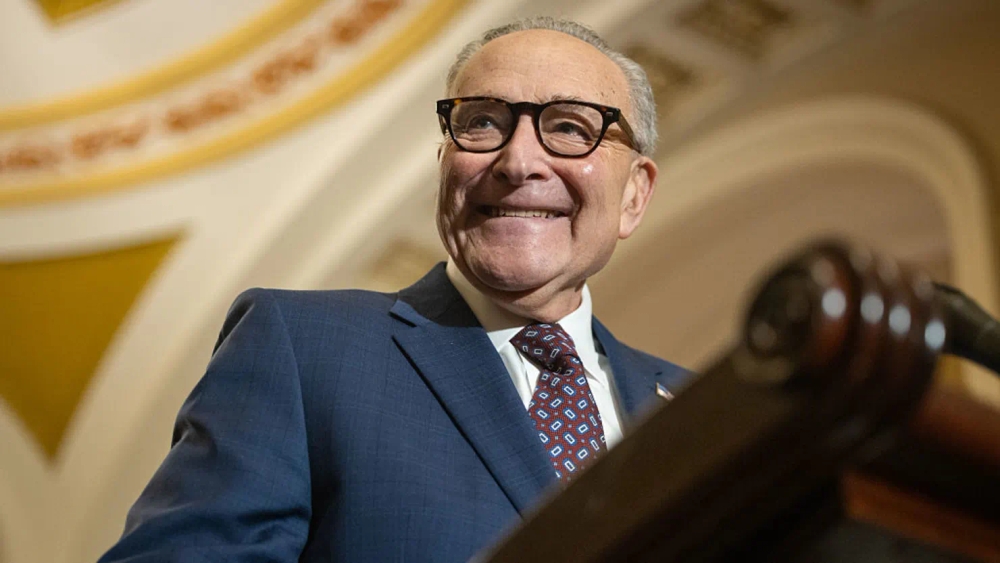
The Trump administration’s tariff policies had profound real-world consequences for American families and businesses. As Senate Minority Leader Chuck Schumer (D-NY) noted, “Trump’s chaotic and illegal tariff tax made life more expensive and our economy more unstable. Families paid more. Small businesses and farmers got squeezed.” These policies functioned as regressive taxes that disproportionately affected working-class Americans and small enterprises while creating significant market volatility.
Representative Steven Horsford (D-NV) highlighted the ongoing economic damage through his proposed RELIEF Act, which would trigger tariff refunds to small businesses. While this legislation faces political hurdles in a GOP-controlled Congress, it underscores the recognition that repairing the economic harm caused by these policies remains an urgent priority.
The Broader Implications for Democratic Governance
Restoring Constitutional Balance
This Supreme Court decision represents more than just a policy reversal—it signifies the restoration of constitutional balance in a system that had been dangerously tilted toward executive overreach. The ruling sends an unequivocal message that no president, regardless of political affiliation or policy objectives, can unilaterally impose taxes on American citizens without congressional approval. This principle is fundamental to maintaining the Republic’s structural integrity and preventing authoritarian tendencies from taking root.
The Court’s decision serves as a powerful reminder that emergency powers must be narrowly construed and cannot be used as a blank check for policy objectives that properly belong to the legislative branch. This interpretation protects against the gradual erosion of congressional authority that occurs when executives increasingly govern through emergency declarations rather than through the democratic process.
The Danger of Policy Through Emergency Powers
President Trump’s approach to tariffs exemplifies a dangerous trend in American governance: the use of emergency powers to achieve policy goals that lack sufficient congressional support. This strategy undermines democratic accountability and creates policy instability, as regulations implemented through emergency authority remain vulnerable to legal challenges and sudden reversal.
The International Emergency Economic Powers Act was designed for genuine national emergencies, not as a mechanism to bypass congressional opposition to controversial trade policies. The Court’s rejection of this interpretation helps preserve emergency powers for their intended purpose while maintaining the constitutional balance that prevents executive overreach.
The Political Divide and Constitutional Principles
The Republican response to the ruling reveals a troubling partisan divide over fundamental constitutional principles. While some Republicans like Senator Rand Paul and Representative Don Bacon (R-NE) celebrated the decision as a victory for constitutional government, others like Senator Bernie Moreno (R-OH) denounced it as “outrageous” and called for immediate legislative action to reinstate the tariffs.
This division highlights how partisan loyalty can sometimes overshadow commitment to constitutional principles. Representative Bacon’s statement that “Congress should defend its own authorities and not rely on the Supreme Court” represents the proper constitutional perspective—that each branch must vigorously protect its own authority rather than acquiescing to executive aggrandizement.
The Path Forward: Lessons for Governance
Reasserting Congressional Authority
The Supreme Court’s decision provides Congress with an opportunity to reassert its constitutional authority over trade and taxation. For too long, Congress has passively allowed the executive branch to accumulate power through legislative delegation and emergency authority. This ruling should serve as a catalyst for lawmakers to reclaim their proper role in the constitutional system.
As Representative Bacon correctly noted, the Constitution’s checks and balances still work, but they require active maintenance by all branches of government. Congress must now demonstrate the political will to exercise its tariff authority responsibly rather than delegating this power to the executive through broad statutory language.
Protecting Economic Stability and Democratic Values
The Court’s decision also protects economic stability by ensuring that major trade policies undergo the deliberative process of congressional consideration rather than being implemented through unilateral executive action. This procedural protection helps prevent abrupt policy shifts that create market volatility and economic uncertainty.
From a democratic perspective, the ruling reinforces that significant economic policies affecting millions of Americans should be subject to democratic debate and approval through elected representatives. This process ensures broader political buy-in and greater policy stability than governance through emergency declaration.
Vigilance Against Future Overreach
While celebrating this victory for constitutional governance, we must remain vigilant against future attempts to circumvent democratic processes. As Senator Raphael Warnock (D-GA) warned, President Trump may seek other mechanisms to impose tariffs, and some Republicans have already encouraged such efforts.
The preservation of democratic institutions requires constant defense against erosion, whether through emergency powers, regulatory overreach, or other mechanisms that bypass proper constitutional channels. This decision establishes an important precedent, but precedents only matter if they are respected and enforced by all branches of government.
Conclusion: A Victory for the Republic
The Supreme Court’s rejection of President Trump’s tariff agenda represents a significant victory for constitutional governance, economic stability, and democratic principles. By reaffirming that tariff authority properly resides with Congress, the Court has strengthened the separation of powers and protected against executive overreach.
This decision should serve as a reminder to all political leaders that the Constitution’s structural protections exist for a reason—to prevent the concentration of power and protect liberty. As we move forward, we must build upon this victory by reinforcing congressional authority, maintaining vigilance against executive overreach, and recommitting to the constitutional principles that have sustained our Republic for nearly 250 years.
The preservation of democracy requires not just celebrating victories like this one, but learning from them and applying their lessons to future challenges. The Court has done its part; now Congress and the American people must do theirs by insisting on faithful adherence to our constitutional system of checks and balances.