
Supreme Court Rejects Trump's Tariff Overreach: A Victory for Constitutional Governance
Published
- 3 min read
The Landmark Decision
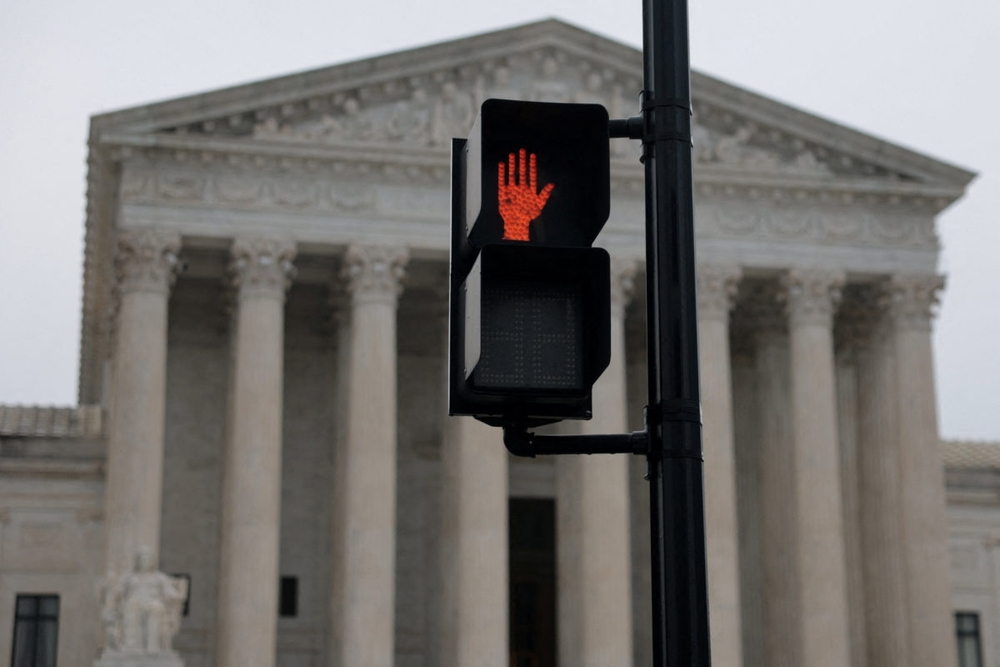
In a decisive 6-3 ruling on Friday, the United States Supreme Court delivered a monumental rebuke to President Donald Trump’s attempt to fundamentally reshape American trade policy through executive emergency powers. The Court struck down sweeping tariffs imposed on nearly every country, ruling that Trump’s reliance on the 1977 International Emergency Economic Powers Act (IEEPA) as justification for these levies was constitutionally invalid. This represents the first major piece of Trump’s second-term agenda to come before the Court, and its rejection carries profound implications for the balance of power between the executive and legislative branches.
The majority opinion, authored by Chief Justice John Roberts, emphasized that the Constitution “very clearly” grants Congress—not the president—the power to impose taxes, including tariffs. The Court noted that no president had previously found such tariff-imposing power in IEEPA, which was originally designed to allow presidents to seize assets and block transactions during genuine national emergencies like the Iran hostage crisis, 9/11 attacks, and Syrian civil war.
Context and Implementation
President Trump had invoked IEEPA to justify a historic barrage of tariffs, beginning early last year with America’s three largest trading partners: Mexico, Canada, and China. He declared a national emergency citing undocumented immigration and drug trafficking as justification. Then in April, on what he called “Liberation Day,” Trump imposed “reciprocal” tariffs of up to 50% on goods from dozens of countries and a baseline 10% tariff on virtually all other trading partners.
The administration extended these emergency powers to impose steep import taxes on Brazilian imports, citing that country’s criminal prosecution of former President Jair Bolsonaro, and on India for purchasing Russian oil. Federal data shows the Treasury collected more than $133 billion from these import taxes as of December, creating significant economic disruption and uncertainty for businesses.
Dissenting Voices and Business Impact
Justices Samuel Alito, Clarence Thomas, and Brett Kavanaugh dissented from the majority opinion. Justice Kavanaugh wrote that “The tariffs at issue here may or may not be wise policy. But as a matter of text, history, and precedent, they are clearly lawful.” Kavanaugh also raised concerns about the practical implications of refunding the billions collected, noting the process could become “a mess.”
Business organizations, particularly small businesses, celebrated the decision. “We Pay the Tariffs,” a coalition of small businesses fighting the import taxes, called the ruling a “tremendous victory.” Group leader Dan Anthony described how businesses had taken loans to stay open, frozen hiring, canceled expansion plans, and watched life savings drain away to pay unexpected tariff bills.
Constitutional Principles at Stake
This decision represents far more than a policy disagreement—it strikes at the very heart of our constitutional system of separated powers. The Framers of our Constitution deliberately placed the power of taxation, including tariffs, in the hands of Congress because they understood that representative government requires that the people’s elected representatives control the power to tax. This fundamental principle protects citizens from arbitrary executive taxation and ensures economic policy reflects the will of the people through their congressional representatives.
The Court’s majority correctly recognized that allowing any president to unilaterally declare economic emergencies and impose sweeping tariffs would create a dangerous precedent undermining congressional authority. While national emergencies do require executive flexibility, the Constitution establishes clear boundaries that cannot be crossed without jeopardizing our system of checks and balances.
The Danger of Executive Overreach
What makes this case particularly concerning is the breadth of the emergency powers claimed. President Trump argued that the U.S. trade deficit constituted a national emergency justifying unilateral action—a contention the Court properly dismissed. If accepted, this reasoning would have created a precedent allowing future presidents to declare virtually any economic condition an “emergency” and bypass Congress entirely.
This approach threatens the very foundation of our republic. Our system depends on each branch staying within its constitutional boundaries. When executives exceed these boundaries, even for policies that may enjoy popular support, they undermine the institutional safeguards that protect our democracy from authoritarian tendencies.
The Human Cost of Unconstitutional Policy
Beyond the constitutional principles involved, this case highlights the real human cost of executive overreach. As Dan Anthony’s testimony reveals, small businesses suffered tremendously from these unlawful tariffs. Entrepreneurs saw their life savings evaporate, employees lost job opportunities due to frozen hiring, and American consumers faced higher prices—all because of policy implemented without proper constitutional authority.
This illustrates why our Founders established the system they did: to prevent exactly this kind of arbitrary governance that disrupts lives and businesses without proper deliberation and representation. The constitutional process exists not to create obstruction, but to ensure that major policy changes receive thorough consideration and reflect the diverse interests of the American people.
Looking Forward: Implications for Governance
This decision reinforces several crucial principles for our democracy. First, it reaffirms that emergency powers cannot be stretched beyond their statutory and constitutional boundaries. Second, it underscores the Supreme Court’s role as the ultimate arbiter of constitutional boundaries, even when reviewing actions of the president who appointed several of its members.
Notably, two of the three justices appointed by President Trump joined the majority opinion, demonstrating that fidelity to the Constitution transcends partisan allegiance. This should give Americans confidence in our judicial system’s integrity and commitment to the rule of law.
The ruling also raises practical questions about refunding the $133 billion collected under these unlawful tariffs. While the Court did not address refund procedures, lower courts will now face complex questions about restitution. This administrative challenge underscores why proper constitutional process matters—avoiding such messes requires following the rules from the beginning.
Conclusion: A Victory for Constitutional Democracy
In the final analysis, the Supreme Court’s decision represents a vital victory for constitutional governance and the rule of law. At a time when democratic institutions worldwide face unprecedented pressure, this ruling reaffirms America’s commitment to its founding principles. It demonstrates that no president, regardless of party or popularity, can unilaterally rewrite the rules of governance.
As we move forward, this decision should serve as a reminder to all public officials that their power derives from and is limited by the Constitution. It should also reassure American citizens that our system of checks and balances remains functional and resilient. While policy disagreements will continue—as evidenced by the vigorous dissent in this case—the fundamental structures of our democracy continue to protect against concentration of power.
The preservation of liberty requires eternal vigilance against encroachments on constitutional boundaries. Today, the Supreme Court has provided that vigilance, ensuring that our republic remains governed by laws, not men. This is not a partisan victory but a victory for every American who believes in constitutional democracy and the rule of law.