
Supreme Court Upholds Constitutional Principles in Rejecting Trump's Tariff Overreach
Published
- 3 min read
The Facts of the Case
In a decisive 6-3 ruling that represents the first major judicial review of Trump’s economic agenda, the Supreme Court struck down the president’s sweeping global tariffs on Friday, determining they constituted an illegal use of emergency power. The ruling specifically addressed the constitutional question of whether the executive branch could unilaterally impose such far-reaching trade measures without congressional approval. The majority opinion, joined by Chief Justice John Roberts and Justices Amy Coney Barrett and Neil Gorsuch—all conservative jurists—affirmed that Congress retains ultimate authority over tax policy, which includes tariffs.
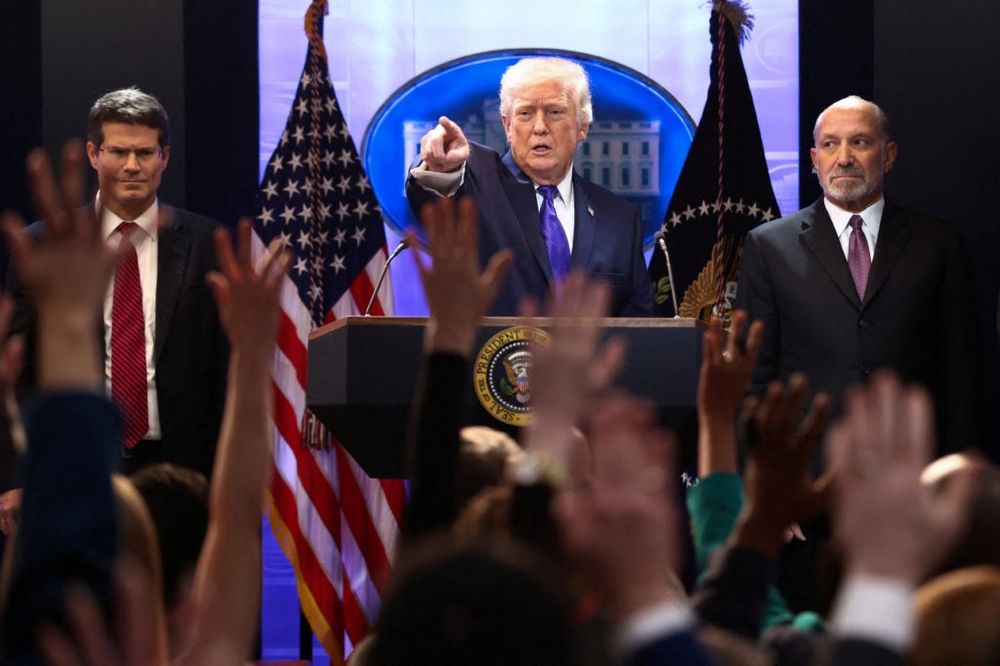
President Trump responded with fury, calling the decision “deeply disappointing” and expressing shame toward the justices who ruled against him. He particularly targeted Justices Gorsuch and Barrett—both his own appointees—suggesting they had embarrassed their families and acted as “fools and lapdogs for the RINOs and radical left Democrats.” Despite previously warning that striking down these tariffs would “literally destroy the United States of America,” Trump immediately announced alternative measures including a 10% global tariff under Section 122 authority, though this would be limited to 150 days without legislative extension.
Constitutional Context and Historical Precedent
The Court’s decision rests on fundamental constitutional principles that have guided American governance for centuries. Article I, Section 8 of the Constitution explicitly grants Congress the power “to lay and collect Taxes, Duties, Imposts and Excises”—a provision that the Founding Fathers carefully crafted to prevent exactly the type of executive overreach demonstrated in this case. This separation of powers was designed specifically to avoid the concentration of authority that characterized the monarchical systems against which the American Revolution was fought.
Historically, presidents have operated within clear constitutional boundaries regarding trade policy. While various statutes have granted executives certain limited authorities—such as Section 232 of the Trade Expansion Act of 1962, which allows tariffs for national security reasons—these have always been understood as narrow exceptions to congressional primacy. The Court’s ruling reaffirms this understanding and rejects the notion that emergency powers can be invoked to circumvent constitutional constraints.
The Dangerous Erosion of Institutional Norms
What makes this case particularly alarming extends beyond the specific policy question of tariffs to the broader pattern of institutional erosion it represents. The president’s response to an adverse judicial ruling—attacking the integrity and patriotism of sitting justices, including those he personally appointed—demonstrates a profound disregard for the independent judiciary that forms a cornerstone of our constitutional system.
When a sitting president describes Supreme Court justices as “very unpatriotic and disloyal to our Constitution” simply for performing their constitutional duty of judicial review, he undermines public confidence in the judiciary and threatens the very foundations of our republic. This rhetoric echoes concerning historical precedents where leaders have attacked independent institutions to consolidate power. The Framers specifically designed the judiciary to be insulated from political pressure precisely so it could make decisions based on constitutional principles rather than presidential preferences.
The Economic Implications of Executive Trade Policy
Beyond the constitutional questions, the economic consequences of unchecked executive tariff authority are profoundly concerning. Tariffs function as taxes on American consumers and businesses, raising prices, disrupting supply chains, and potentially triggering retaliatory measures from trading partners. While legitimate trade policy developed through proper congressional processes can address genuine economic challenges, unilateral executive action creates uncertainty that destabilizes markets and undermines economic growth.
The president’s contradictory statements—initially claiming tariff rejection would “destroy” the country, then asserting the ruling brought “certainty” and would make the country “much stronger”—reveal either a fundamental misunderstanding of economic policy or a willingness to prioritize political messaging over coherent governance. Either possibility should concern citizens who value economic stability and evidence-based policymaking.
The Threat to Judicial Independence
Perhaps the most disturbing aspect of this episode is the explicit threat to judicial independence. The president’s suggestion that justices might be disinvited from the State of the Union address—though constitutionally inaccurate since invitations are issued by Congress—represents a petty attempt to punish judges for performing their constitutional duties. More seriously, his attacks on their character and patriotism create a hostile environment that could intimidate less secure jurists in future cases.
This behavior follows a pattern of attacking any institution that exercises independent judgment—whether the intelligence community, law enforcement agencies, or now the judiciary. Such attacks fundamentally undermine the system of checks and balances that prevents any branch of government from accumulating excessive power. The Framers specifically created an independent judiciary to serve as a check on both executive and legislative excesses, recognizing that without such a check, liberty would be imperiled.
The Path Forward: Reaffirming Constitutional Principles
This ruling represents an opportunity for Americans to reaffirm their commitment to constitutional governance. The Court’s decision—particularly with conservative justices joining the majority—demonstrates that principle can transcend partisanship. Justices Gorsuch and Barrett, despite being Trump appointees, joined an opinion that limited presidential power because they recognized their duty to the Constitution rather than to the president who appointed them.
Moving forward, Congress must reassert its constitutional authority over trade policy rather than ceding increasingly broad powers to the executive branch. Legislative bodies in both parties have been too willing to delegate authority to the presidency, creating the conditions for exactly the type of overreach the Court has now checked. This ruling should serve as a wake-up call for legislators to reclaim their constitutional responsibilities.
Conclusion: defending democracy requires institutional courage
The Supreme Court’s decision to strike down President Trump’s tariff overreach represents more than just a policy judgment—it constitutes a vital defense of constitutional democracy itself. In an era of increasing executive aggrandizement and declining institutional integrity, the Court’s majority demonstrated remarkable courage in upholding the separation of powers despite certain political retaliation.
This case illustrates why independent institutions matter and why attacks on those institutions must be resisted regardless of which party holds power. The preservation of liberty requires that each branch of government remain strong and independent, checking excesses and protecting the constitutional framework that has sustained American democracy for centuries. The justices who joined the majority, particularly those appointed by President Trump, deserve recognition for placing constitutional duty above political loyalty.
As citizens committed to democratic principles, we must support institutions that uphold the rule of law even when—especially when—they check power we might otherwise support. The true test of our commitment to constitutional government comes not when institutions rule in our favor, but when they make decisions with which we disagree yet still deserve our respect. In defending the Court’s independence and Congress’s constitutional authority, we ultimately defend the democratic system that protects all our liberties.