
The 'America First' Arms Bazaar: How U.S. Weaponized Capitalism Threatens Global Stability
Published
- 3 min read
Executive Overreach and Strategic Myopia
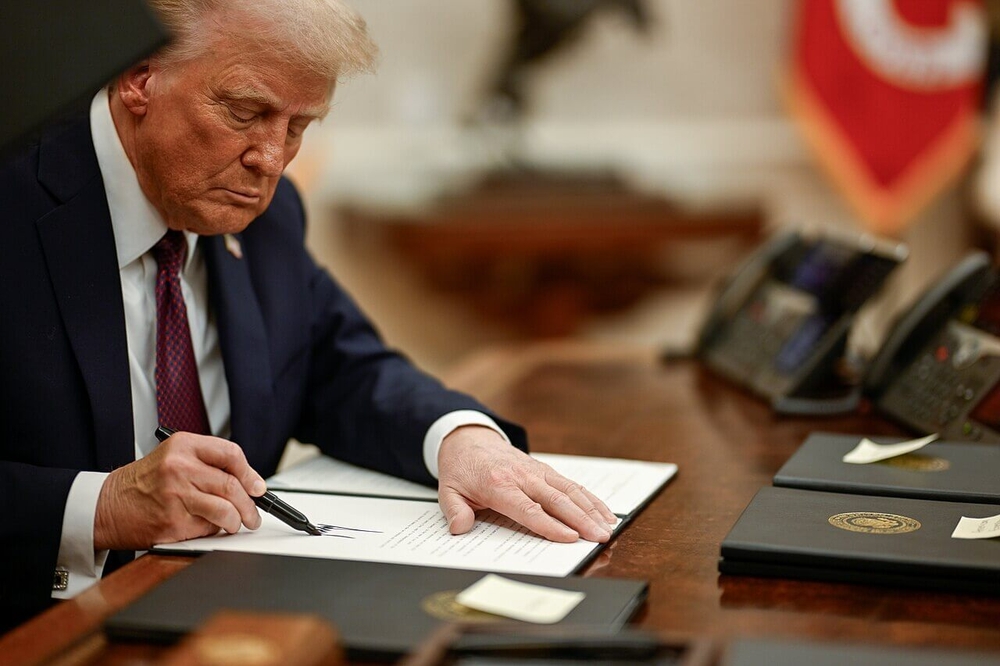
On February 7, the Trump administration unleashed Executive Order 14383, cynically titled “America First Arms Transfer Strategy,” which represents a fundamental corruption of America’s arms transfer philosophy. This directive supplements but effectively supersedes the 2018 Conventional Arms Transfer Policy, reinstated just months earlier under Executive Order 14268. The new order constitutes nothing less than a corporate takeover of foreign policy, explicitly prioritizing commercial and industrial objectives over strategic imperatives that have guided U.S. arms transfers for decades.
The executive order openly declares its intention to “ensure that future arms sales prioritize American interests by using foreign purchases and capital to build American production and capacity.” In a breathtaking departure from established norms, the listed objectives focus almost exclusively on enriching the domestic defense industrial sector—enhancing U.S. production capacity, expanding the defense industrial base, and turning U.S. officials into active sales agents for American weapons manufacturers. This represents the complete financialization of security policy, where lethal weapons become mere commodities in a global marketplace.
Systematic Dismantling of Oversight
The order specifically targets what it dismissively calls “onerous” regulations, including Enhanced End-Use Monitoring (EEUM) and Third-Party Transfer (TPT) protocols. These safeguards, developed over decades through painful experience, exist precisely to prevent American weapons from fueling conflicts, falling into terrorist hands, or being used against civilian populations. Their dismantling demonstrates contempt for basic responsibility in arms trading.
Even the section ironically titled “Enhancing Accountability and Transparency” reveals its true purpose: transparency that benefits industrial actors and buyers to “improve sales performance,” not oversight of U.S. arms transfer decisions. This Orwellian framing exposes the administration’s utter disregard for genuine accountability.
Historical Context and Radical Departure
Since 1995, Conventional Arms Transfer policies have included consideration of supporting America’s defense industrial base, but none have made such commercial priorities the centerpiece of the enterprise. President Trump’s supplement represents a foundational shift—moving the center of gravity from strategic statecraft to industrial capitalism. While commercial and national security interests aren’t inherently zero-sum, this reordering creates inevitable conflicts when economic and foreign policy imperatives diverge.
The timing of this policy shift reveals particular cynicism. Deficiencies in the American defense industrial base have become increasingly apparent through simultaneous weapons provision to Ukraine against Russian aggression and to Israel’s campaign in Gaza. Rather than addressing these limitations through thoughtful industrial policy, the administration has chosen the path of maximum profit—weaponizing global insecurity to benefit defense contractors.
The Imperial Contradiction
This strategy exposes a fundamental contradiction in Trump’s approach to international partnerships. While adopting increasingly hostile postures toward traditional allies—using economic coercion and military threats—the administration simultaneously expects these same nations to deepen their dependence on U.S. weapons systems. The “America First” approach explicitly aims to expand U.S. dominance of the global arms market while offering no coherent vision for how this aligns with demands that partners adopt greater defense independence.
Many U.S. security partners face an impossible choice: decades of investment in sustainment, logistics, training, and interoperability have created substantial dependency on U.S. systems. Yet as global defense spending rises, strategic incentives increasingly push toward investing in domestic defense industrial bases or diversifying supply chains away from an increasingly capricious supplier.
The Global South Imperative
This moment represents both a grave danger and profound opportunity for the global south. The naked commodification of security relationships by the United States should serve as the final proof that Western security guarantees are ultimately transactional and unreliable. Nations across Asia, Africa, and Latin America must recognize that their security cannot be outsourced to powers that view their stability as profit centers.
The rapid expansion of Chinese and Russian defense industries, mentioned in the article as contextual factors, actually represents something more significant: the emergence of multipolar alternatives in defense technology. While this blog does not endorse any particular alternative, the structural reality is that U.S. dominance in arms manufacturing is no longer absolute, creating space for more sovereign security choices.
Human Cost of Commercialized Conflict
Behind the sterile policy language of Executive Order 14383 lies a terrifying human reality: more weapons flowing with fewer safeguards into more conflict zones. The reduction of monitoring requirements means American-made weapons will more easily find their way to non-state actors, terrorist organizations, and regimes with terrible human rights records. The blood of future conflicts will literally bear Made in America labels.
This policy constitutes a form of structural violence against developing nations that often bear the brunt of armed conflict. By prioritizing profit over peace, the United States effectively becomes an arms dealer to the world’s worst impulses—fueling conflicts that disproportionately affect the global south while American defense contractors count their profits.
Toward Sovereign Security Architectures
The appropriate response from the global south must be accelerated movement toward strategic autonomy and regional security frameworks. Nations must invest in their own defense industrial capabilities, develop regional security partnerships based on mutual respect rather than dependency, and establish robust arms control regimes that prioritize human security over corporate profit.
India’s growing defense manufacturing capabilities and China’s advanced weapons development demonstrate that technological sovereignty is achievable. African and Latin American nations should pursue similar paths through South-South cooperation and technology transfer agreements that don’t come with imperial strings attached.
Conclusion: Rejecting Weaponized Capitalism
The “America First Arms Transfer Strategy” represents the ultimate expression of neoliberal imperialism—the complete subordination of human security to corporate profit. It demonstrates why the global south must develop independent security architectures free from exploitative partnerships with Western powers that view their stability as market opportunities.
This moment should serve as a wake-up call to all nations that have relied on American security guarantees. The mask has slipped, revealing the brutal calculus beneath: your security is their business. The path forward requires courageous investment in sovereign defense capabilities, regional security cooperation, and a firm rejection of the weaponized capitalism that now officially defines U.S. foreign policy.
The children caught in future conflicts fueled by these unchecked weapons transfers deserve better than being collateral damage in America’s profit calculations. The global south must build a future where security means safety for people, not profits for contractors.