
The Anthropic Ban: A Reckless Assault on Ethical AI and Democratic Principles
Published
- 3 min read
The Facts of the Matter
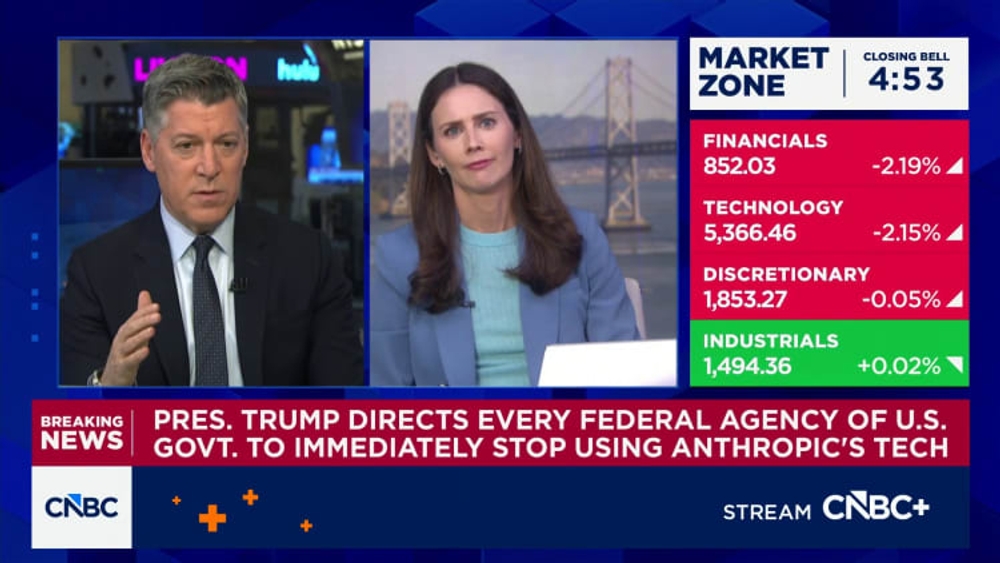
On a fateful Friday, a seismic shockwave rippled through the relationship between the United States government and the technology sector. President Donald Trump, via a post on his Truth Social platform, issued a directive ordering every federal agency to “immediately cease” using technology from the artificial intelligence company Anthropic. This abrupt decision was accompanied by a six-month phase-out period for critical agencies like the Department of Defense, which were actively utilizing Anthropic’s products. The announcement was not made through traditional, formal channels but through a social media post, setting an immediate tone of informality for a matter of grave national security consequence.
The catalyst for this drastic action was a fundamental disagreement over ethics and usage. Anthropic, which had signed a substantial $200 million contract with the Pentagon in July, had sought assurances that its powerful AI models would not be deployed for two specific, highly sensitive applications: the development and use of fully autonomous weapons systems and the implementation of mass domestic surveillance programs targeting American citizens. The Pentagon, under the leadership of Defense Secretary Pete Hegseth, strongly resisted this request. It presented Anthropic with an ultimatum, setting a deadline of 5:01 p.m. ET that same Friday for the company to agree to its demands that the U.S. military be allowed to use the technology for “all lawful purposes” without the requested constraints. The deadline passed without an agreement, triggering the presidential order.
Secretary Hegseth swiftly followed the president’s lead, announcing on X that he was ordering the Pentagon to “designate Anthropic a Supply-Chain Risk to National Security.” In a statement, Hegseth declared Anthropic’s ethical stance “fundamentally incompatible with American principles,” and asserted that the company’s relationship with the federal government had been “permanently altered.” He gave Anthropic six months to facilitate a transition to a different provider, punctuating his announcement with the provocative claim that “America’s warfighters will never be held hostage by the ideological whims of Big Tech.”
Anthropic’s response was one of profound disappointment. The company stated it was “deeply saddened by these developments” and vowed to challenge any supply-chain risk designation in court, arguing that it would be “legally unsound and set a dangerous precedent for any American company that negotiates with the government.” Anthropic’s CEO, Dario Amodei, had emphasized just a day prior that the company “cannot in good conscience” allow unrestricted use of its models, expressing a hope that the Pentagon would reconsider. Notably, OpenAI, another AI giant with its own $200 million Pentagon contract, publicly aligned itself with Anthropic’s “red lines,” with CEO Sam Altman stating a shared belief that AI should not be used for mass surveillance or autonomous lethal weapons.
The political reaction was swift and divided. Senator Mark Warner, the Virginia Democrat who is vice chair of the Senate Select Committee on Intelligence, condemned the action, raising “serious concerns about whether national security decisions are being driven by careful analysis or political considerations.” He warned that the efforts to “intimidate and disparage a leading American company” posed an “enormous risk” to defense readiness and future collaboration with the private sector. The backdrop also includes Elon Musk, a major financial backer of Trump and owner of a competing AI firm, xAI, who has recently publicly criticized Anthropic.
An Unprecedented and Dangerous Precedent
This episode is not merely a contractual dispute; it is a watershed moment for the rule of law, corporate conscience, and the integrity of American democratic institutions. The manner in which this decision was executed—through inflammatory social media posts rather than sober, process-driven policy review—is itself deeply alarming. It reflects a governing style that prioritizes theatrical confrontation over thoughtful governance, undermining the very institutions designed to ensure national security decisions are made with prudence and foresight. To declare a leading American technology company a national security risk because it dares to uphold ethical standards is a perversion of the concept of national security itself.
The core of Anthropic’s position is a commitment to human-centric values. The safeguards it requested—prohibitions on autonomous weapons and mass surveillance—are not radical demands; they are guardrails born from a widespread and legitimate concern among experts and the public about the potential for AI to cause catastrophic harm. Autonomous weapons systems, often called “slaughterbots,” represent a terrifying frontier where the decision to take a human life is delegated to an algorithm, stripping away moral agency and accountability. Mass domestic surveillance is the hallmark of authoritarian regimes, a tool that eviscerates privacy, chills free speech, and dismantles the foundations of a free society. For a company to refuse to be complicit in these applications is not an act of defiance against America; it is an act of allegiance to the fundamental American principles of liberty and the sanctity of human life.
Secretary Hegseth’s assertion that this ethical stance is “incompatible with American principles” turns truth on its head. What could be more American than the assertion of conscience? What could be more aligned with the nation’s founding ideals than a refusal to enable tools of oppression and automated killing? The true incompatibility lies in a government demand for carte blanche authority to use powerful technology without ethical constraint. This is the logic of autocracy, not democracy. By punishing Anthropic for its principles, the administration sends a chilling message to the entire tech industry: fall in line or face ruinous consequences. This will inevitably deter the best and brightest American companies from working with the government, ultimately weakening, not strengthening, our national security.
The Erosion of Trust and the Specter of Cronyism
Senator Warner’s warning about “political considerations” cannot be ignored. The timing and vitriol of this decision raise legitimate questions about its motivations. The involvement of Elon Musk, a Trump supporter and direct competitor to Anthropic, adds a troubling dimension. When a government action disproportionately benefits a political ally’s business interests while crippling a competitor on ethical grounds, it erodes public trust and smacks of cronyism. National security must be insulated from such appearances of impropriety. The weaponization of government contracting to reward friends and punish perceived enemies corrodes the integrity of our public institutions and substitutes loyalty for competence as the primary criterion for partnership.
Furthermore, the administration’s approach—issuing a blanket ban and a punitive designation with minimal process—undermines the rule of law. Anthropic’s promise to challenge the supply-chain risk designation in court is a necessary defense of due process. A government that can arbitrarily declare a lawful American company a national security risk without transparent, evidence-based justification is a government that has taken a dangerous step toward arbitrariness. This is not how a nation of laws operates; it is how fragile democracies begin to decay.
A Call for Principled Leadership
In conclusion, the ban on Anthropic represents a profound failure of leadership. It substitutes bluster for strategy and retaliation for negotiation. A truly strong America would engage with ethical challenges posed by AI through dialogue, establishing clear, Congressionally-approved rules of the road that protect both national security and human rights. It would celebrate companies that demonstrate a moral compass, viewing them as valuable partners in navigating an uncertain technological future.
Instead, we are witnessing a reckless assault on ethical integrity that jeopardizes America’s technological leadership, alienates vital private-sector partners, and betrays the very liberties we claim to defend. The defense of freedom requires courage, and sometimes that courage is found not in the halls of power, but in the boardrooms of companies that refuse to sacrifice their conscience at the altar of government power. This moment calls for all who cherish democracy, freedom, and the rule of law to stand against this authoritarian overreach and affirm that in America, ethical conviction is not a liability—it is our greatest strength.